Category: Florida exploring

  • Loxahatchee Wildlife Refuge

    Earlier this month we set out to explore another part of the State.. There really is a lot to Florida that is different from the sun-soaked beaches often pictured.

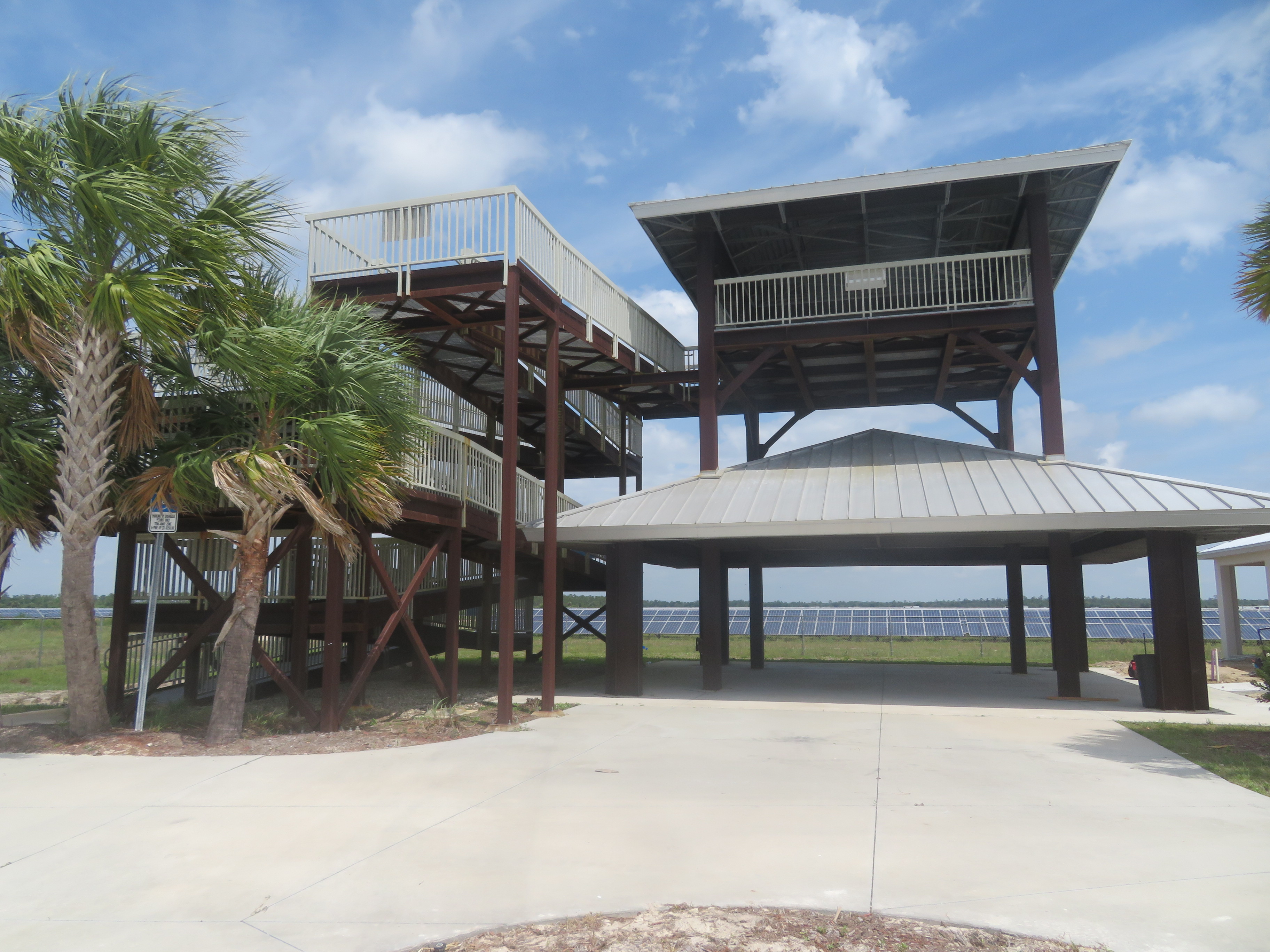
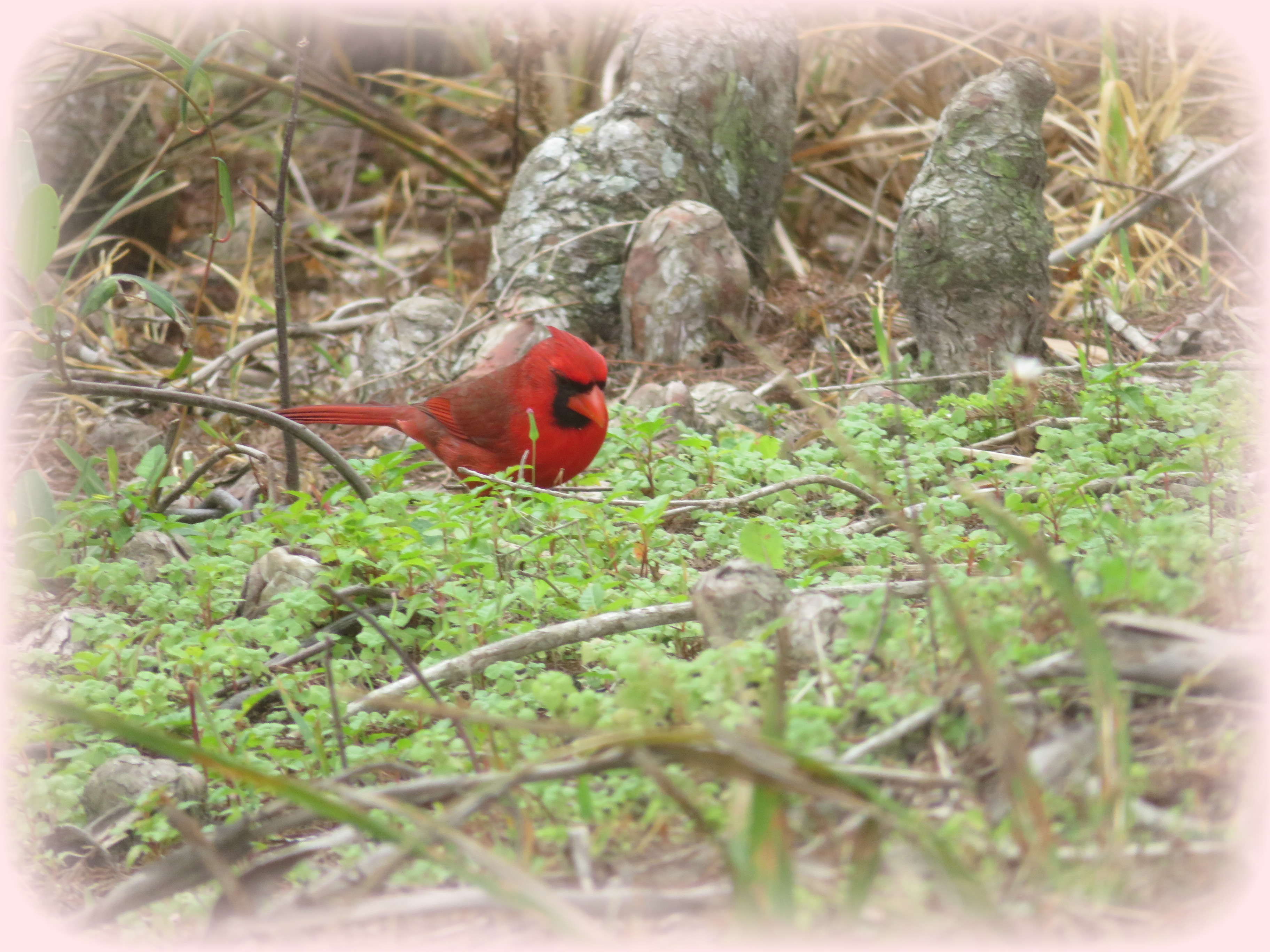
    We camped near three different National Wildlife Refuges: Loxahatchee NWR on the Northernmost end of the Everglades, Nathanial Reed Hobe Sound NWR, and Pelican Island NWR on the Indian River lagoon near the Atlantic Coast. These pictures are from the first one.

    The ongoing drought was still obvious at the beginning of our trip — very dry and not a lot of birds.

    It was good hiking weather though (and by hiking, I definitely mean walking on lovely boardwalks.)

    It was quite warm out, but there was enough greenery for shaded walks… the best kind.

    Thigmotropism examples
    (cypress tree trunk grown around fence post obstacle
    and cypress knees)

    We always learn new things from our walks. I’m as much a word nerd as I am a nature lover, so I enjoyed learning this new one and being able to take pictures showing it. The sign explains what thigmotropism is, but says nobody knows why it is. (A fun word to say, although I probably won’t use it too often in everyday conversation.)

    It was a joy to come across ponds that weren’t dried up.

    Boardwalks always have “rest stops,” usually a simple bench placed at an overlook. Loxahatchee was the first one I’ve ever seen that offered rocking chairs. Of course we tried them — and of course it was hard to get motivated again for the rest of the walk. We were grateful both for the rest and for being able to finish the walk.

    Drive-by shot in a pretty village on our way to Pelican Island — more on that interesting Refuge and the end of our trip in another post.

    #

    Linking to the following sharing opportunities. Thank you to the hosts.

    NATURE NOTES; MOSAIC MONDAY;  THANKFUL THURSDAY; SKYWATCH FRIDAY; and SATURDAY CRITTERS;


  • Around home, mostly

    Blue sky days have been rare the last couple of weeks, but on one pretty morning I saw some interesting wild-flowers in the wetlands across the street.  They were the tallest flowering plants I think I’ve ever seen.  I zoomed in on the flowers.  It’s easier to walk closer to the wetlands after the winter season because the RV lots along that side of the street are vacant.


    Wildflower2


    I’m marginally better with bird ID than with wildflowers —  keep meaning to install that app.  I think the two ducks below are Lesser Scaups.


    Scaup


    The Scaups were swimming  on Merritt Island Parkway last month.  We have been sticking closer to home this month.  It’s a busy time for us and the weather is iffy anyway.  The wet/rainy season is here and at the same time most days are very hot and humid.   Weather is different here.   The skies in the picture below are a good sample of what we’ve seen most days lately.  


    Page

    It’s going to pour down any minute now! 

    You really don’t want to be outside in a Florida rainstorm.  It comes down in walls and  buckets and this time of year it comes with thunder and lightning.  And even though this  is our umpteenth season here, I never get used to the other thing about Florida rain.  Which  is that it can come down in those buckets and with all that noise for an hour or two and then suddenly just stop completely.  Then the sun comes out and you can’t even tell it rained.  The picture below is the calm after the storm.  It is taken from the end of the canal.


    IMG_7803

    After the Rain

    There are a few people who live here year-round, but most are snowbirds who head to their home “up north” by April. The snowbird season is typically November through March.   We’re snowbirds too of course, but we come later and stay later than most.   Autumn is beautiful where we live in Oregon so we love being there then.   Late Spring is beautiful there too but grass-seed is a major crop and so it is also a hay-fever magnet.  We are thankful to skip allergy season as long as we can.

    Below is another memory from last month.  The osprey didn’t seem to be  impressed by the roseate spoonbill coming in for a perfect landing.

    Osprey spoonbill


    “When you rise in the morning, give thanks for the light,  for your life,  for your strength. Give thanks for your food and for the joy of living.  If you see no reason to give thanks, the fault lies in yourself.”

                                                                                                                                               Chief Tecumseh


    LINKING this week to the following sharing opportunities, with thanks to the hosts:

      SKYWATCH FRIDAY;  SATURDAY CRITTERS; NATURE NOTES; MOSAIC MONDAY;  THROUGH MY LENS;   MY CORNER OF THE WORLD; WILD BIRD WEDNESDAY; and THANKFUL THURSDAY                           


    44 comments on Around home, mostly

  • Bowls of Spoonbills

    We took a little mid-week getaway trip last week, staying in Titusville on what's known as Florida's Space Coast.  But we went to see the birds, not the rockets.  We spent most of two days walking in the Orlando Wetlands near the strangely named village of Christmas.  


    IMG_7712


    Making angel wings!

    Bowls of Roseate Spoonbills were everywhere.  (That really is the collective noun for groups of Spoonbills.)    I'm happy any time I even glimpse those beautiful pink wings.  On this trip they gave us more than glimpses.  


    P700x401

    Great Blue Heron and habitat scenery, Orlando Wetlands

    "In the midst of chaos, find peace. In the midst of sorrow, find joy. In the midst of loss, find hope.” 

                                                                            Margaret Renkl, “Late Migrations: A Natural History of Love and Loss" 


    IMG_7702-crop

    Roseate Spoonbill


    Usually we see spoonbills foraging in shallow water.  They use that bill to sweep the water stirring  little fishes and insects up from the bottom.     So that bill (more spatula-shaped than spoon in my opinion)  is a  necessary survival feature, but it really isn't exactly what makes them so photogenic.  On this day they must have already eaten because all we saw were perched up above the water.  All the better to show off their color and wingspread.


    Flight

    A whole bowl of Spoonbills

    This was an accidental flight-shot, but I'm rather proud of it anyway.  I'm usually too slow on the button to catch that action.


    Spoonbill foraging

    Foraging Roseate Spoonbill (from an old post)


    We saw other birds on our two days of walking the Wetlands and  again on our Merritt Island drive-through  on our way home,  but they need their own future post.  These beauties somehow almost took over this one.

    Spending time in nature is a path toward calm and peace.    I'm grateful we were able to go there. 


    Thanks to everyone for your support.  I'm Linking to the following sharing opportunities, with thanks to the hosts:
     

    SATURDAY CRITTERS; NATURE NOTES; MOSAIC MONDAY;  THROUGH MY LENS;   MY CORNER OF THE WORLD; WILD BIRD Wednesday;  THANKFUL THURSDAY; and  SKYWATCH FRIDAY   


  • Back again —

    In our real (full-time) life we're back again at the Florida Canal Cottage.  And  back in blogland after too long an unexplained absence.   I've always hated it when bloggers I follow disappear without a trace and I really wish I hadn't done the same exact thing.  This post is my attempt to catch up a little bit.   All pictures the are from the current season here in Florida.  But not all the words. 

    I've missed blogging, but it has been hard to get started again.    We've been busy since the last time I posted at the end of October, but honestly the real reason I haven't posted has more to do  with the disastrous result of November's election.  I've always thought of the blog as my "happy place"  — where good memories are stored.    Although I don't dwell on the state of the world every moment while we're living our lives, whenever I thought about putting a post together for the blog,  it somehow seemed shallow to be chronicling only happy times when our whole country honestly seems to be falling apart. 

    -4608x3456-000023

    Black-Crowned Night Heron at Ding Darling

    He looks cranky,  but I think its just because of the photographer and not because of the state of the world 

    I hate the feeling that there's really not much we can do.   But wallowing in depression certainly isn't good for me or for anybody else, so I am back to chronicle the good memories and to share them with anybody who happens by.   Even though I'm afraid the nation's problems aren't going away anytime soon, further posts will, I hope, be more about our personal life and less about worry.     

    And now, back to our regularly scheduled programming:


    IMG_7218

     Looking up  — at Six Mile Cypress Slough in Florida

     We stayed at home in Oregon longer than usual this time, enjoying lots of happy times with our Oregon families including two of our "kids"* , our grown grandchildren, the five great-grands who live in Oregon, and even our grand-family of three  from Europe who visited for almost a month while we were also in town.   A big bonus was spending both Thanksgiving and Christmas with family, for the first time in quite a while.      


    IMG_7654Loop Road, Big Cypress


    Another happy, but harder, kind of busy happened because we moved our Oregon "home-base" to  a newly-opened independent senior community.   We  enjoyed our shiny new "lock and leave" home along with the amenities the community provides and look forward to taking even more advantage of those when we return this summer.     


    Page d d birds

    Roseate Spoonbills, White Pelicans  and Night Heron at Ding Darling.  Little Blue Heron at  Six-Mile Cypress  

    Although feeling barely settled in our new Oregon digs, in early January we made our semi-annual cross-country migration.   We spent the majority of that month  opening the Canal Cottage and happily getting re-adjusted to the subtropical winter here in southwest Florida.    

     IMG_7652

    Green Heron, Big Cypress Refuge

    We had a joyful week in February, when we had a visit from all three of our sons.  They came from Colorado, Texas, and Oregon for a brothers' reunion and to see the old folks (and for two of them to visit us here in Florida for the first time.)    We loved showing them around some of our favorite places.   We missed our Oregon daughter and son-in-law and our daughters-in-law, but it was a delight to see our  boys* all together.    Almost all of the family pictures I took, both here and from Oregon are on my phone and somehow those don't seem to want to upload easily to the blog.   

    *All four of our children are old enough to be eligible for residence in our senior communities, although none of them are remotely interested in such a thing just yet.  But it's sure a reminder of our own advanced age!


    IMG_7647

    Great Egret in front of  everybody's favorite (?)  Florida icon in the background , at Big Cypress


    It always seems to happen that we see several of one certain species whenever we go to one of our 'nature places.'  The Black- Crowned Night Heron is that  one so far this season, as we've seen at least one on every outing.   Below is just one more picture of this pretty heron.  


    IMG_7656

     Black-Crowned Night Heron.  Big Cypress   


    It's good to be back to blogging again .  Thanks to everyone who reads, visits, comments, and hosts.  


    SATURDAY CRITTERS;  NATURE NOTES; MOSAIC MONDAY;  THROUGH MY LENS;   ;  WILD BIRD Wednesday;  THANKFUL THURSDAY;  and  SKYWATCH FRIDAY  


  • To Learn and Remember

     More pictures from our RoadTrek van camping vacation earlier this month.  Although we didn't get to do as much "exploring" Florida as usual this year,  we made the most of the camping trip we did take.  We always enjoy discovering more about "old Florida" or the "real Florida" as some refer to what's left of it.


    IMG_7265 sign


    We stayed for three nights in a campground on the Seminole Indian Reservation.  The reservation is located in the heart of Florida's everglades and is quite far removed from any urban area.   The campground where we stayed was located just across the Josie Billie Highway from Ah-Tah-Thi-Ki, the Tribe's Museum.  In the Seminole language, the museum's name  means "place to learn and to remember."      We were happy for the chance to learn more about these original Floridians (and, I hope, to remember).    


    2024-06-054


    Most of the pictures in the Mosaic above were taken on the one-mile boardwalk through the cypress dome behind the museum.  (The hawk and woodpecker were Campground visitors.)     

    The Seminole Tribe of Florida is a federally recognized Indian Tribe.   Their website states "our ancestors have lived in the Everglades since creation."        


    Museum outside 2

    Inside the Museum, we watched a well-made orientation film, providing a brief overview of Seminole history through interviews and filmed re-enactments.  The Goal of the Museum is to Respect, Celebrate, and Preserve the Seminole History and Traditions.   


    IMG_7253

    Seminole Wars Diorama, AhTahThiki Museum

    The Seminole Wars were  three military conflicts between the United States and the Seminoles  that took place  between 1821 and 1858.   In an attempt to gain  land for white settlers during those years,  the United States was in the process of forcefully relocating all Eastern Tribes to Indian Territory (now Oklahoma).    Some Seminoles complied but others resisted violently.  Their warriors used knowledge of the land to hide and attack.   Instead of continuing to hunt these people down in the difficult terrain,  the US Military Forces changed their strategy and attempted to burn and destroy Seminole villages and crops.   Some then went to the Indian Territory, but others fled deeper into the everglades.    Active fighting ceased in 1858 because the bands of Seminoles remaining in Florida had fled deep into the Everglades to land unwanted by American settlers (or land that military forces could not penetrate, depending on which accounts you read.)    The Seminole Nation is the only  Tribe in America that has never signed a peace treaty.   In all, the Seminole Wars were the longest, most expensive, and most deadly of all American Indian Wars.

    IMG_7264

    Seminole Basket Display 

    Not only did the Seminoles not sign a treaty, but in many ways, nowadays it also appears they won out in the end.  The Seminoles of Florida own six gambling casinos in this state.   (As a sidenote, there are none at all in the Seminole Village where we stayed).  The Tribe also owns  the Hardrock International chain (all of them).    As the Tribal Chairman said in the video we watched "gaming has been very good to us." 

    The Chairman also said "today we fight our battles in the Courts."   Just shortly after we returned from our vacation, we read that the US Supreme Court allowed to stand a verdict that gives the Seminole Tribe the rights to on-line gambling in the State.      Isn't there a saying that revenge is a dish best served (very) cold?   


    IMG_7256

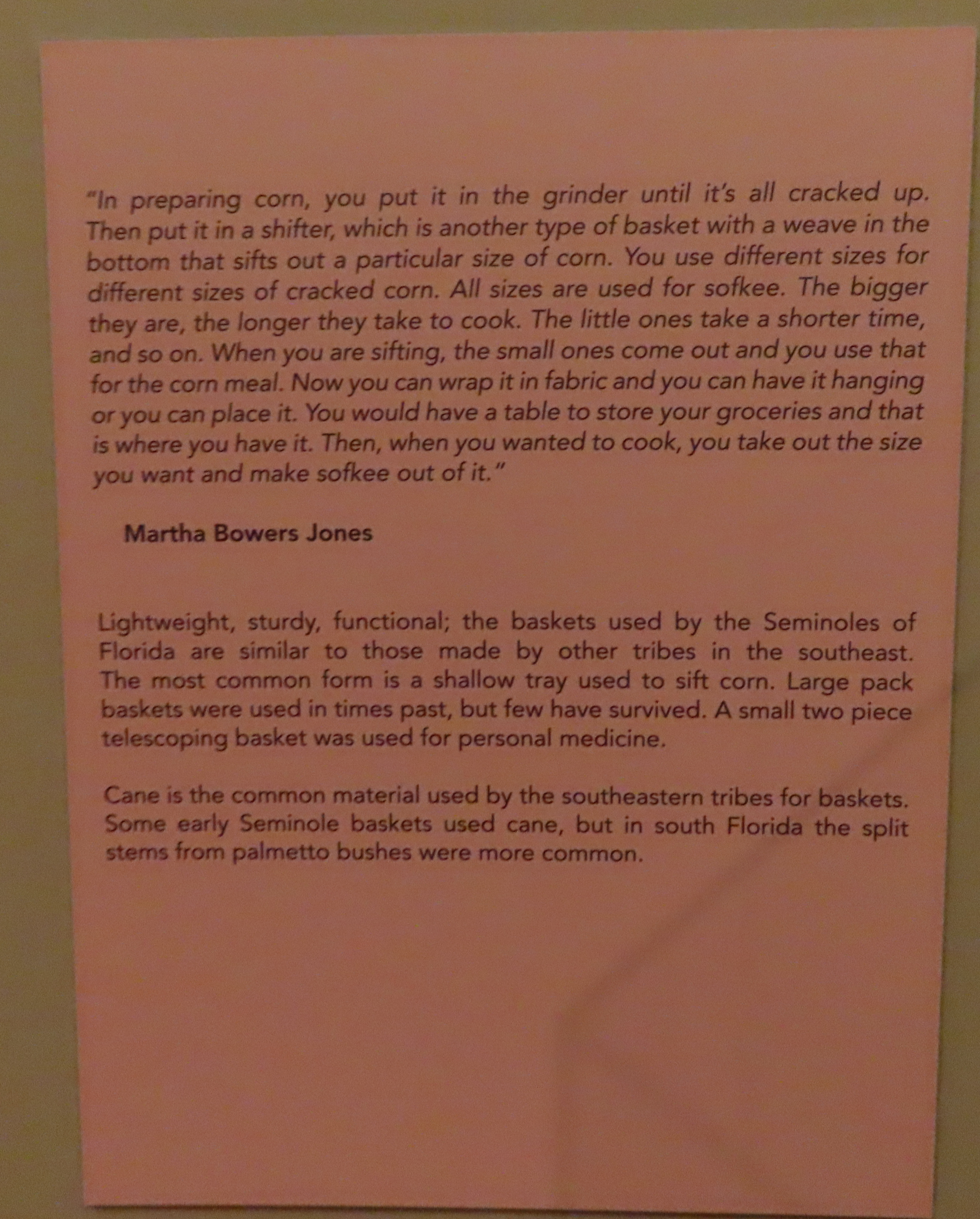
    Making Sofkee (corn flour)

    Several years ago, tribal historians interviewed people who still remembered taking part in some of these old traditions and their words were displayed with each of the domestic dioramas. 


    IMG_7255-001
     
    No passports are required to enter the  Seminole Nation, but it really is a separate state and country in many ways.  We drove around the Village and looked at the facilities and homes.  Here, the Tribe of Florida has its own police, schools, medical facilities, safety and law enforcement, and road department.   It  isn't a poor reservation obviously — the community buildings in the village were new, most older homes looked well-kept, and there were several subdivisions of newer homes that looked much like many such developments anywhere in Florida. 

    IMG_7266

    Except here  almost all the homes had a grass-roofed chickee hut in their backyard, present day versions of the ceremonial chickees of the ancestors.   The woodpile would be for food smokers and bonfires, not for winter heat, which isn't needed much here.  

    We enjoyed our visit and are always grateful for having a chance to learn more about the history of this area.  


    LINKING this week to the following, with thanks to the hosts:

    SATURDAY CRITTERS ;  NATURE NOTES; MOSAIC MONDAY;  THROUGH MY LENS;  TUESDAY TREASURES;  MY CORNER OF THE WORLD;  SIGNS SIGNS;  THANKFUL THURSDAY;  and SKYWATCH FRIDAY   

  • Big Cypress National Preserve

    We  spent a few late-season days in Big Cypress country and the Glades last week.  Late-season means  less traffic and campgrounds that have plenty of space, but also means that it was very hot outside (just as it is here  at the Canal Cottage this time of year.)  We camped for a couple of days in one part of the Preserve where we'd never been before and I'll post more about that later.    

    IMG_7271

     Green Heron on Loop Road, Big Cypress 

    The pictures in this post though are from last week's repeat of  two of our all-time favorite nature drives, in more familiar parts of the Preserve.   It was a good getaway before we settle down to the business of getting ready to close up the Canal Cottage for the summer.    

    IMG_7289

    Turner River Road, Big Cypress 

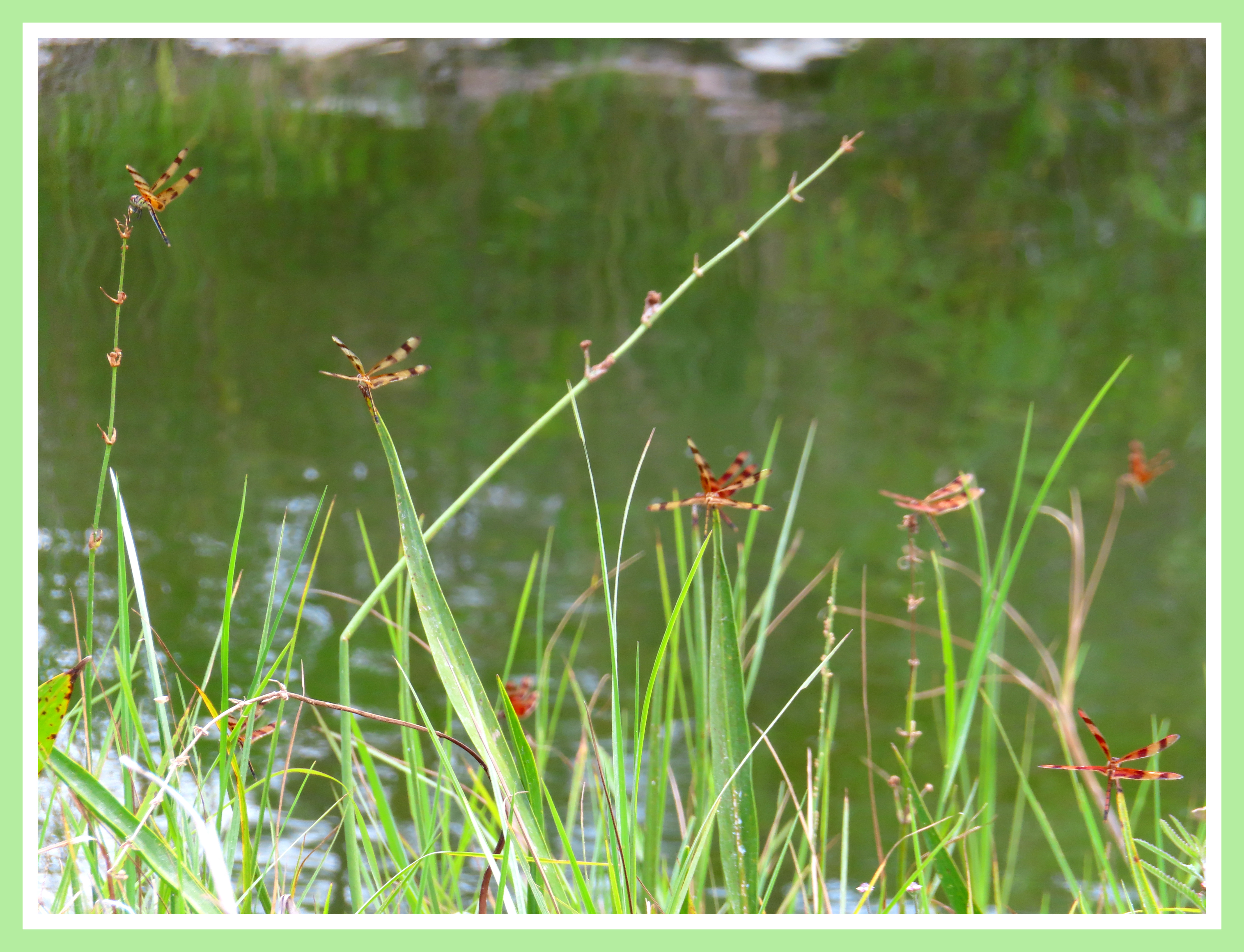
    We drove Turner Road on our last day.  It was really hot, so that day was a "sit-and-see" — no walks and using the van as a blind.  There really wasn't a whole lot of wildlife to see  anyway because of the heat and how late in the season it is.  But we did see more dragon-flies  than we've ever seen in one place before.  Every reed and grass stem was a perch.   


    IMG_7286

    Even the antennae on our van! 

    IMG_7285

    We saw this sign on Turner Road but no alligators on that day.  This is your Alligator  warning though — we did see several a few days earlier when we drove the Big Cypress Loop Road.  And of course as a bona-fide Florida snowbird, I am required to include Alligator pictures every year.  These gators are the first  ones we've seen this season (and almost certainly the last of the year).    If you didn't ever go out exploring you really could live here for a whole season and never see one.  But that would be a shame.  


    2024-06-05

     There's another dragon fly in this picture too!  Not afraid to land on the alligator's head.

     All of the Alligators we saw were nearly fully submerged because of the heat.    The swamps and cypress forests along the Loop Road are better wildlife viewing areas earlier in the season.  It's the route we call the "Last Chance Turn Around Road" and it really was very rough as a recent rainstorm had left some pretty deep ruts.  (See here for an earlier year's visit.)  Here's the sign:

    Last chance sign 


    It was lovely to see the most dragon-flies ever in one place, but perhaps not as lovely to see the most Black Vultures ever at once as we also did on our way home: 


    2024-06-051


    About half of them were dining on road-kill that looked like it might be an alligator, while others waited in the greenery just above.   They're really un-lovely birds, but they are just doing their assigned  clean-up job so we should be grateful I suppose.  

    Here's a more charming picture –  the setting sun peeking through the palms at  Orton Locks Campground on the first night of our week's trip:


    IMG_7244


    And some wildflowers along Loop Road:


    2024-06-052


    Grateful we were able to get away for a few days.  Nature trips are my favorite way to re-charge and re-fuel.  


    LINKING to the following sharing opportunities.  Thank you to the hosts:

    SATURDAY CRITTERS ;  NATURE NOTES; MOSAIC MONDAY;  THROUGH MY LENS;   MY CORNER OF THE WORLD; SIGNS SIGNS;  THANKFUL THURSDAY;  and SKYWATCH FRIDAY   


  • Ding Darling Preserve

    We drove to Sanibel Island one day last week hoping to see some of our favorite Florida birds at the Ding Darling Wildlife Preserve.  And also to see what's happening with the island's hurricane restoration efforts.     


    IMG_7120

    A pair of Ibis in a dead tree

    Roads to Sanibel were closed most of last season, but opened toward the end of the time we were here.  We drove across the bridge back then to look at the beaches and homes, but the devastation was still so sad.  I thought I took some pictures on that drive,  but apparently I threw them away out of sorrow as I couldn't find any for comparison.     It seems like most homes are recovering or recovered now but the beaches are still undergoing massive restoration.  People were still using some of them anyway.  


    2024-04-18


    We're not beach people though, so we were really here to drive through the preserve and look at birds.

    There was an Osprey nest on the other side of the road from this male and he was singing (screaming) his heart out at it.  There was a bird in the nest but she wouldn't put her head out far enough to to even acknowledge his efforts — or for me to get a picture  


    2024-04-181


    Ding Darling Reserve wasn't opened last year, so we hadn't been there for quite a long time.  It used to be lush with mangroves and cypress trees.  Now there are a lot of dead trees, but nature is recovering — new growth is emerging and some mangroves survived.  

    But birding was disappointing — we didn't see much at all on the refuge's famous Wildlife Drive.   It's a four-mile one way road, with lots of pull-off stops and viewing platforms and we've  usually seen more birds than we can count.    Maybe we were too late or it was too hot and  wildlife certainly doesn't have to appear on our schedule.    But we did notice that a lot of the water was heavily green with algae.  And we wondered if that made a difference.  The most birds we saw were  outside of the wildlife drive just as we were leaving the refuge.  

     IMG_7131


    Here on this barely visible puddle in the dead grass, were at least five different species of birds.  (This also makes me think there may have been something wrong with the water on the Drive where they would have had so much more room.)  Identifiable birds in this picture are a Roseate Spoonbill, immature Ibis, and Snowy Egrets ("Yellow slippers").  We also saw Great Egrets, adult Ibis, and a Great Blue Heron in another puddly clearing just a few steps away from this one.    Not very picturesque with all the dead foliage, but at least we saw some birds.

    Now to go back home to our Canal.  The picture below is from an earlier day this season:


    IMG_7030

    This is the Canal where we live.     I took it from the back of our boat as we exited into the Caloosahatchie River.  Our Cottage is on the left of this picture, but about halfway down, so it doesn't really show here at all.  On the other side of the canal, the motor home (RV) is parked in a space where there used to be a house.  It  was one of  over 30 homes in this resort  destroyed by Ian.  We were lucky.  It's an ongoing reminder to count our blessings.


    LINKING this week to the following, with thanks to the hosts:

    NATURE NOTES; MOSAIC MONDAY;  THROUGH MY LENS;   MY CORNER OF THE WORLD; WILD BIRD Wednesday;   THANKFUL THURSDAY;  SKYWATCH FRIDAY;  and SATURDAY CRITTERS 

  • Meanwhile ….

    …  in real life and closer to real-time

    While  I've been blogging for the past three months about a trip that ended in January, we have actually been living a pretty good life here at the Canal Cottage.  So much to be grateful about!  


    IMG_6936-001

    I'll admit it took us a few days to get used to being home and … oh, little things like having to make our own breakfast  as the morning sun rose.    

    Upriver February 2024

    But  it didn't  take long until I realized  I'd missed our canal … and just being here where we can see the water from our own windows and where the sunrise colors show up inside as well as out.  And really, it was good to eat our own cooking again!   It's great to travel but it's wonderful to be home too.  

    This year, Bill not only repaired remaining hurricane damage on the porch, but also improved it by replacing some of the screen area with glass where rain tended to blow in.  It's more than a porch now — really an indoor-outdoor room.  


    IMG_7018

    Our boat "Oh-Zone" 

    Our boat stayed in storage last season when we were busy nearly the whole time with  Hurricane repairs on the Cottage.  It finally came home last month.   Here's Bill and the guy from the boat hospital docking it for the first time after it's postponed annual checkup.  We were fortunate to have it stored in a safe place during Hurricane Ian. 

    It's nice to look out our windows and see "Oh-Zone"  on the dock — and even nicer that we have time now to take it out for an occasional excursion.


    2024-04-13


    Geoff (our youngest son) came to visit us for a few days and we got out on the boat on two of them.   We had such  a good time and it was lovely to see him.    One day we boated up  the river going through the Franklin Locks — that's Geoff in the center hanging on to the rope as we lock through.  The lower row is on the return trip in a different place on the river.  We'd already passed under the lift bridge at Highway 31 without a problem — it opened a few minutes later for the boat in the pictures — that one is a little bit taller than ours (and by little bit, I mean a whole lot.)  We drive over that bridge at least every week we're here, sometimes we have to wait when the bridge is up for a big boat.   We don't hold the traffic up when we boat under it!

    We've had time to visit  a few of our favorite walking areas since we've been home .  Here are a few birds we saw:


    IMG_6949

    Cardinal, Lakes Park


    Lakes Park March 2024


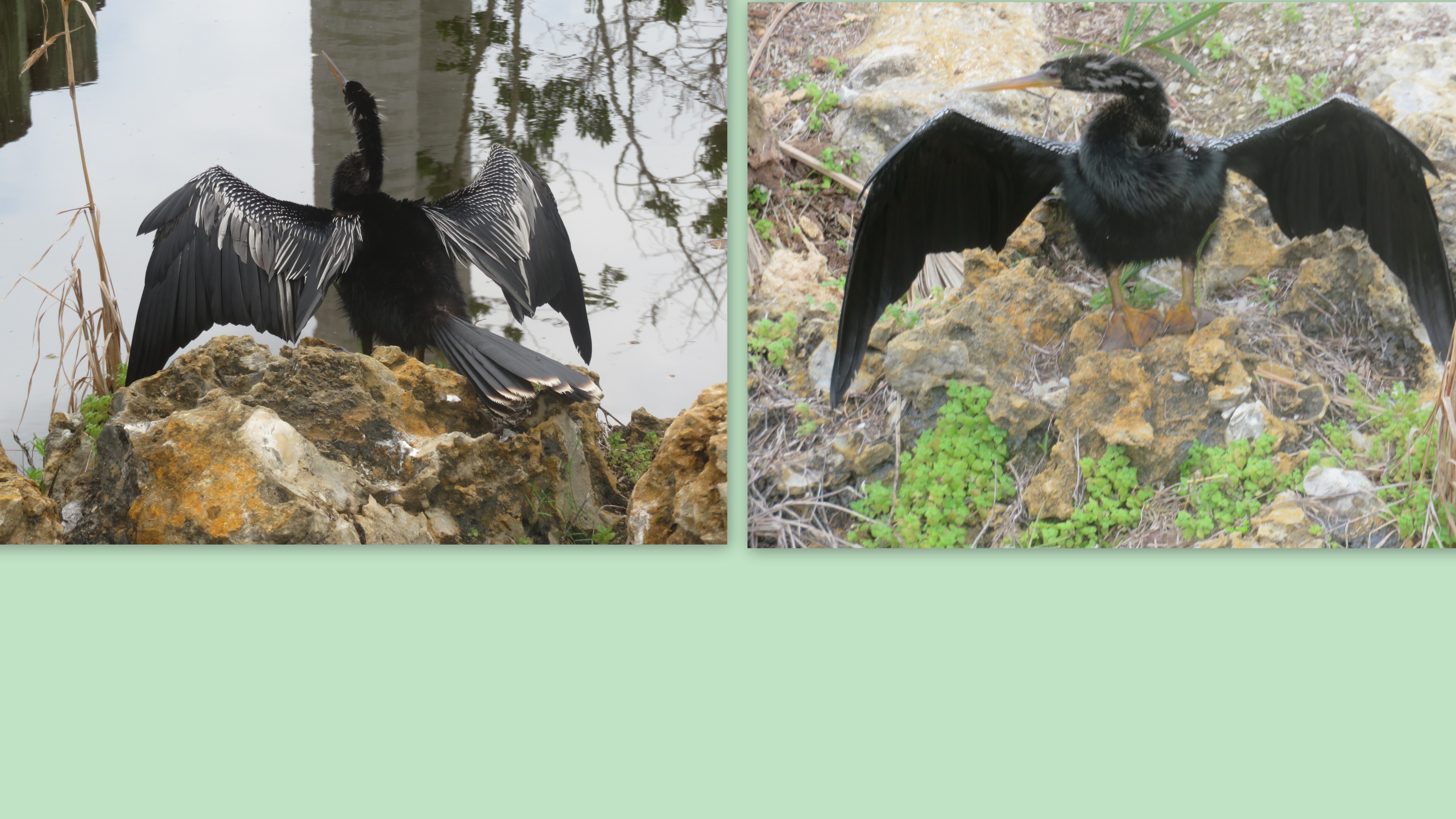
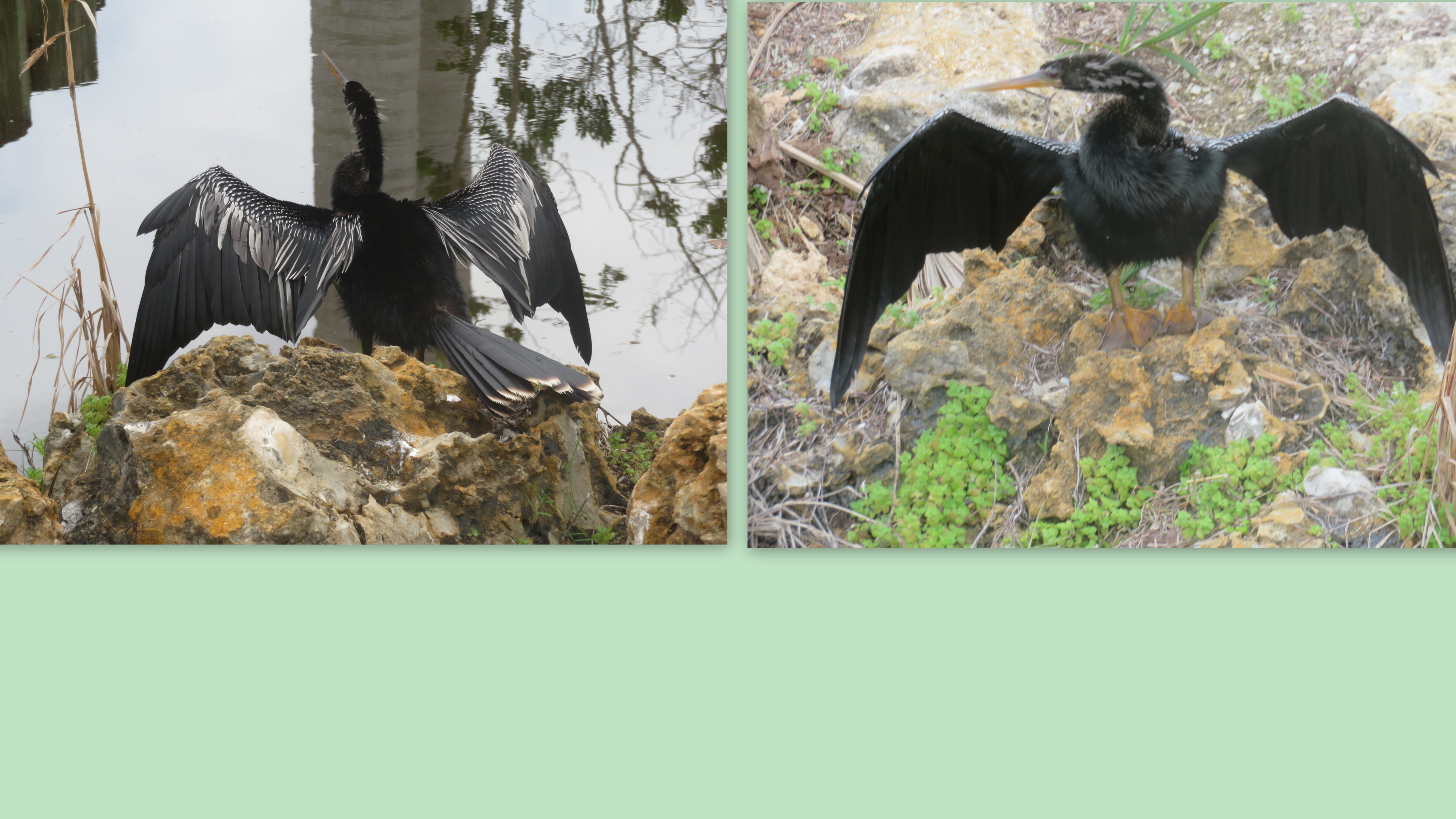
    Red-Bellied Woodpeckers  at both Lakes Park and Caloosahatchie East Preserve and below back and front views of an Anahinga drying his wings at Lakes Park.


    Lakes Park March 20242

    It's good to be here!

    LINKING this week with  the following sharing opportunities.  Thank you to the hosts:

     MOSAIC MONDAY;  THROUGH MY LENS; TUESDAY TREASURES;  MY CORNER OF THE WORLD;   THANKFUL THURSDAY;  SKYWATCH FRIDAY;  and  SATURDAY CRITTERS


  • Potpourri …

    … Otherwise known as almost the end-of-the-season catch-all.


    2023-05-20


    We had a lot of busy days here at the Canal Cottage this season and most of those days were filled with repair and renovation projects.   So there weren't a whole lot of photo opportunities in the neighborhood, but the morning skies almost always deliver, no matter what the rest of the day brings.


    IMG_4075


    I kept up with the doings of our local Eagles again this season.  Just like  hundreds of other people locally and thousands all over the world because of the web-cam.   There wasn't time this year to spend hours waiting for the perfect picture, but we pass the Eagle pasture almost every time we leave the cottage, so one day earlier this month we made a quick stop.    


    2023-05-07

    At the Eagle Pasture, 2023

    It was quite a year for these neighbors.  Just a few days after I wrote about the two new eaglets back in  January  the matriarch Harriet  flew off  in pursuit of intruders.  Sadly, she never returned.   Besides mourning the mother eagle many have watched for years, there was fear  for the eaglets who, at that stage, were still totally dependent on their parents for food and all care.  Usually the pair of adult eagles alternate hunting for food and protecting the eaglets on the nest.   So it was amazing to see the male Eagle completely assume their care and feeding and to see the eaglets remain safe in the nest while he was out hunting for food to bring back to  them.  Both eaglets grew successfully to fledge and, as of this date, one has flown away to begin its new life.  The other remains in the pasture area, well past the nestlings usual departure time.   It is taking care of itself while the male parent has left the area the way that the adults normally do every year after their offspring leave the nest.     Eagle watchers  can but await the next season.     


    IMG_4139

    We did manage one more mid-week getaway earlier this month. 

    We didn't go to Cuba  (and I'm pretty sure if we did they'd spell their capital  city  with just one "n").  This Havanna (Cafe) is in  Everglades City  near where we stayed.  The food is good and there's a really pretty garden area with outdoor tables.   


    IMG_4138


    This is a  Royal Poinciana tree in a neglected village yard  in the Everglades.  It's all gnarly and unpruned and un-cared for and some jungly palmetto plants have entwined themselves around it.    But it's still so bright and cheerful even in neglect.  Everything grows in this climate. 


    IMG_4136

    We almost had to get out of town this year to give Bill a little respite!      He enjoys having projects but rest and recreation is important too.   I'm beyond grateful that he was able to accomplish so much.  The Canal Cottage is now actually better than back to pre-hurricane status.    Quite a few of the other small homes in our resort are still awaiting repairs because people haven't yet been able to get on the  busy schedules for the appropriate repair persons.


    IMG_4092


    Sometimes on a morning walk, I remember to look down instead of up at the beautiful sky!


    LINKING this week to the following sharing opportunities.  Thank you to the hosts.

    MOSAIC MONDAY;   NATURE NOTES; THROUGH MY LENS; MY CORNER OF THE WORLD; SIGNS SIGNS;  THANKFUL THURSDAY;  SKYWATCH FRIDAY;  and  SATURDAY CRITTERS    


  • Wakodahatchee Wildlife

    This post is a wrap-up of our walks at Wakodahatchee Wetlands earlier this month and it's very picture heavy, because I just couldn't put my camera down.  There was so much  that I want to remember.


    DSCN5871


    Wakodahatchee Wetlands is located at Delray Beach near Fort Lauderdale.  We had no idea on this beautiful blue sky day that this area would experience three days of heavy rain and severe flooding starting the day after we were there.  


    DSCN5851

     Florida Wood Storks — adult and a nest full of young ones.

    I can't find any information about whether the floods affected this wetlands.  I hope all the families who live there are still OK.  I suspect the birds knew how to manage.


    DSCN5852

    Great Egret on a nest

    We tried to decide if there was a baby in that Egret's nest or if that was just a stray feather.  Hoped a closer look at the pictures would show more, but still not sure.

    We spent a longer time watching the birds in the series below, trying to decide what they were and what exactly they were doing.  

     
    2023-04-123

    Any guesses?  (I do know the answer now, but it took us a while.)

    2023-04-124

    They were very noisy and very engaged with each other.  At first we weren't even sure what kind of birds they were, but then a large black bird swooped into the picture and cleared things up.  Apparently these two were just a couple of hungry teenagers killing time waiting for dinner to arrive.  We recognized the adult  Anhinga immediately as we see them often here in Florida.    Dad flew right to the young ones and opened his beak wide:


    2023-04-125


    He wasn't  much larger than his two nearly grown and very hungry offspring.   I didn't know this while we watched this behavior but read later that the parents feed new babies by dropping regurgitated food into their mouths.  It doesn't take long for the babies to learn where the food comes from and by the time they are as big as these two birds, they just reach right down  into the parent bird's mouth for the food.  That's what's going on in the picture above.   (I love learning first hand about bird behavior.  But maybe I should have added a "slightly gross" warning about the above photo for those of you learning it second hand.)  


    DSCN5870


    Later, we saw a different adult with younger babies.  (This one's a female because she has a brown head and neck.)  Mom looks less frazzled than the dad in the other picture.  And the babies are cuter at this stage.  Although it doesn't demonstrate as much about their behavior,  it's probably a more suitable family portrait for sharing.  


    DSCN5892

    Common Gallinule

    We watched a whole family of these birds, also known as Moorhens, but they were hard to photograph in the vegetation where they like to forage.


    DSCN5896


    Stork Spa!  Their wings are much cleaner and the black and white contrast is more noticeable than when they're in their nest.   (Click on the photo to admire their pretty feathers.)  

     The photo below is from a different place and a different time (but still from Florida).  I just wanted to end with a sunset.


    DSCN4999

    Grateful for all we see and all we learn.


    LINKING this week to the following:  Thank you to the hosts.

    SATURDAY CRITTERS ;  RATHER B' BIRDING; NATURE NOTES; THROUGH MY LENS; MY CORNER OF THE WORLD; WILD BIRD Wednesday;  THANKFUL THURSDAY;  and SKYWATCH FRIDAY