HAPPY MONDAY! AND A BRIGHT AND RUBY TUESDAY

CLICK HERE FOR MORE SUNNY YELLOW PICTURES TO CHEER UP YOUR WEEK:
HAPPY MONDAY! AND A BRIGHT AND RUBY TUESDAY
CLICK HERE FOR MORE SUNNY YELLOW PICTURES TO CHEER UP YOUR WEEK:

Florida. Strawberries. March! Yummm!
These are growing behind the farmstand nearest to our Florida home. The berries are full and sweet; the cold (before we got here) and all the rain don't seem to have hurt the crop at all.
We used to do you-pick berries when we lived in Oregon — now I do you-pic(ture).
Back then, strawberries were a favorite because they are the first to ripen and that meant summer was almost here. But back then — and back there — they ripened in June! We were lucky to have shortcake on Father's Day. This isn't the first Winter/early Spring we've spent on the Gulf Coast, but we still marvel at having local berries this early.
 Visit Mary right here at Work of the Poet for more RUBY TUESDAY posts.

Bill brought this bouquet of sunshine with him when he came home from his short but tedious daily job Friday. I love these early daffodils with their promise of Spring!

And I have to say that early spring flowers are a joy that we miss when we spend the winter in warm climates.
It was gray and rainy on Friday and Saturday so that the flowers were the only bright spot we could see.
Today we had blue skies and cool sunshine, so the promise of spring is slowly materializing. (Although any Oregonian or former Oregonian knows not to expect a steady path of sunshine this early in the season.)
Happy February.
MELLOW YELLOW MONDAY because lots of people love cheerful yellow, especially this time of year!

Our scenery right now is still pretty much all sepia and gray, so it's time again for a look back at some color.


All these sunny yellow color spots are really just flowers growing wild — otherwise known as weeds!
The cactus picture was taken at Falcon Lake State Park in Texas, the middle two on the bike paths here in Oregon (in another more colorful season) and the agave plant in Tucson, Arizona.
"Winter must be cold for those with no warm memories." (From the movie An Affair to Remember) and quoted on THIS BLOG, one of my favorites:
I feel warmer now!
Here a few bright spots from past trips. Just for some cheer during NOcolor NOvember.

(Click to enlarge any of the next ones)


___________________________________________________________________________________________________
Here's where they were taken:
Top picture: Wildflowers on top of a mountain in Colorado (in June)
Marigold and butterfly in Vermont at a farmstand; fall flowers in Eugene Oregon (along a bike path); Butterfly garden in Seattle
Japanese Iris at Denver Botanical Gardens; exotic plants in a conservatory in Charleston SC; blooming cactus at Falcon Lake State Park, Texas
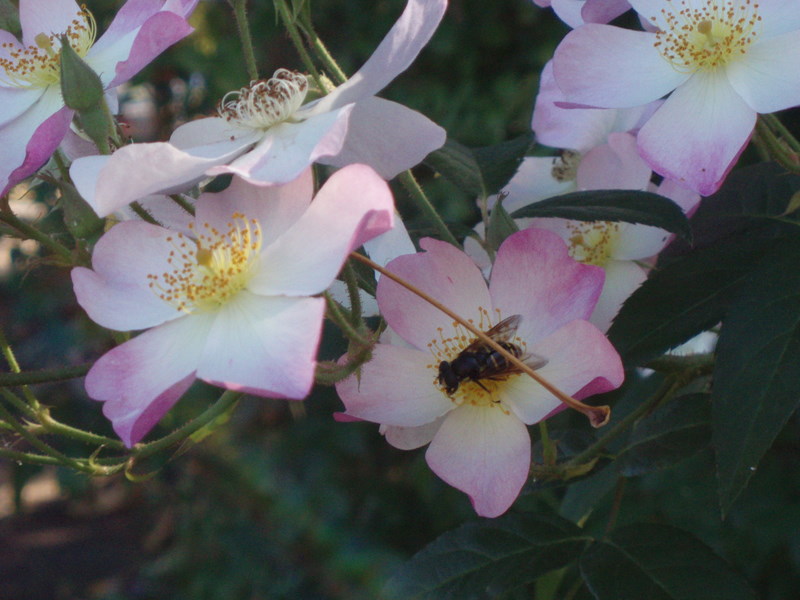
Just some very brave wildflowers, blooming along a dusty roadside near Ocala FL; and wild roses (being pollinated) along a roadside in Alvadore Oregon
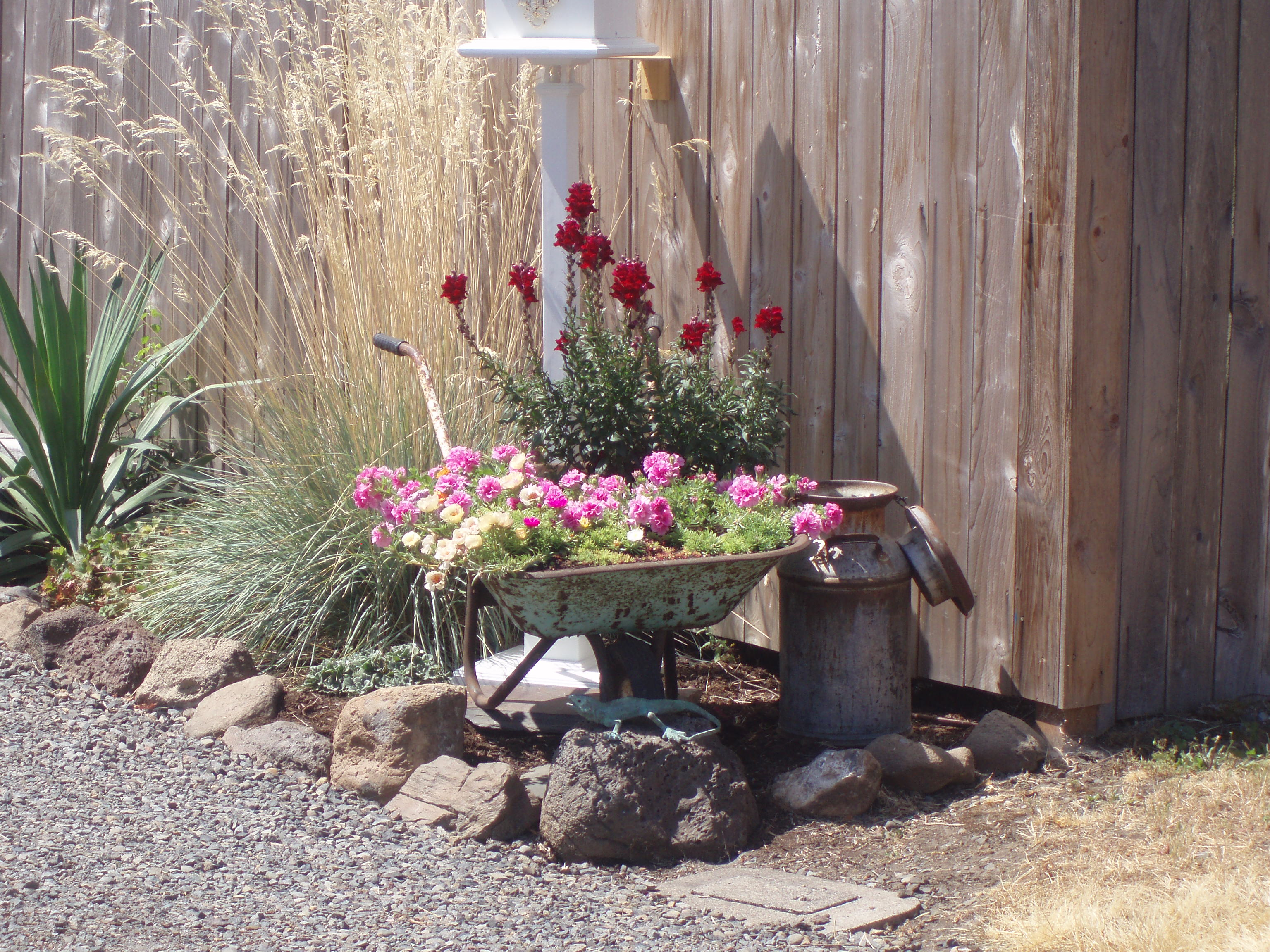
This beautiful garden belongs to our daughter and son-in-law in Alvadore, near Eugene OR. It's one of our favorite places to hang out. We don't get to see flowers like this too often any more, because usually we're not in the northwest during the Spring. But in 2007 we were in Oregon in April and the flowers were at their best. 
Some of our family and most of our non-RV friends say that their yard is what they'd miss most if they were houseless like we are. A few RVers must miss that too because they carry outdoor-friendly houseplants with them. When they settle in they haul out the plants and then they have their own little garden wherever they are. We're surprised sometimes at the size and number of plants that appear. (And it makes me tired just to think about the logistics of packing them all away when it's time to move on down the road.)
Fern Ridge Shores, where we're staying now, has quite a few semi-permanent residents and many of them have very nice flowers in their yards. It does add a lot to the park.
But someone has to admire the results of all the hard work. So we are garden and flower appreciators. We enjoy the yards that belong to family, old and new friends, and even perfect strangers. We love to stroll in public parks and gardens.
We enjoyed all those things when we owned our own house too, but back then every visit to another garden involved, at worst, envy, or at best, trying to learn to emulate the gardener's techniques in order to make our own yard better. And we always enjoyed the looking and planning a lot more than we did the actual work.
We are retired from all that now and the only thing I still want to learn about flowers is how to take better pictures of them. I like to practice while I admire other people's yards:

 We almost waited too long to go to see this castle and world famous gardens. The day we’d planned to go, the rising river caused the Thames Cruise Boat to cancel trips. But a couple of trains got us there just fine. (It was from the road next to the castle that we took those two pictures of the high river.) And, after all, it turned out to be a lovely day.
 The castle, which was first the home to Henry VIII, is magnificent inside and out, but our favorite parts of the tour were where we learned about how the working people and servants who supported it lived and worked. Also, the sixty acres of formal gardens really make Hampton Court a must-see. We are glad we didn’t miss it.
Good old Henry took over a courtier’s country home and transformed it into a magnificent palace. It was his summer home. A chapel dating from this era is still in use (for anyone now). Self-guided tours take you there and into the Tudor-era royal rooms, public and private.
The only part of the inside tours where you’re allowed to take pictures is in the reconstructed Tudor kitchens and other work areas. There are great stories about how many "support persons" the royal court needed — several hundred — and about how the food was ordered and prepared. Anyone could show up at the castle, and assuming they were reasonably well dressed, could request to "say hello" to their ruler. They could also stay for dinner, mostly meat and bread, but the records show that they did buy a lot veggies also. The different European kings tried to outdo each other with their hospitality. This castle fed as many as one thousand people each day. Food historians actually cook in the same way they did back then. You can smell food cooking. The picture of the pies show how they baked a lot of meat and vegetable dishes–the shells were simply flour and water paste, and were discarded after the food was removed. The huge boiling pots looked almost like the ones in today’s institutional kitchens, except these were heated by wood fire underneath. They also had six huge fireplaces with several spits placed before each one–it was very warm with only one fire going–it must have been almost unbearable with all of them roaring away.


——————————————————————————————————————————
——————————————
—————————————————————————————————————————–
After the Tudor era, sometime in the 1600s, the royals of the time, King William III and Mary II, commissioned Christopher Wren to design a remodel of the palace. But the plan was only partly completed (the queen died of smallpox and the king lost interest in the project). So half the palace remains Tudor and the other half all that elegant baroque style of the Georgian era, that’s so pleasant to look at (since somebody else has to dust). So you really get to see two palaces for the price of one, assuming your feet hold out. The gardens were actually put in during this time. Earlier, the land was mostly used for hunting.
Art works from the times are displayed and there are furnished public and private rooms of the royals, with the self-guided audio tour giving you some good stories. 
Again — you can’t take very many pictures of the castle insides, but (if you are us) you can make up for it in the beautiful gardens. We took a land-train around the periphery and then walked until we couldn’t any more. There’s a pretty cool maze, where we managed not to get lost, and the Guinness-certified largest vine in the world — a grapevine. (There are gardeners just to take care of it.)
Here are some garden pictures:
Who doesn’t like a post with lots of pictures and not very many words. (In contrast with the previous post.) Especially when the pictures are of beautiful flowers.
(As always, click on the thumbnails to enlarge.)
These are from Kew Gardens. We took the train to London Bridge, then the tube to Westminster and then a river boat ride to Kew. There is a castle there and the beautiful River Thames. But these are all of the beautiful gardens:


The next two are from the garden at Westminster Abbey — kind of a secret garden effect since it’s in the back of the imposing buildings and is walled in:


This is the Conservatory and some garden pictures from the Horniman Museum and Gardens at Forest Hill — the next railroad stop North from us or a quick and easy bus ride (about 2 miles).
There are hundreds and hundreds of beautiful parks around the city, but this one feels like our own since it’s so close.

Here are a couple of bonus garden pictures.

These last three are complete ringers! They were taken at "The Potterf Gardens of Alvadore" the day before we left Oregon. And about a week earlier than the ones at Forest Hill. You can tell that the climate and growing seasons are similar.
Also that the flowers and gardens look a lot the same, even though I believe there are considerably fewer gardeners at work at Alvadore!