Category: The Whole USA

  • PTARMIGANS … and Chicken (?)

    The Willow Ptarmigan is Alaska's State Bird.  This bird is really good at camouflage — in the winter they  turn completely white (in all the snow) while this time of year, their dappled brown feathers  blend in really well in Alaska's summer landscape.  We spotted this family out for a stroll on the outskirts of Denali National Park.


    P1010605


    Of course this was a new bird for us because it doesn't migrate into the lower 48.  


    P1010615


     Ptarmigans are members of the grouse family.  They are protective parents as we could tell watching them shepherd their babies.


    P1010616


    Sometime after our visit to Denali, we spent a night in the old mining town of Chicken.  The legend is that the settlers spotted a whole lot of these birds around the area and wanted to name their new town after them, but they couldn't agree on how to spell it.    So they settled on Chicken.  (I don't blame them.)


      2014-08-06


     Sharing these birds (not the chicken) with WILD BIRD WEDNESDAY.  Thank you to Stewart for hosting.

  • BOATING IN ICE

    We took a full-day boat tour of Prince William Sound up to Columbia Glacier.    Lots of beautiful scenery and wildlife along the way but the highlight was arriving at the Glacier ice field.   We were amazed.    

    All of the pictures in this post are straight-out-of-the camera and were taken without using a zoom lens.  We were this close!  

     1 1/2


    In the picture above the boat was a mile and a half from the face of the Glacier.  Those giant "snowballs" are actually chunks of ice that flew on top of icebergs when the glacier calved.   (Calving is the word used to describe the process of ice breaking free from the face of the glacier.)


     1mile


    Here (above) we were one mile from the face of the Glacier.  The ice was getting thick and the Captain was having to pick his way carefully through the ice-field.


    Half mile from face


    And here we are only one-half mile from the face of Columbia Glacier.  Most of this floating ice calved during the night as the Captain said the waterway had been much more open the day before.    The large cracks in the face of the glacier are where more calving will soon take place.

    The Captain stopped the boat at this point for over an hour, so that we could watch for calving and take lots and lots of pictures.   When we were ready to leave, he had some difficulty maneuvering the boat to free it from the ice that had packed in around us.   

    I tried to relax and remind myself that he had done this many times before.


    Sharing this memorable experience with OUR WORLD ON TUESDAY.  Thank you to the hosts.

  • MUSK OX

    On our trip to Prudhoe Bay we saw three different herds of musk ox (I never heard anyone say musk 'oxen' although it seems like the plural should be that). 

    These huge animals are more closely related to goats and sheep than they are to oxen, but they are a species of ther own (genus Ovibos 'sheep-goat').     They are the last survivor of a line that eons ago adapted to cold tundra environments.    


      P1010816-001


     The one in the picture below was part of a herd that was bedding down for the evening.   He looked so goofy and happy to be chewing on a flower while he was falling asleep.

    I'm sure I had a big goofy grin on my face too while I was taking his picture … he was so fun to watch.


      P1010825-001

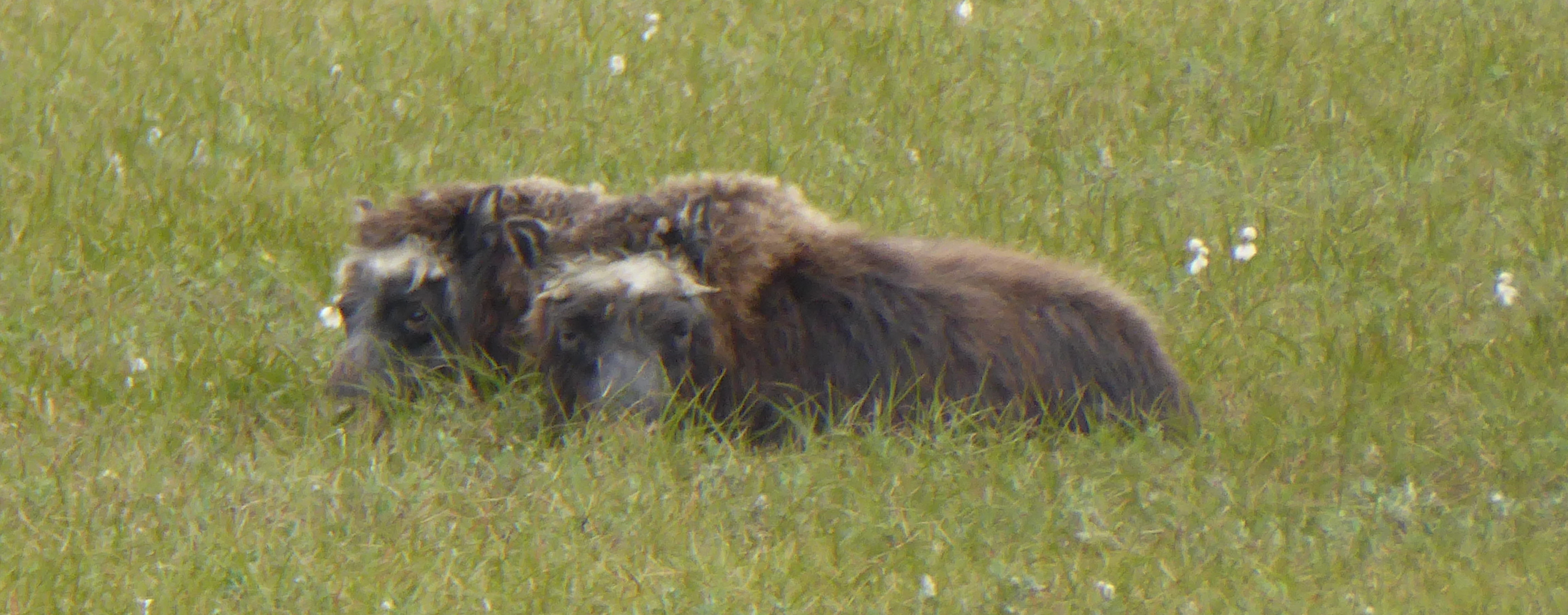
     They do look like prehistoric survivors  …  as I guess they are.    And they all look ancient — even when they're babies like the two below. (Their mother was just out of photo range and in a few minutes she curled up around them.  But that picture just looked like three brown rocks on the tundra.)


    P1010819


    Once spotted, the animals were easy to see  with the naked eye but  you could only see the expressions on their faces through binoculars or the camera.   

    Adult musk ox(en?) weigh 500 t0 800 pounds and they are four to five feet tall at the shoulder.    You would not want to get real close to them — they are said to have a bad temper — and those horns look lethal.


    P1010823


    There were  20 to 30 animals in each of the herds we saw. 


    P1010815


    I don't think there is such a thing as a 'life-animal' list, the way there is for new birds.  But if there were, the Musk Ox would definitely be a 'lifer' for us.


    Linking to SATURDAY CRITTERS.  Thanks to Eileen.

  • THE ROAD TO VALDEZ


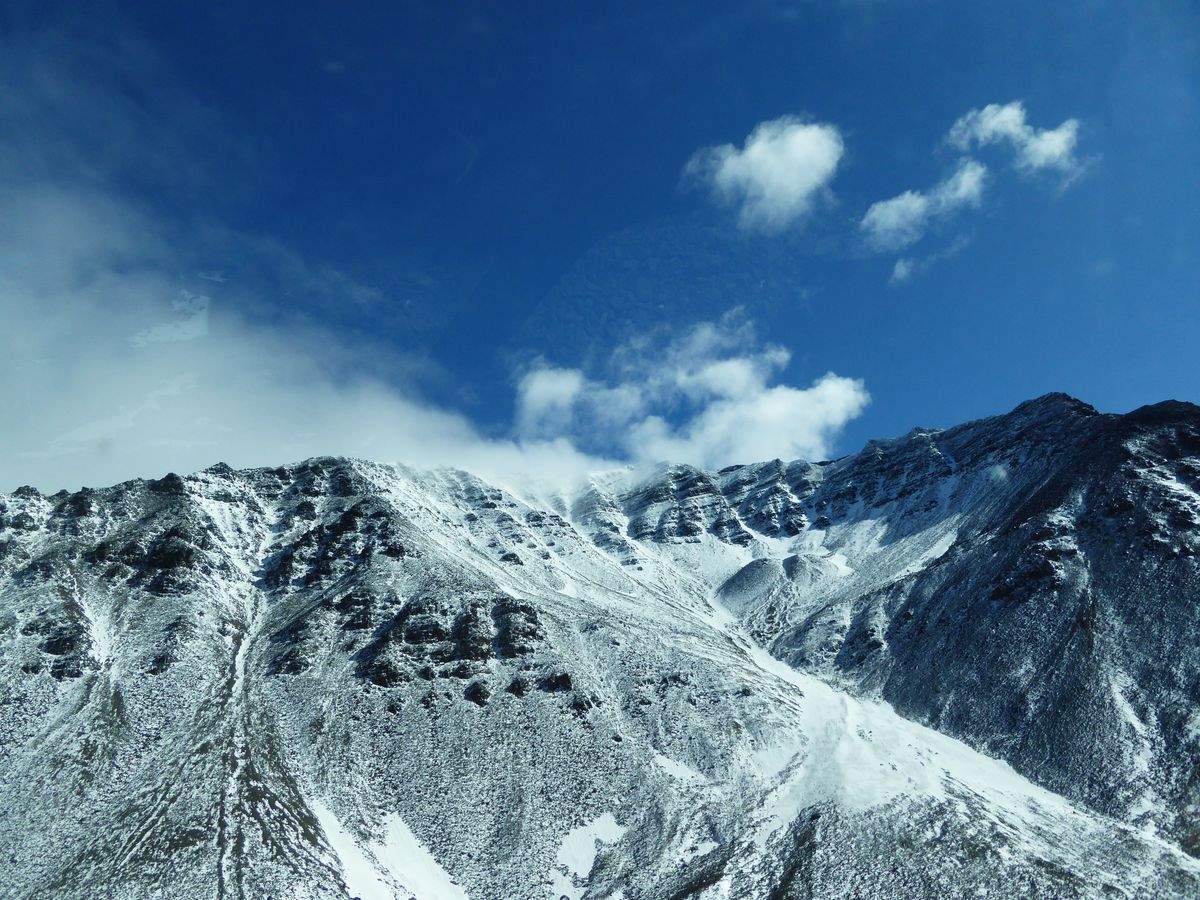
    This is Alaska's  Richardson Highway near Thompson Pass heading toward Valdez.  Those are snow posts along both sides.  (The average snowfall on the pass is 50 feet.)   The bend in the post is to show where the lanes actually are when everything is covered with snow. 
     

    P1010906-001


    We drove it earlier this week and road conditions were fine.     I can only imagine what it will be like when the snow covers all that green clear up to the top of those posts … (and have no desire whatsoever to experience it in reality).  


    P1010902-001

     This glacier, easily seen from the road, is only one of the nineteen or so that surround Valdez.  We'll see more of them while we're here.

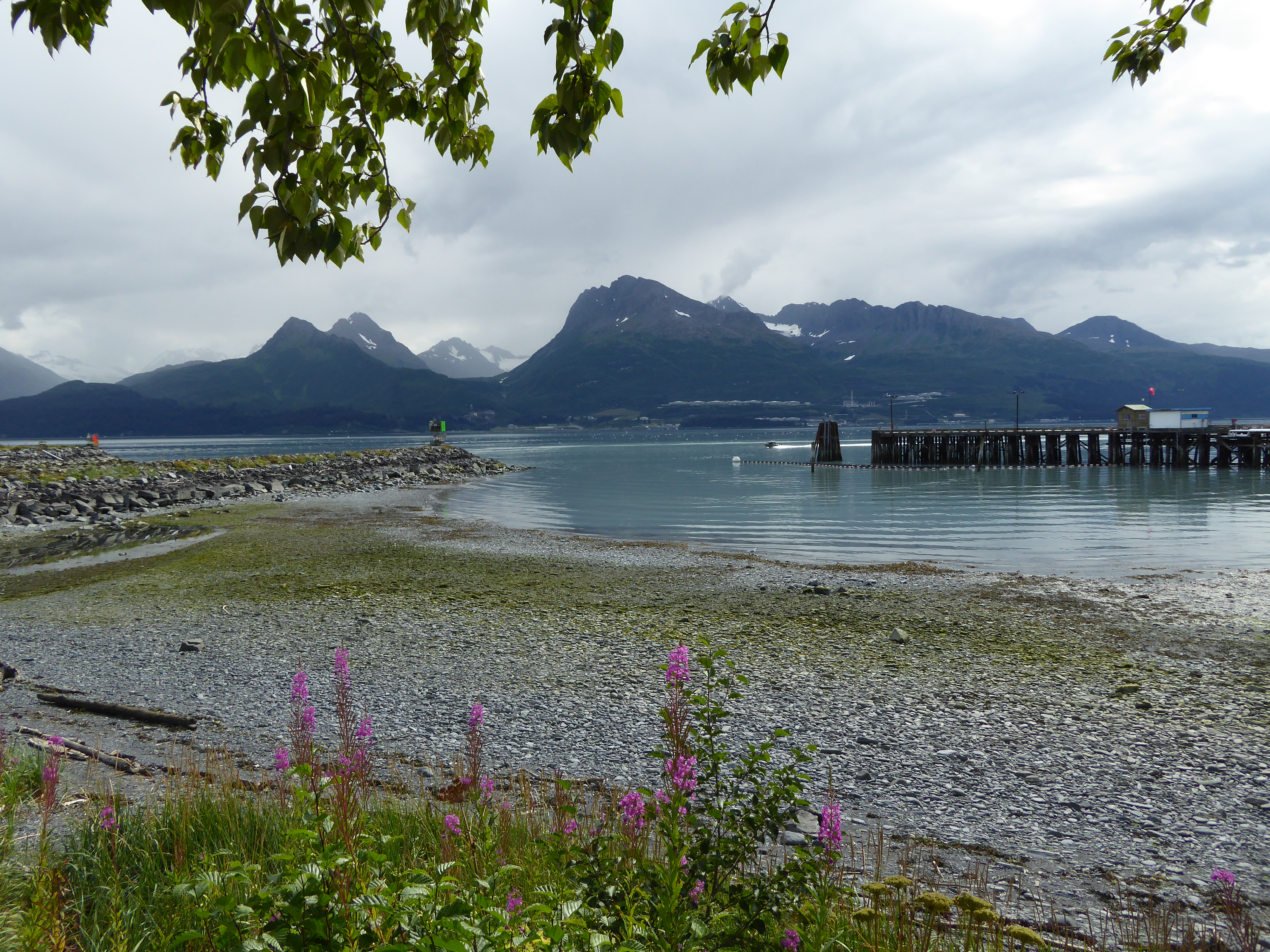
    Below is the view of Prince William Sound from where we're staying  in Valdez.  The fireboat was practicing this morning.

    P1010918-001

     It looked like the boat had spouted water wings.    Water poured down over the boat as well — that must be to keep it from catching fire itself when it gets close to the flames.

    Below is another view from our temporary front yard.     There is  so much to see in the beautiful Valdez area that we can't stay here in the RV all day — but with this view it is  tempting!  


      P1010928-001


    Sharing with the SKYWATCH FRIDAY community.  Thank you to the hosts.

  • DALTON DRIVE-BYS

      P1010872


    We drove the Dalton Highway to the end of the earth!  (As far North in the US as you can drive by car — and then we took a tour bus even further.)  Here are just a few quick pictures of the journey (there will be more someday I'm sure.  It was quite a trip.).  


    P1010725
     

     The road is rough — it is really a haul road (built for truckers and equipment used to install the pipeline from the Prudhoe Bay  oil fields).  It has only been open to the public since 1995.     

      P1010733


    The pipeline is close to the road in some places — in others it is buried.  Beautiful mountain views all along (when you can take your eyes off the road). 

    P1010770


    On the way, we slept at the Arctic Circle (one night in a BLM campground) . 

    P1010741
     

    Ancient rock formations  on the tundra:  


    P1010740


    Coldfoot camp (below) is  the only place on the Highway where you can get fuel and fill the RV water tank.    Look at that dirty camper van   — and we weren't  nearly at the end of the road yet.

    2014-07-26 


    The actual end of the road is Prudhoe Bay —  the industrial area for the Alyeska Pipeline.  I'll do another post about it later.   Because of the oil fields,  private vehicles aren't allowed to go the Ocean.  You have to reserve a spot on a security bus.   

     We did that — and here we are enjoying the lovely summer ocean breezes:

    20140801-112845


     By the time you reach Prudhoe Bay it really does feel like you're at the end of the world — and then you have to go back again:   


      P1010834


     Hoping to link this post to next week's OUR WORLD on TUESDAY.  Thank you to the hosts.


  • INTO DENALI

    Addendum, Tuesday evening July 22.  We are out of Denali.   A little while ago after we checked into our camp spot in Fairbanks, I noticed that for some reason I had two drafts of this same post —  and   I accidentally deleted the published one — and all your comments.  Thank you to everybody who visited and my apologies if you see this as a new post on your Feedly.)   I still have all your comments in my E-mail box and I will eventually catch up!!


    We are heading into Denali National Park for the rest of this week. There's no Cell service or WiFi in there. I'll touch base with everyone  when we get back out of the wild.   These pictures are Matanuska Glacier —  part of the great drive-by scenery (this was on the Glenn Highway)  as we traveled toward Denali.

    P1010444

    We're staying tonight in a Park in Cantwell and phone service and wi-fi — even here on the edge of the park  – is intermittent.  (I hope this post will publish.)


      P1010448


       I have so many beautiful pictures from the first month of our trip that I haven't yet been able to post.  So many beautiful places, so little time …  

    P1010449


    And I'm sure I'll have lots more after our stay in Denali.   See you next week!


    If anybody wants to link this to SKYWATCH FRIDAY or SCENIC WEEKENDS which is what I would do if I could, that would be wonderful.  If not I will link next week!  

  • RED-NECKED GREBE


    P1010276

    Condos overlooking Westchester Lagoon

    We had planned to stay  in Anchorage for a few days because it was in between two areas of Alaska that we wanted to explore.  

    And because we needed to do some city stuff before we headed out again.

    We did not expect to see wildlife and birds (especially  birds new to us)  here in the middle of Alaska's largest city.  

    But we were happily surprised to learn about The Westchester Lagoon, an urban park and trail an easy drive from our RV Park.    

    The new-to-us bird was the Red-Necked Grebe.   We spotted him almost as soon as we started our walk on the Tony Knowles Coastal Trail in the Lagoon Park.


    P1010245-001


     This was a beautiful park and trail.   I like it a lot when a City has places like this.

    Even if Anchorage is surrounded by a zillion acres of coast and mountains and real wild areas, just like in any City anywhere, people who live and work there can't always make time to get away.    But anyone could go this Park for a walk.


    Anchorage Westchester Lagoon Tony Knowles Coastal Trail1

     There were helpful signs along the trail like the one below.  (You can click to enlarge it.)


      P1010266

     Linking to WILD BIRD WEDNESDAY.  Thank you to Stuart for hosting.


  • SLED DOGS and MUSHERS


    P1000575 Usually the symbols on those roadside "Visitor Services" signs will tell you about lodging, campgrounds, food, fuel, maybe shopping …  but it took a while to learn that this one means 'dog-sleds'.  Only in Alaska.

     Sled dog racing is a big part of the Alaska culture.   Mushers (almost anywhere around the State) may open their kennels to visitors and sometimes take tourists on a 'training run' during the summer.  

    P1010332-001


    We visited the Iditirod Race Headquarters in Wasilla.  Below is a team  waiting to take a practice summer run.  These dogs live to run and were so happy when they got to start.    The only time these dogs barked was when the musher switched a few of the dogs from resting to pulling.  Then the ones who were switched in looked at the ones they replaced and said 'ha ha my turn now'.  (We both swear that's what they said!)

    2014-07-08


     The  musher (dog owner/trainer) here at Wasilla was the son of Joe Redington, the man who revived the Iditarod Trail Sled Dog Race.  

    The Race begins on the first Saturday in March.  All dogs must have a medical checkup and a clean bill of health before beginning.  Mushers must have between 12 and 16 dogs to start and must finish with at least six dogs on the towline.  

      P1010337The sled used today is the same design that was used by Alaska's Native people centuries ago.

    There are three mandatory stops.   One 24-hour layover whenever the musher chooses, one 8-hour layover somewhere on the Yukon and an 8-hour layover at White Mountain checkpoint.

      P1010331

    There are additional checkpoints every so often and at each one the musher must present a notebook to the Veterinarian on duty.    The notebook records  how much the dogs are eating, drinking, how they are running and a whole list of other things the Vet looks at before giving each dog a thorough check.  (If the dog doesn't pass it, or just doesn't want to run any more, he will be trucked back and that is how a musher may end up with fewer dogs than what he or she started with.)

    P1010335


    There's a whole list of things each team must carry.  One of the most interesting was eight booties for each dog.  These are little colored socks to keep their feet warm.  

    We learned that  Colleges of Veterinary Medicine (not just in Alaska) have had researchers studying these dog teams for many years.  One thing that I remember hearing  was that they learned the importance of Omega Threes to a dog's diet.   These dogs have enviable heart rates!

    P1010339


    These dogs are well-loved and well cared for.  And they are also trained and highly skilled athletes.  We enjoyed learning a little more about them. 


    FOR:  OUR WORLD on TUESDAY and next week's SATURDAY CRITTERS (if I am able to link; we may be out of cell-phone reach next weekend.).

    Thank you to the hosts.


  • FIREWEED

    Fireweed is a  tall beautifully-colored wildflower that is blooming prolifically in fields and along roadsides wherever we've been in Alaska so far.  

    It is lovely to see masses of these magenta flowers as you walk or drive along.   


    P1010204


    Fireweed is known as Alaska's Summer Clock.   Local wisdom says that once the fireweed blooms to the top of the stalk,  summer is over and it is only a few more weeks until the long winter sets in.   


    P1010203


    Believe me, we are keeping a  close eye on it! 


    Here are a few more beautiful Alaska wildflowers.   We've enjoyed these lovely color spots as we travel in the state and, for year-round Alaskans, I would imagine they are even more welcome after a long cold winter. 


    Alaska wildflowers


    I'm planning to link this post* to TODAY'S FLOWERS AND NF BLO-MA.  Thank you to Denise and the TF team and to Monica for hosting Blo-Ma.  

    (*if travel and internet connections cooperate)

  • Brownish SANDHILL CRANES — in Alaska

    We were puzzled when we first glimpsed these birds (and about half a dozen more) feeding in a lovely grassy field near the harbor in Kenai.  We really didn't need binoculars to tell that they had to be Sandhill Cranes.  

    Everything about their shape, their size, their walk and their behavior was right.  


       P1010183

    Except that we had never seen them with reddish-brown feathers before.  

    We've  watched these guys in New Mexico, in Utah, in Texas, and in Florida … maybe other places too … but they've always always had gray/white plumage.


      P1010172


    We took a ton of pictures of course.

      P1010178


     And did some research later when we downloaded the photos.  Here's what we found on the National Wildlife Federation's  site:


    "Although the feathers are gray, sometimes they can have a reddish-brown appearance. The reason for the change in color is that sandhill cranes preen themselves by rubbing mud on their feathers. The mud can be brown or red. The red mud comes from iron rich environments."


      P1010174

     At three to four feet tall with a wing-span that can be over 5 feet, sandhills are always an impressive bird.  I think maybe even more so in their ocher "dye job" which certainly made them stand out in their green field.      


     LINKING TO:  Stuart's WILD BIRD WEDNESDAY and Annie's BIRD D'POT (on Saturday).    Thank you both for hosting!!!