• ARKANSAS

    We saw a lot of new country on this leg of our journey, but Arkansas was our first completely new state.  We had never before set foot or wheel in it.  We crossed into the state almost as soon as we left Branson; it was 250 miles to Hot Springs and it was a beautiful drive.

    Our view J and J RV Pk Hot springs 029 We stayed at J&J RV Park , where we were parked looking at a lovely little creek.  This was a friendly, quiet place very close to downtown (and the National Park).  A nice amenity was two (count 'em) two  different newspaper boxes.  We hadn't been anyplace where we could buy a daily paper for days and days. It was especially good timing because we arrived on November 5 and were able to see the historic election day headlines.  I know the newspaper business is fading fast, but Internet and 24/7 cable news coverage notwithstanding, it would have been just wrong not to have seen this historic election day coverage in print.

    We liked the Hot Springs area a lot.  Our original plan had been to spend a couple of days here so we could visit the National Park (just scroll down a little bit to see our post on it).  We ended up staying a week.  One of the joys of RVing is sometimes being able to do that when a spot unexpectedly catches your fancy.   Here are a couple more places we visited while we stayed here. 

    Is it a diamond 22 Crater of Diamonds State Park in nearby Murfreesboro is the only place in this country where diamonds can be found.    There's about 40 acres of plowed field where for a small fee you can prospect as much as you want to and keep whatever you find.  Diamonds and other gems have been discovered and the most perfect diamond in the world was found here a few years ago.  We didn't find anything — we didn't really look very seriously — but it was a good excuse to play in the dirt on a sunny afternoon.  (We learned later that the best time to find diamonds is immediately after a rainstorm.  People who are serious about their prospecting drop everything to arrive then because the rain washes up the stones.)   Check out their website by clicking right there on the blue; it really is very well done.  

    Stacks clinton library 35 Little Rock, the State Capitol, was just an hour away.  We toured the President Clinton Library and Museum there.  There's a lot of stuff packed into this building.  Those boxes that form the walls are full of schedules and letters that you can take out and read.    The other picture is a replica of the oval office.  Clinton oval office rep 37 

    The Presidential Museums do provide a good overview of a particular era in history.  On an earlier trip, we visited the Truman Library in Independence MO and I think we got more out of it.  Maybe this one is just a little too close to the present to be fully appreciated.  But one display here pointed out that the Federal budget was balanced and the country was at peace at the end of President Clinton's term.  What you heard everybody say as they viewed that was "what a difference eight years had made."

    Arkansas definitely goes on our "hope we get to come back" list.  We really enjoyed our week in Hot Springs and could easily spend more time there — and there is a lot more of the state to see as well.

    The day we left Hot Springs we stayed overnight in Vicksburg, Mississippi.  No  beautiful view for the first time in two weeks; we stayed at Ameristar Casino RV Park.  We paid more here than we had per night in the last two places (where we had those great views) so it wasn't a huge bargain.  But we did get a coupon for a pretty good free breakfast at the Casino hotel the next morning. 

    Our next stop was not exactly in Mississippi but it was all about it.  Scroll down to the post "Miss Lou."  I don't know if this is true everywhere, but a hundred years ago or so back in the Northwest I learned how to spell the name of this state this way:  M straight letter crooked letter crooked letter, straight letter, etc etc.  Staying here I learned that it would be a lot easier if we spelled it like people pronounce it, which is more like this:  Mizzippi.    It sounds good that way and it would be a lot easier on 4th graders if they could spell it like it is supposed to sound.

  • CROSS COUNTRY ROAD TRIP 2008, part 2: Oklahoma and Missouri


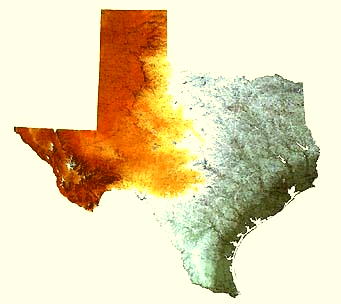
    Waltz-Across-Texas-for-web We left Tucamcari New Mexico on October 26 and, as Bill said, just "waltzed across Texas" (earworms anybody?) without even spending a night.  Although I can look at a map and see that the part of Texas between Tucamcari and Oklahoma isn't all that far, it was still shocking to me that we could get in and out of the great State of Texas during a day's travel.  I swear we've spent weeks and weeks in Texas on other road trips, but those were different parts of the state with more stuff to see. 

    So our first overnight stop on the second part of this road trip was in Elk City, Okflag Oklahoma.  This was the first time we had RV'd overnight in this state, although, in contrast to Texas, we'd spent a hour or less crossing it on several other trips.  Those other times were across the panhandle, which is uninteresting, at least the little we see driving across it.  So we were pleasantly surprised at how lush and green everything was as we entered this part of the state.  

    The previous day, back in not-so-beautiful Tucamcari, we had grazed a post pulling into our spot, (which wasn't nearly as big as advertised) and put a slight ding in the trim.  So after we settled in at Elk City, Bill went out to repair the damages and a whole bunch of guys came out to kibitz.  There is no quicker way to meet people on an overnight stop.  It was fun though, because that whole entire day on the road we actually didn't see one single human being outside of a car.  Okhwy Sometimes on the road it seems like we are all pod people and there is no life outside of the vehicles.  So the RV Park here was a welcome and friendly overnight stop.  It is called Elk Creek RV Park.  There's no web site, but the review sites give it a positive rating and so do we.

    Lake Eufaula The next night, still in Oklahoma, was in Checotah at Lake Eufaula West KOA.  Again, it was a beautiful drive and this was an interesting stop with woodsy walking paths and nature trails to the Lake and a small restaurant on site.   

    The only problem is of course, now that we've seen the good part of it, we want to spend more time in this lovely state. 

    We arrived at Branson View RV Park, Missouri the next night. Here we had one of the loveliest view spots ever.  It took a little juggling to get into it, but it was well worth it.   Every so often we are lucky enough to get a beautiful water view, but this was the first time ever we'd had a hilltop view looking down at a City.   We liked this park and if we'd stayed longer, our leg muscles would definitely have grown stronger.  Walking up and down the steep hills, was …well, breathtaking. 

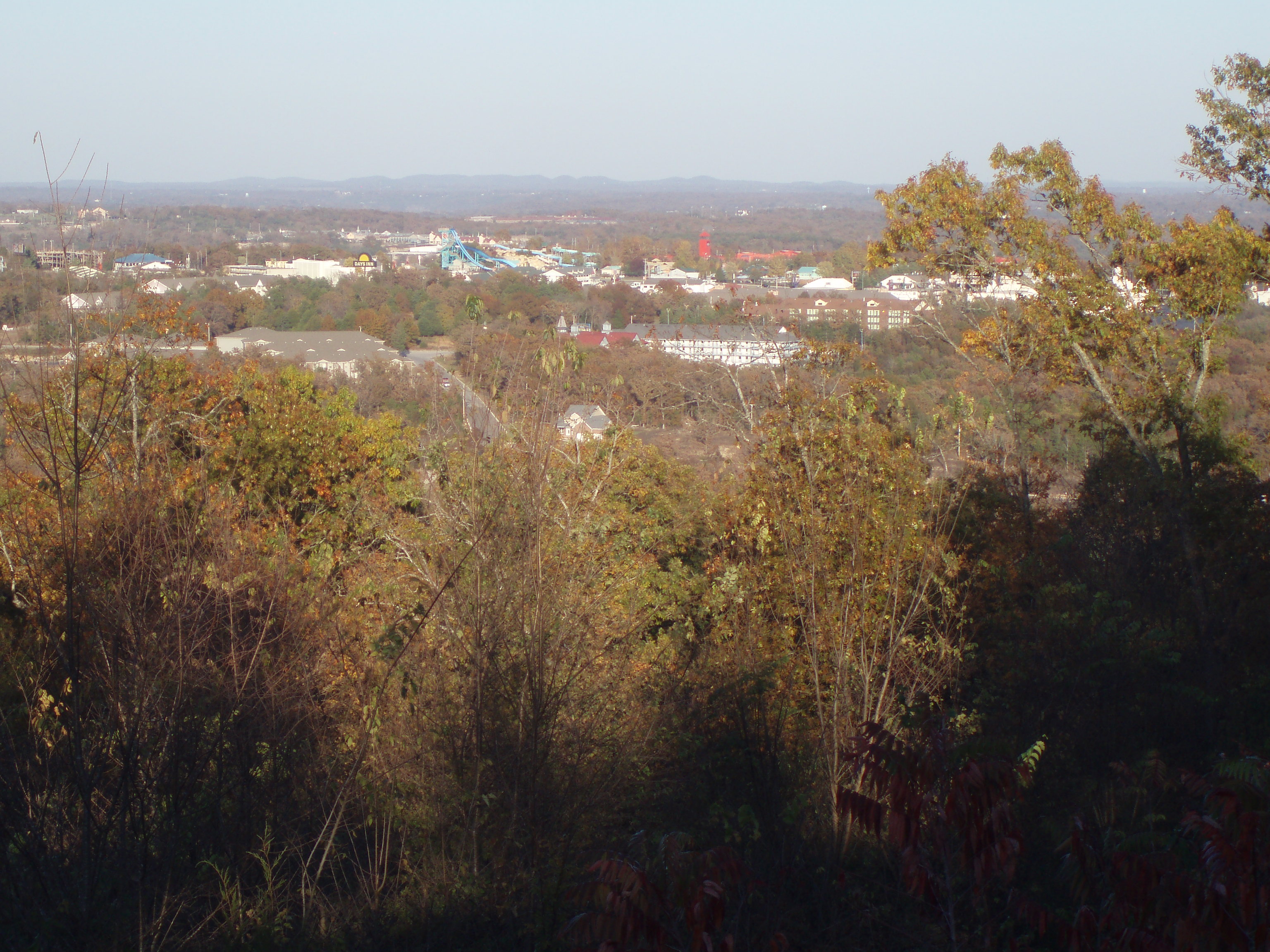
    In some quarters, RVers have a reputation of being a little bit tight with their Ozark valley 22 money.  Merchants think we bring everything with us and don't go anywhere. We feel that reputation is generally unfounded and certainly doesn't apply to us.   We eat (in and out), go to theaters, movies, shop … whatever we'd do if we weren't RVers.   But our week in Branson threw us right into the tightwad stereotype.  We  couldn't find a single thing in this entertainment city that interested us enough to shell out the big bucks for tickets.  Even the restaurants seemed uninteresting and the whole town too glitzy and fake for our taste.  But we liked our RV Park with its beautiful view and enjoyed enjoyed driving around to see more of the scenic Ozarks.   

    Keeter Ctr HWU09 One of those drives was to Point Lookout where we had Sunday brunch at The Keeter Center, the restaurant of Hard Work U (otherwise known as the College of the Ozarks).    This is a fully-accredited and well-rated liberal arts and sciences University founded on the premise that each student works on campus to pay for his or her education.  These aren't make-work but real jobs that the students do in restaurants, the farm, and about 80 other jobs or industries right on the campus.  These kids graduate free of debt and with an appreciation for work.  We were impressed.  Some of the job stations are in the dining room and kitchen of the restaurant.  The brunch table included produce and meat raised on their own farms.  After our lovely meal, we toured a little bit of the campus and learned some of history of the school and the Ozark region.  

    Chasing Autumn is one of our favorite things to do and we loved the Ozarks.  We drove through more of them on our way to Hot Springs, our next stop (and the next post).  Ozarks rotary ann view24 But if we get to visit this area again, we'll spend more time in Oklahoma and Arkansas and less in Branson.

  • MISS LOU, 2008

    Barge on Mississippi view from RV Park62 When we left Hot Springs this Fall, our next destination was Mississippi, which, like Arkansas, would be a new state for us.   (We had taken a side trip into the state in 2004, but this would be the first time we'd had the RV there.)  We planned to stay in Natchez, but it turned out that our RV Park was in Vidalia, Louisiana, just across the Mississippi River.  (We did actually stay a couple of nights in Mississippi, on the way to Natchez/Vidalia and after our stay there.)  This barge is going right past our Vidalia front door — looking across to Natchez.  The whole area around Natchez-Vidalia is called "Miss Lou", which sounds to me like it should be the name of somebody's sweet Southern Aunt.  Half of the businesses in and near the two towns are called Miss Lou something or other.  

    Natchez trace orig. rd 73 The main reason we wanted to stay in Natchez was to explore part of The Natchez Trace Parkway.  The Trace is a living monument to the history of people on the move.   It is built along what were paths for Choctaw Indians that eventually came to form a trail from the Mississippi River into the valley of Tennessee.

    Around 1780, farmers found they could build boats and float their crops and products downriver to the good markets of Natchez or New Orleans.   Then, instead of taking the empty flatboat back up the River, they would sell it as lumber.  But then they would have to hike back home.  So they used the Indian paths and with frequent use, the paths eventually evolved into the Trace (trail).  The picture above was taken from the bottom of the trace–in places it was worn into an eight to ten foot deep "ditch."

    Mt Locust 77 This is Mount Locust, one of the oldest structures still standing on the Trace.   Built as a family plantation, it was one of the first to open its doors to travelers.  Food and accomodations for the night cost about 25 cents.  

    We only had time to explore a few miles of the Trace, but you can drive it from Natchez to Nashville, almost 450 miles.  Maybe someday we will be able to do that.  It was interesting that this long Parkway, with so much of historical interest, is only designated as a national historical area, while back in Arkansas, Hot Springs, just a few blocks long, is a National Park.   

    While visiting Miss Lou, we also toured Frogmore Plantation (on the Louisiana side of the border).  This 1800-acre working cotton plantation has been operating since the early 1800s.   Part of it is kept as it was in the early 1800s, including slave row cabins and assorted plantation buildings, called dependencies.  These included barns, cane mills, butcheries and other buildings necessary to keep the plantation Frogmore slave cab in39 going.  This is from the inside of a slave cabin, looking out at the fields where they would have worked.

    This tour wasn't exactly a fun and relaxing afternoon, but it is a relatively painless way to sort of experience this history. You have to commend the owners for keeping a portion of their property the way it used to be, so that the era won't be forgotten.  It was easy to imagine what it must have been like back then.  The tour also touched on reconstruction and the sharecropping era, which wasn't a barrel of laughs either. 

     Cotton gin 53

    Cotton GinCanemill49


    Cane Mill


    Cotton bale 54

    Scales for bales


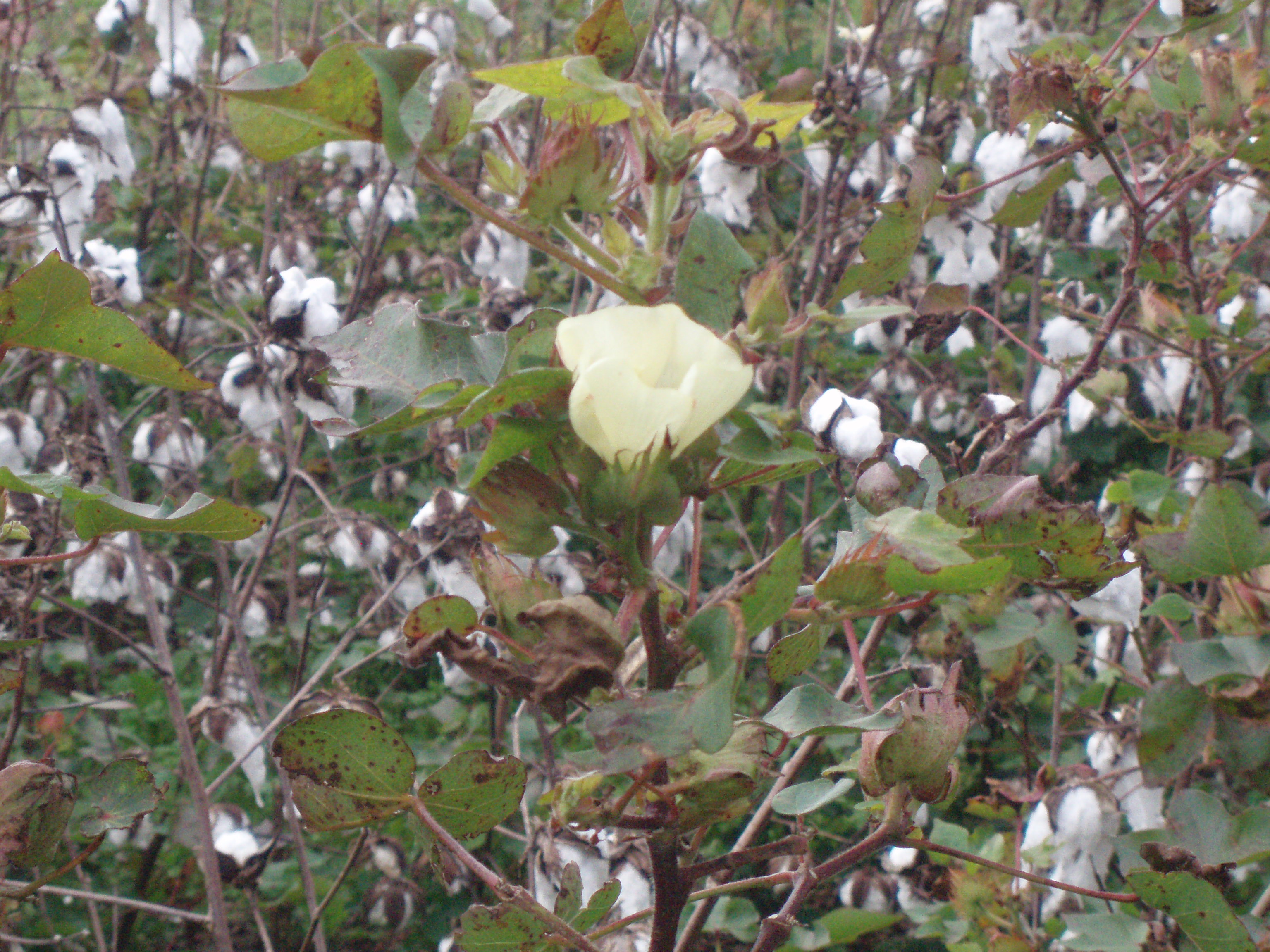
    Cotton blossom43 If we had gotten there a little earlier in the season, we would also have seen the current cotton ginning process, but it was the very end of the harvest season, so the action was just about over for the year.  There was still some cotton growing though.  We learned that cotton is a member of the hibiscus family and that when it first blossoms it is pink. 


  • CROSS-COUNTRY ROAD TRIP 2008, part 1 — OREGON TO NEW MEXICO


    Boat at fern ridge lake 024In mid-October of this year, we were still enjoying family, friends, and beautiful Oregon weather at Fern Ridge Lake.   The Lake is actually a reservoir and the Corps of Engineers was getting ready to "pull the plug" as they do every year before the rainy season starts.  Here's Bill getting ready for the last boat ride of the season.  Our son-in-law met him on the other side of the lake and pulled it to their house and barn, where we store it. 

    It is always hard to leave Oregon, but our plan for this Winter is to visit new parts of the country and it's a long trip cross-country to Florida (especially the way we like to travel).  So it was time to say goodbye and hit the road again.  Click here for posts about our Oregon stay.

    We left Fern Ridge Shores at noon on October 15 and arrived in Bakersfield California on the 17th.     That was pretty fast for us — we don't travel long days, but we have been over this road many times and there was nothing we wanted to spend any extra time visiting.  We stay at Orange Grove RV Park whenever we travel to California and it really is a very nice place.  Usually when we're there, we've been able to step outside and grab a few delicious oranges right off the trees, but it was too early this time — they were still green.  

    We rented a compact car so that we could drive to Long Beach to see my Aunt and cousins.  We left the Freightliner at the Rental Agency Parking lot; the guy in the RV next door to us took a look at the little white car and said  "Looks like your truck shrunk." 

    Naples 1My Aunt's home is in a beautiful neighborhood on a Canal.  The streets are narrow and winding and certainly not made for baby Freightliners, so renting the car made sense. 

    My Aunt is 100 years old and is more informed on politics and current events than we are.  She is also generous about sharing her knowledge of old family history.  She's a great role mode and we had a wonderful visit. 

    Because it is on the water, there is no smog in my Aunt's neighborhood, but it was heavy the whole time we were in Bakersfield and on the trip to her house and back. Although Orange Grove is a great park, we wouldn't want to spend too much time in Bakersfield because of that depressing smog.

    Needles desert view rv 08 rd trip 04Our next and last stop in California was in Needles where we stayed at Desert View RV Resort.   This was a nicely designed park with flowering hedges between each spot — and nice long spaces.  It was definitely still summer here (maybe it always is).  Quite a few people winter in this area because it is very close to the Colorado River and Laughlin, Nevada (so you could have your choice of outdoor or indoor sports).  But although the park was very nice, the scenery around it is barren and desolate.  And still a little bit smoggy, so we were happy to be leaving California after one night here. 

    We were now traveling on Route 40.  It overlaps or parallels the old Route 66, so all of the towns sounded very familiar. 

    Black bart's flgstf 08 rd trip 009We stayed the next night in Flagstaff Arizona.  It wasn't a long day, but a hard driving one — all mountain passes and lots of construction projects and wind most of the way.  Quite a difference from Needles — we were up in the mountains and the air was beautifully clear, but (no surprise) cold!  We had to dig out the fall clothes again in order to take an evening walk. 

    We stayed at a park called Black Bart's.  It's an older park, but the spaces were long and we didn't have to unhook, which is always what we aim for on overnight stops.  The RV Park is adjacent to Black Bart's Steakhouse and Saloon.  Of course we had to try it, especially since we received a 10%-off coupon for dinner upon check-in.  Dinner was a fun experience.  The waiters are all performance students at Northern Arizona University in Flagstaff and they took turns performing in a music revue.  Our waiter sang the signature tune "Route 66" and whenever he came to the line about Flagstaff, all of the locals cheered.  The food was good too and service excellent (even though the staff was doing double duty with the entertainment plus serving a couple of long tables of bus tours).  So this was a very fun overnight stop. 

    Sky city 30On Thursday, October 23, we reached Grants, New Mexico.  This is where we visited the Acoma Village of Sky City.  (Click on the link to read our post about it.)  We loved our visit here.   We stayed at Bar S RV Park, a small and very reasonably priced park (about $15.00 per night).  There's no website, but this was an excellent place to stay for a few days.   There were some train tracks nearby, but they didn't really disturb us at night and the park was clean and convenient.  

    When we left Grants, we got on Route 40 again and it was long, straight and monotonous.  There was no interesting scenery and very little traffic.  I was afraid Bill would fall asleep out of boredom.  (I don't think he did, but I'm not sure, since I slept a lot of the day.)  That night we were at Tucumcari, one of the very few places in New Mexico that I haven't fallen immediately in love with.  The name seemed to be the cutest thing about it.  So that made it easy to leave the next morning and head on to the second part of this road trip, which would bring us into some states where we'd never stayed and a whole bunch of new places to explore.  

  • SOAKING UP SOME HISTORY (HOT SPRINGS NATIONAL PARK, 2008)

    Buckstaff 17Hot Springs is quite an unusual National Park.  Water — for bathing and drinking — is the main attraction.  The Park is a developed area in the small city of Hot Springs, Arkansas.  Some beautiful scenery surrounds the city, but the main part of the National Park is located along one street in downtown Hot Springs called Bathhouse Row. There is also is a series of walking paths through a park area behind the Row.  This is the Buckstaff Bathhouse, seen from the path behind it.

    Hot Springs isn't a volcanic region.  The water began as rain that fell over 4000 years ago.  It is heated by a combination of rocks that lie deep in the earth here and then it surfaces in springs on the slopes of the Hot Springs mountains.  It gets hot because of gravity compressing the earth and by certain elements decaying the earth crust. When it gets to the surface it is an average temperature of 143 degrees F.  People filling water jugs hotsprings 18

    Many people believe in the therapeutic powers of the spring water.  There are free fountains fed by springs throughout the town and we saw people collecting it by the jugful to carry home.   The water has no taste or odor at all.

    There are records and pictures showing that various American Indian tribes bathed in these springs in the 1700s and probably their ancestors used them before that.  People soon began to build shacks and wooden covers over some of the springs.  After several disastrous fires, the government took control of the springs in the 1870s and began to license private bathhouses.  The area was promoted as "the Nation's Health Sanitarium."  Water therapy was one of the few treatments available for many diseases.  In the 1920s and 30s, the area was a hugely popular health and vacation destination and a major rail travel destination.    

    But as medical advances provided a surer way to cure disease and car ownership made it easier for people to travel for longer distances, Hot Springs began to decline as a vacation/health destination. Mens pool foredyce 10

    By the 1950s, only one Bathhouse was still operating and some of the others were left to become eyesores.

    After years of decline, the National Park Service began working to restore Bathhouse Row and preserve it as an historical attraction.   The Foredyce Bathhouse is where the Park Visitor Center is located.  It has been restored to the glory of its hey-days and there is a self-guided tour.  The room pictured here was part of the men's bathing room.  The women's side of the bath house was not as elegant. Taking the baths was quite the social occasion in those days, as well as being therapeutic.

    Now there are eight preserved bathhouses along the row, but only a couple are operating.  The Park Service regulates and supervises, but they are run by private concessioners.   Others are still in the process of being renovated..   

    We felt like it would be a shame to be in a National Park and not sample its main reason for being.  So we went to the Buckstaff, which is the one that has been operating continuously since 1912.   It isn't quite as glamorous as it used to be, but being pampered felt great.  Ahhh!  Who would ever think that taking a bath would be a part of a National Park experience. 

    What a fun way to "soak up" some history.

  • AUTUMN COLLAGE

    Ozarks 200819

    Near the beginning of every school year, kids always seemed to have an art project using fallen leaves.  I still think that collecting leaves is fun.  But this virtual collection is less messy.

    Autumn really is a great time to travel.  The weather is usually fine for walking, colors are spectacular and there are fewer people traveling than in the summer.  The best part of it for us nowdays is that we usually avoid the wet and cold season that used to come after fall.  We go from summer to fall and then back to summer again.  This is the Ozark Mountains  where we are now.

    We visited Bosque Del Apache Wildlife Refuge, near Albuquerque, New Mexico in 1999 on our first long RV trip. We've been back a couple of other times since.AA 2 crane landing 1480 It is one of the best places for birding during fall migration.

    The picture below is what the whole Vermont countryside looked like in 2003.  We stayed in Danville.  This was our first trip across country.  We had always wanted to see the Fall leaves in the East.  Vermont hills 2003 07

    In Vermont and New Hampshire, locals call Fall tourists "leaf peepers."  We were happy to be among them.

    This is Hannibal, Missouri in 2004. Hannibal2004 0513

    It's early Fall and the colors are not so vibrant but the "Big River" was a good place to be in the Fall.  We walked along it and took a riverboat cruise — and imagined floating it on a raft — and we bought copies of "Huckleberry Finn" and "Tom Sawyer" at the Mark Twain gift shop.

    This reflection is Barker Dam on a clear sunny day at Joshua Tree National Park, Fall 2005.Barker Dam nov 20051173Joshua Tree is one of our favorite National Parks.  It is an understated park and you have to be a scenery junkie to really appreciate it.  We love it.

    The little Cabin below is on Clark's Fork of the Snake river in Idaho.  We stayed near here in 2006.  Just a little later that year, we were in light snow at Yellowstone, but a few days later we were in Colorado where it was still beautiful Fall weather.  A month later, in Texas it was summer again.  So that year was a very mixed up year seasonally. 

    Cabinon clark fork river sept 06 , idaho0116  Last year, we experienced the worst fall weather we've had for a long time.  We were barely out of Oregon, in the coastal village of Fortuna, California, when the "storm of the century" hit the Pacific Coast.  We only had a few days of lovely fall color before it began to rain and rain and rain.  It's so beautiful along the Oregon and Washington coasts (when it is dry).  Here's a picture of the Eel River — taken a couple of days before the storm hit.Arcata marsh fall 2007 41

    We were happy when it stopped raining enough for us to hook up and get on the road again last year (we headed for the desert near Niland Caifornia).  And we're even more happy not to have experienced anything but lovely Fall weather this year. 

    It is this time of year that truly makes us think about how fortunate we are.

    If we had to choose just one season, it would definitely be Fall.

  • LADYBUG LADYBUG

    LadybugsWe have ladybugs flying around here in Branson and quite a few manage to fly into the RV whenever we open the door.  Just like us, they're looking for a warm place to spend the winter.

    We always loved ladybugs — they are so colorful and they eat garden aphids.  What's not to like?  If we found an occasional one in the house, we always took them outside and told them to fly away home. 

    But in late October of 2003, we stayed in Weston, West Virginia when the area had what they called a ladybug swarm.   We had those little red beetles all over the RV, outside and in.   Bad enough outside (hard on the paint job), but kind of interesting to see.  But inside, oh dear.  Down in the window tracks, in the light fixtures, all over.  That was not fun.  When there are that many of them, they are not at all attractive.  They actually have a stinkbug odor if you smash one, whether accidentally or on purpose.

    It was painful to have to vacuum up the little things, but we really had no choice.   It took us a couple of weeks to get rid of all of them, even vacuuming every single day (something I try hard to avoid).  We sure hope they don't swarm this year, at least not in our house.  One ladybug

    Nicer one at a time

  • SKY CITY NEW MEXICO, October 2008

    Sky city 30Sky City is the oldest continuously inhabited community in the country. Acoma people have lived in the Pueblo for almost 2,000 years.  It is the spiritual center for all of them and still the physical home for about 600, even though the village has no electricity or running water.  Other Acoma live in nearby villages, but return for special cultural occasions to celebrate their ancestral homes. 

    Sky City is on the National Register of Historical Monuments, but it is owned and operated  by the Acoma People.  Like all of the Southwest Tribes, the Acoma trace their ancestry to nearby Chaco Canyon , a National Monument that we visited on an earlier trip.

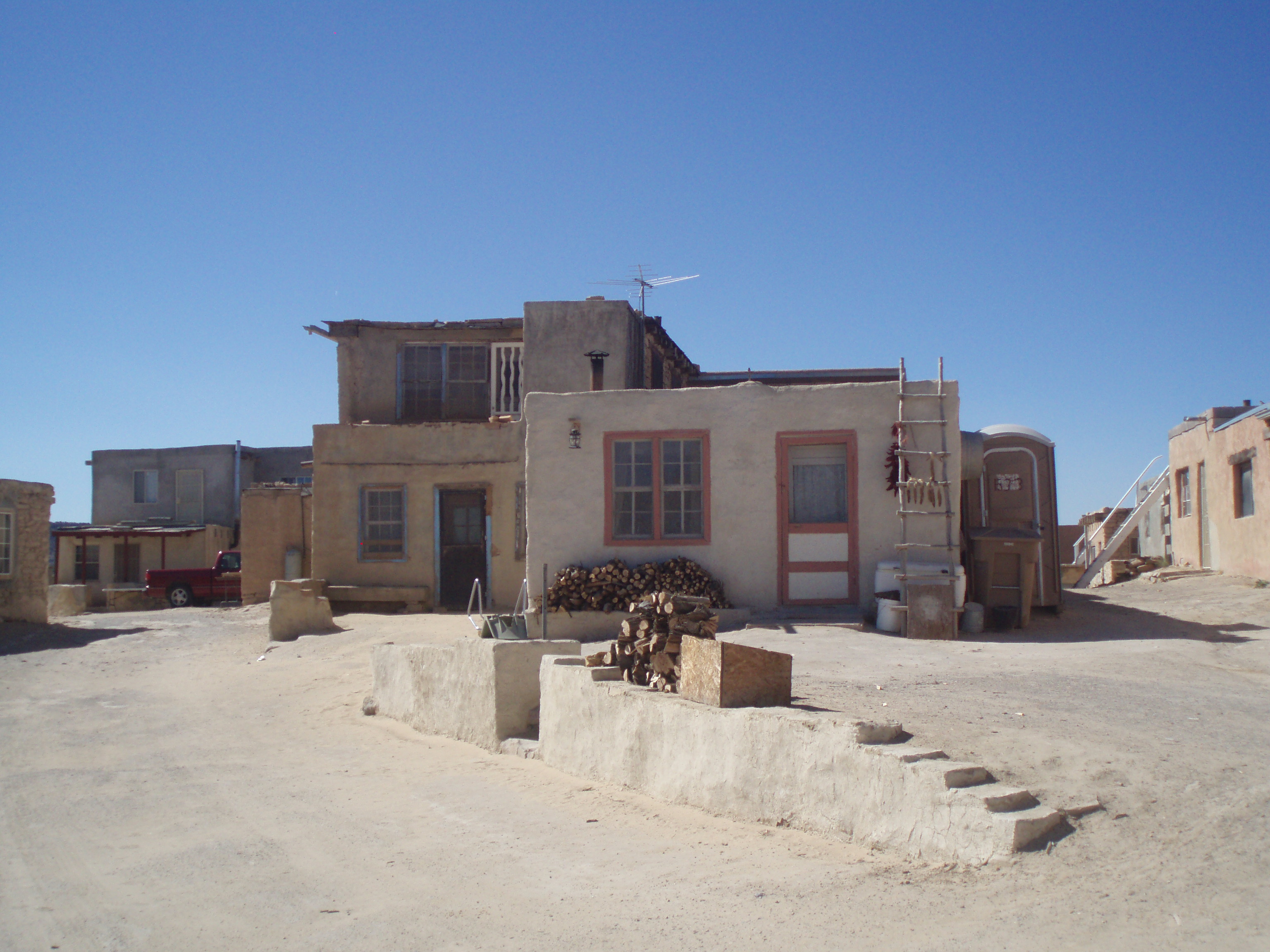
    Home24 Sky City has over 300 structures made of mud brick (adobe) and white sandstone.  The Acomas are a matriarchial society and mothers pass down the homes to their youngest daughter.  Here is a closer view of one of the homes.


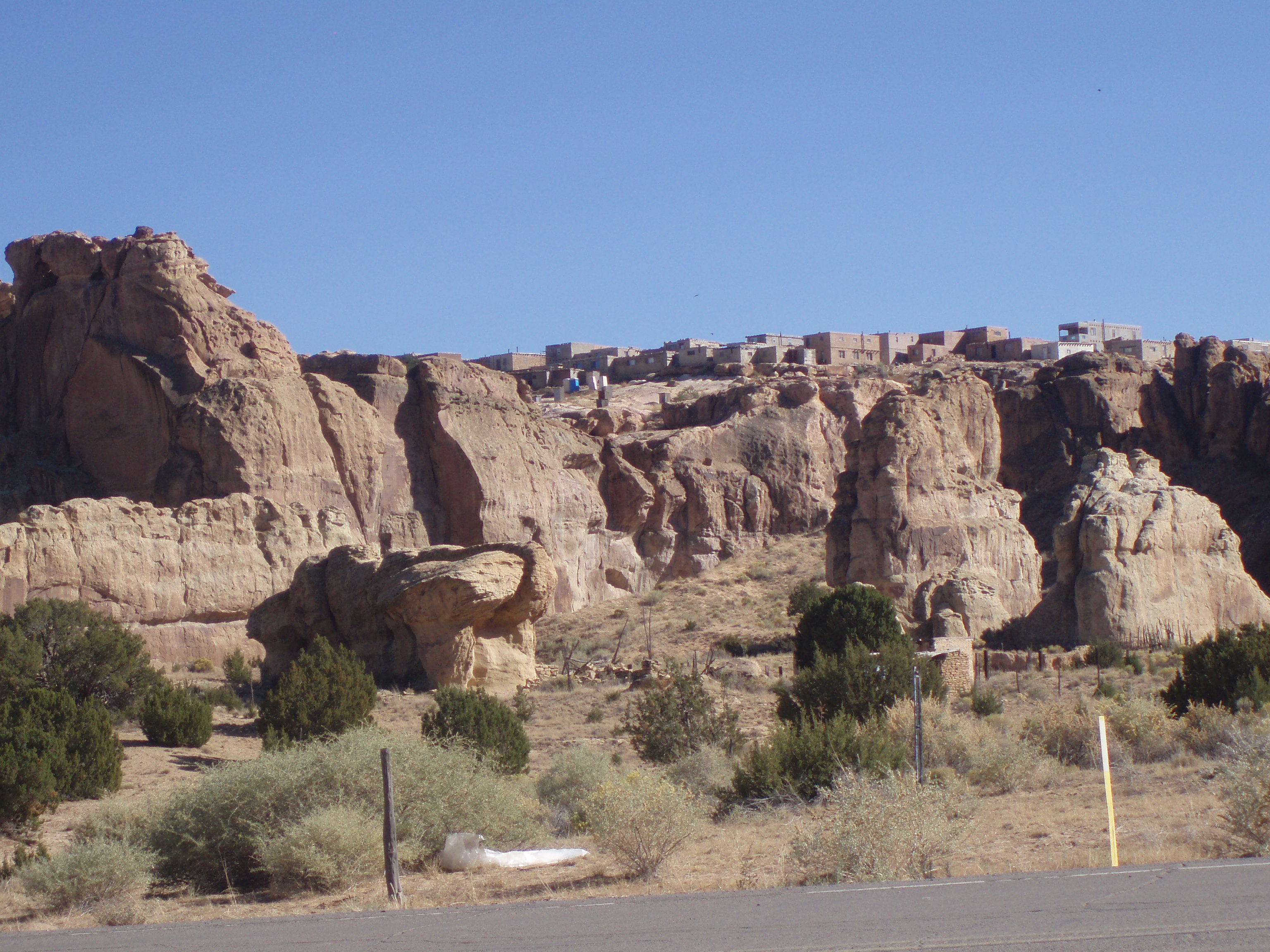
     Skycity from visitor ctr70 For defensive purposes, the Pueblo was built 370 feet above the desert floor, and untill 1959 was only accessed by hand cut trails. This picture was taken near the Museum and Visitor Center at its foot. It is an impressive sight looming above when you are standing on the desert below. 

    We had a very good native Acoma tour guide, whose English name was Gary.  He gave us a good overview of the history of his people.  As always with Native American history, it was not something that is exactly easy to hear, but it is something that all of us should know about. 

     Holy mountain 47 

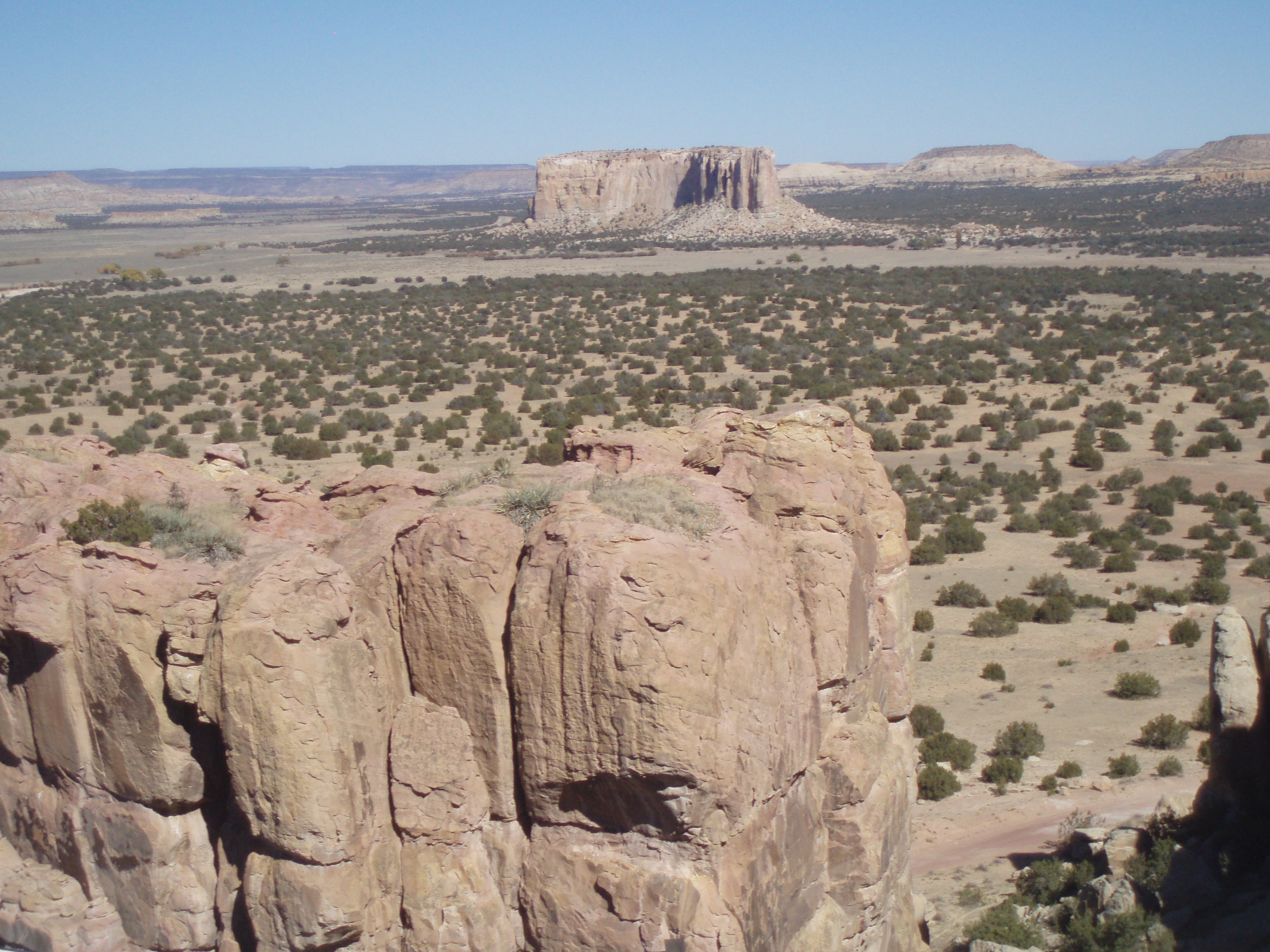
    The mesa in the distance is sacred to the Acoma people.  It was where they originally lived.  Their spoken history tells that once, when most of the people were on the valley floor, a terrible storm occured, washing out the only trail up the mesa.  There was no way to rebuild the trail.  A Grandmother and her grand-daughter were trapped on top, and rather than face a slow starvation, they jumped to their deaths. Prayer ladder 34

    Prayer ladders are still used ceremonially, to access the Kivas (religious chambers).  The arrow near the top of this one serves to protect three Kivas that are located on this passage way through the village.

    Because the Acoma still live in this village, it was a great opportunity to experience living history.  Acoma women are noted for their pottery and it was sold in the village and displayed in the museum.  Food was also for sale (homebaked bread and pies) and that is what we bought, because we don't know much about pottery, but we can always use a few good carbs.  

    Here are a few more pictures from Sky City.  We really enjoyed our day; it was an enjoyable way to increase our knowledge and, hopefully, understanding of Southwest history.

    Acoma worker 38 To the right is a picture of one of the ovens the Acoma have used for centuries to bake bread.           The gentleman at left is pounding clay to prepare it for the women to use in making pottery.    Bread oven 035


    AView and new house 43n Acoma family that has been living and working elsewhere and have now retired are building this new house on the edge of the pueblo, so that they can return to their ancestral home.  We were told that a lot of the residents go elsewere during the winter because of the zero to minus 20 degree weather. 

  • LANE COUNTY SUMMER

    Lane County, Oregon — it's a great place to spend a summer.  When we're here, it feels just like home, except in a smaller and more manageable house than the one we lived in for so many years.    That house, in Springfield, was a great place to raise a family but at this stage of life, our traveling home gives us more time and less work. 

    Ryan catfish aug 08 32 The best thing was just hanging out with our family and having a chance to visit with friends. 

    We had great times with our Northwest kids and their families — including all six of our grandchildren.  What could be better?  Most of the time, there were no special occasions, just the gift of having time to spend together.  The picture is our grandson Ryan, with two catfish he caught from our little boat at Fern Ridge Shores. 

    We did have one big family event, Andy and Denae's Labor Day wedding at Buford Park in Eugene. (He's our oldest grandson.)   It was a lovely day.  Click here to link to their blog where you can read about their fantastic adventures in India.  There's a wedding picture in there too.

    Click here (and scroll down) to read previous posts about our Oregon summer.  Here are a few extra random bits.  

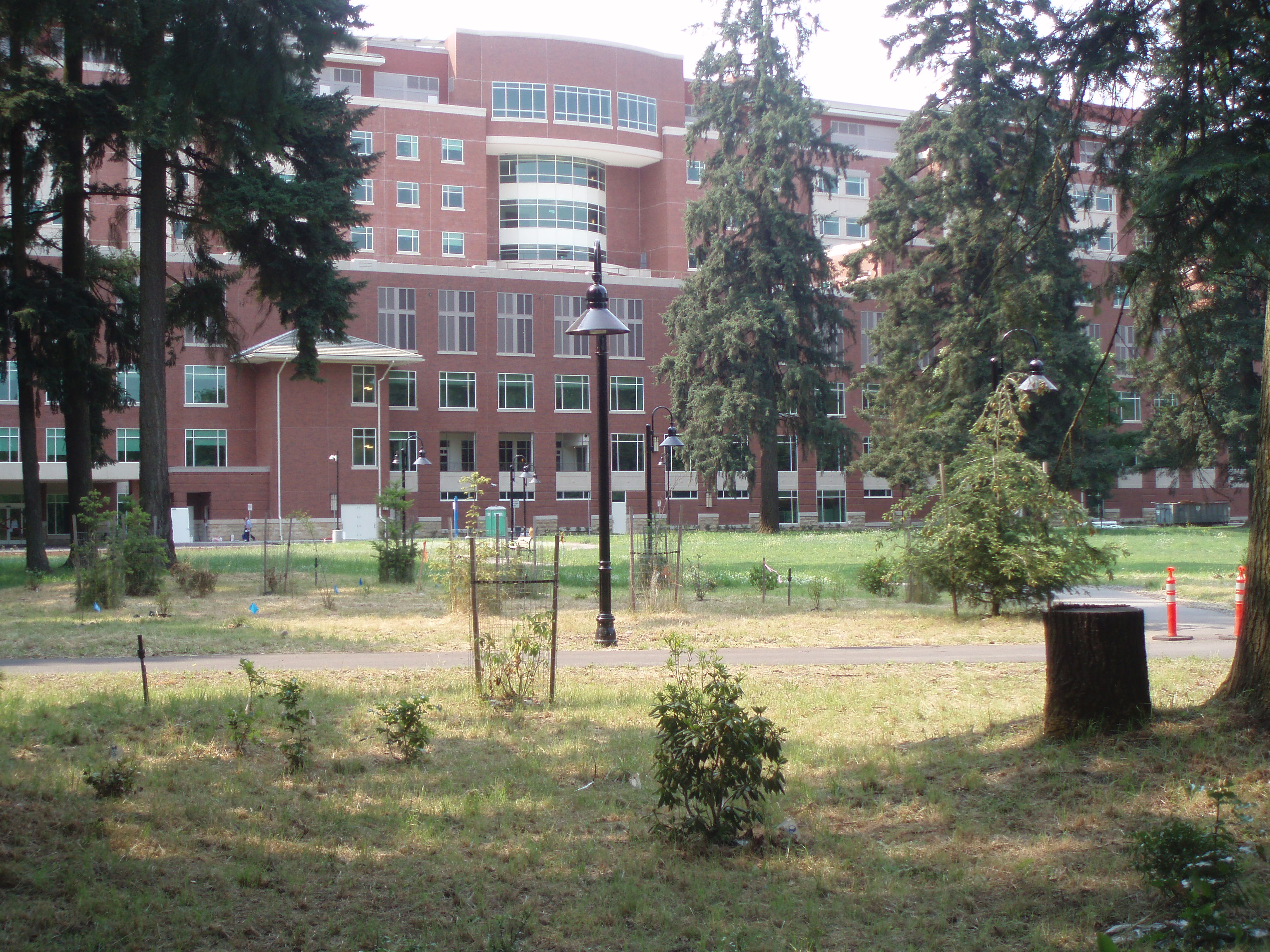
    Spooky island g 6 This picture is Spooky Island on the lower McKenzie River.  It's about three miles from the RV Park in Coburg where we stayed in July and just a few blocks from where we used to live in Springfield.  Our kids used to play here.  There is a huge new modern hospital now right across from here (where there used to be bean fields that provided summer jobs for all the neighborhood kids, including ours).This is it:Peace health hosp riverbend11


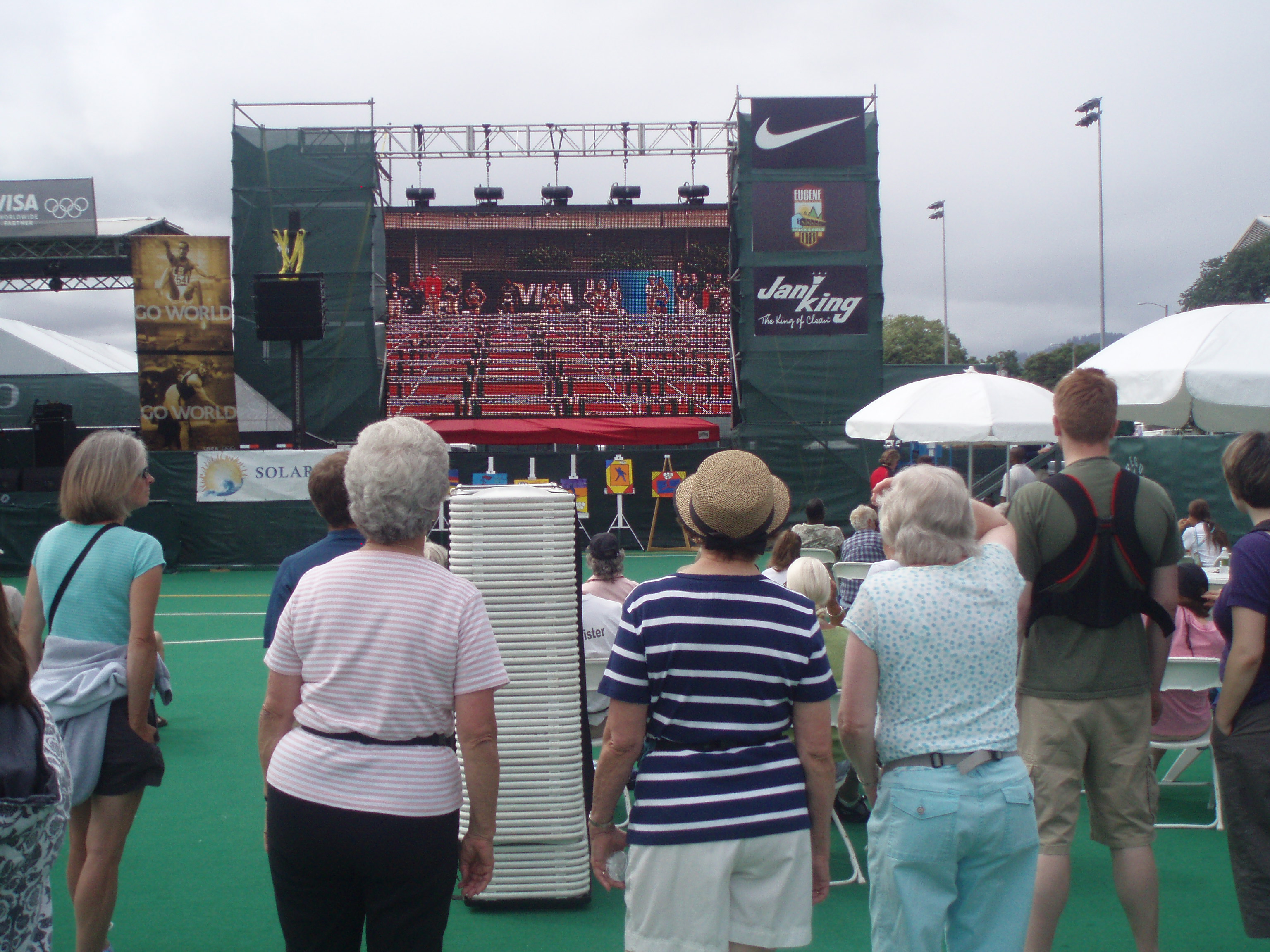
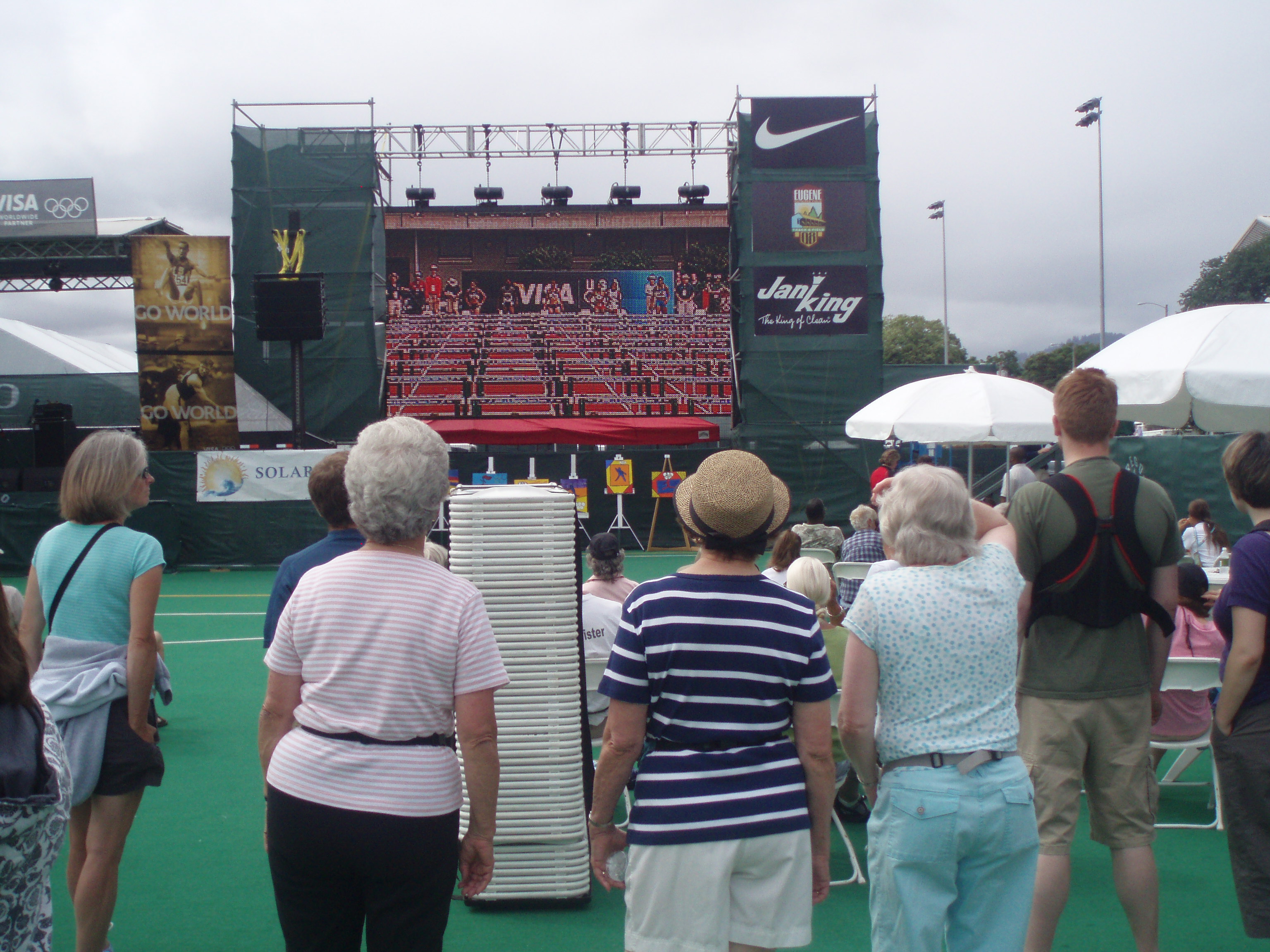
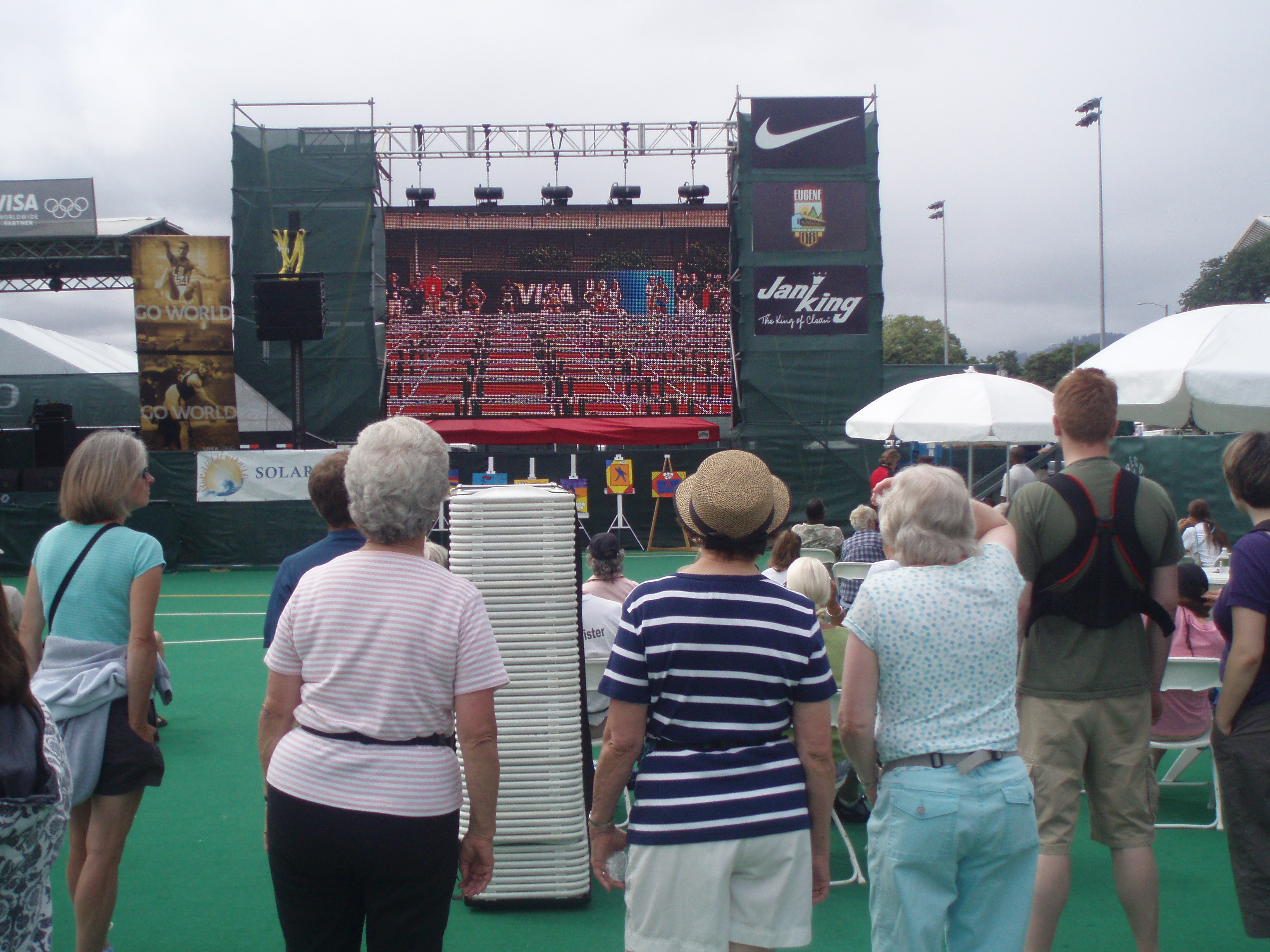
    Oly trials 14 Some friends and I had fun on a 6K Volkswalk that took us through the Olympics Track Trials Fan Village at the University of Oregon's Hayward Field.  We got to see some of the meet on the big screen and enjoy the excitement — no cost, and great fun and exercise.  Eugene did a very good job on the Trials. I thought it would make it more fun to watch the Bejing Olympics, but sadly nobody we saw did very well there.   

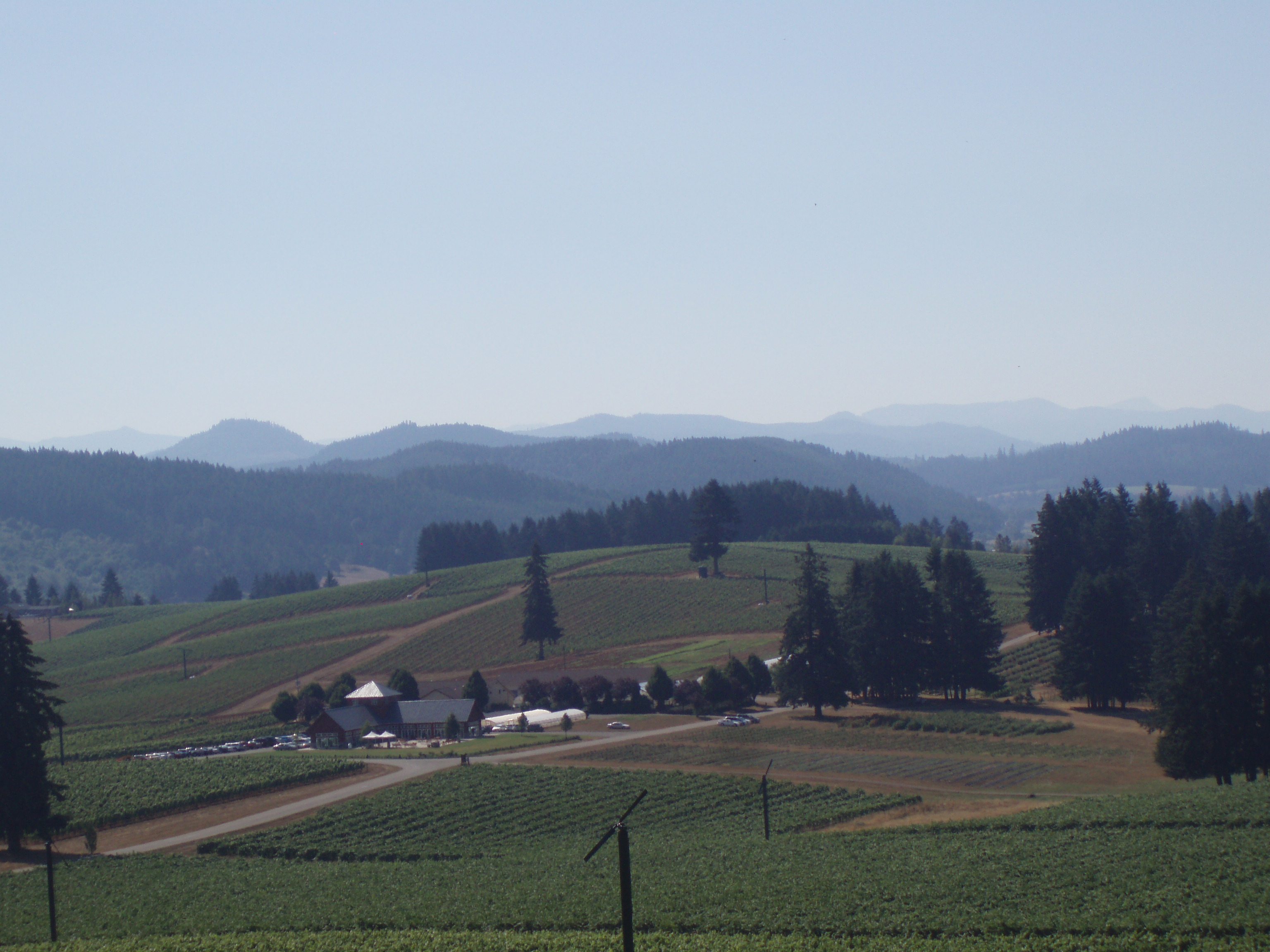
    Oregon has a bunch of excellent wineries, several in Lane County.  The picture below right is at King Estates, probably the best-known one.  King estates06

    The wine is good and the scenery is terrific.

    One day we drove to McMinnville with friends to see the Spruce Goose Museum (below). It's an interesting museum and kind of amazing story the way this iconic plane ended up in this tiny town.  That is one big plane!  There are a bunch of other air-related exhibits, the miniatures of the plane's interior and exterior that were used in shooting the film "The Aviator" and an I-Max Theater. 

    Sg021 

    Our feet start to get itchy when Oregon's rainy season approaches.  But since we never have quite enough time to see all we want to of our family and friends, it is always hard to leave Oregon.  I guess we have split personalities.  When we're in Oregon, the part of us that enjoys routine and familiarity kicks in and it becomes difficult to leave.  We always seem to put off our departure day several times before we finally hit the road.  Thus, it was mid-October before our summer in Lane County ended. 

    We enjoyed every minute of it.  Thank you everybody for the wonderful times.  We love y'all!

  • LIBRARIES

    I’ve always loved using public libraries but thought we’d have to give them up when we sold our Springfield home to travel full time.   But we’ve been pleasantly surprised to get a visitors card in several of the places where we’ve stayed a few months.  You’d kind of think that people who could pull up their house and leave at any time would be poor risks for borrowing books, but instead we have found that Winter visitors are welcome to take out a card. There's a small fee ($8 to $10 so far) and all they ask is an RV Park address and our cell phone number.

    It’s great to save money by not having to buy books for a few months.  But besides that, I like the ambience of a library.  I like to look at books and imagine having time to read them all.   

    SeattleLibrary When we visited my sister and brother-in-law in Seattle recently, we toured  the amazing Seattle Central Library which opened in 2004.  The architect was Rem Koolhaas.  The print guide to the library is called "Cool House", so now we won't forget the name of that architect. 

    I wondered if a building this massive and modern would even feel like a library.  It really does because there are lots of small and friendly spaces within the big one.    Although the map room alone (for example) is as big as some of the small libraries we’ve used, the whole building has been designed for readers.  There’s a café inside, a large but cozy reading area called the living room, and tables and chairs in every section. 

    We learned that Koolhaus chose the art work and furniture as part of the design.  The different levels are built as ramps, similar to a parking garage, with the shelves arranged crosswise and leveled.  The Dewey Decimal System numbers are incorporated into large blocks on the floor, so it is easy to find the section you want.  My sister found a book of Kentucky history that mentioned one of our great-uncles.  (He fought a duel over politics – but apparently both parties were poor shots and nobody was hurt!)

    The whole library is e-wired and there are tons of computers everywhere for public use. 

    Lib view31 This is a view from a top floor window.  You can see the Amtrak Station Tower. 

    The library was only a small part of our most excellent personally led tour of the wonders of downtown Seattle.  Our guides had to go back to work on Monday.  It was raining and we had some time before our train so we hung out there for a while reading magazines, drinking lattes and exploring the stacks.   If I lived in Seattle I’d be there a couple of times a week.  Maybe more often during the rainy season!

    P1010001 But while we’ve stayed on the lake this summer, Cyndi and Jeff have let us piggyback onto their family card at the Fern Ridge Library here in Veneta (pictured at left).    It’s considerably smaller, but there are, after all, considerably fewer people here than in Seattle.   We have borrowed great books and the staff is so friendly.  No lattes though!    This library also gets a lot of use – when I stopped by one afternoon the school bus let about ten high school kids out right in front of the building.  Before I left, they were on the computers doing their homework or quietly searching the stacks.  I love that libraries are a welcoming place for every age. 

    No matter what size it is, a library is a great community resource and I am always happy when we get to use one again.