More pictures from our RoadTrek van camping vacation earlier this month. Although we didn't get to do as much "exploring" Florida as usual this year, we made the most of the camping trip we did take. We always enjoy discovering more about "old Florida" or the "real Florida" as some refer to what's left of it.

We stayed for three nights in a campground on the Seminole Indian Reservation. The reservation is located in the heart of Florida's everglades and is quite far removed from any urban area. The campground where we stayed was located just across the Josie Billie Highway from Ah-Tah-Thi-Ki, the Tribe's Museum. In the Seminole language, the museum's name means "place to learn and to remember." We were happy for the chance to learn more about these original Floridians (and, I hope, to remember).

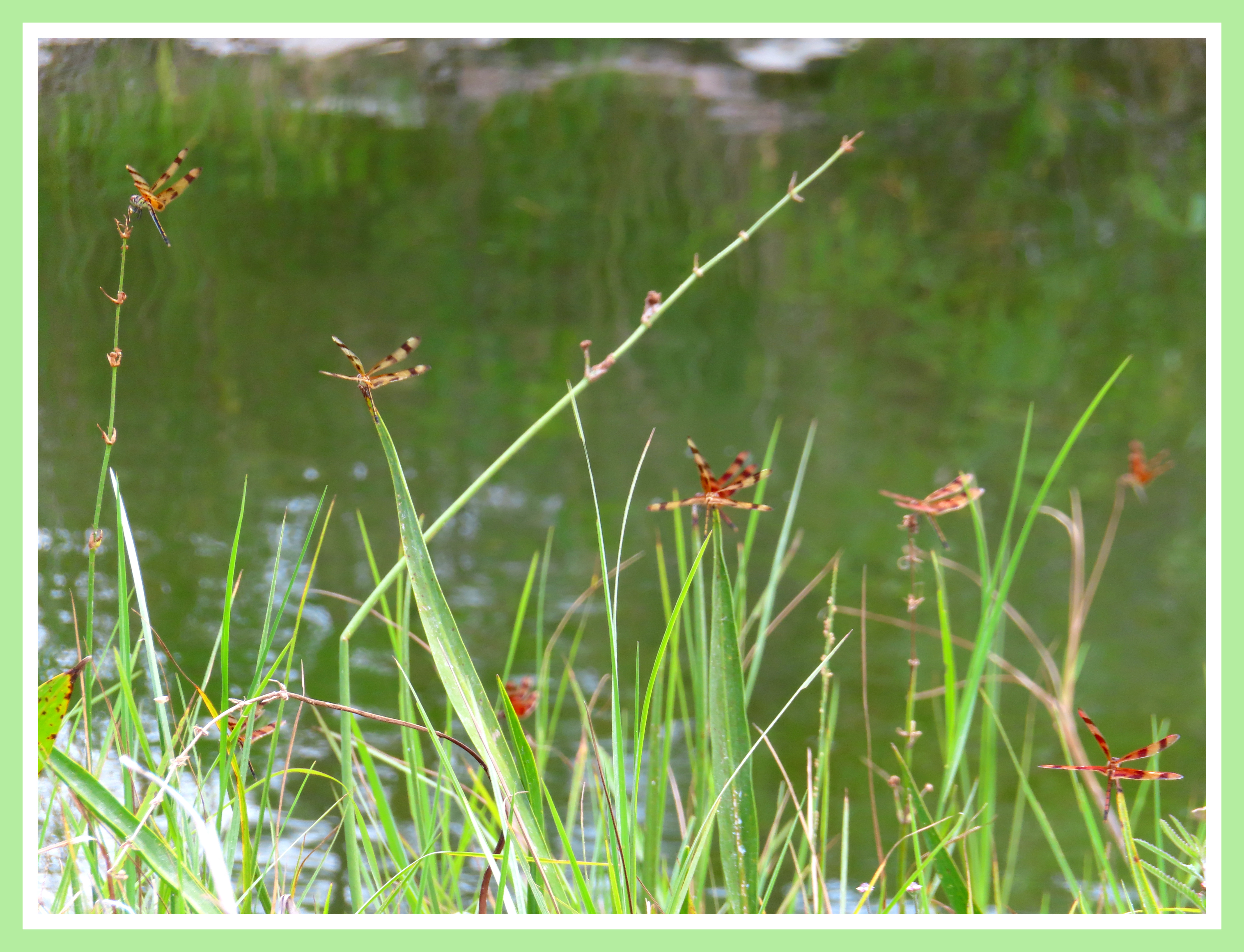
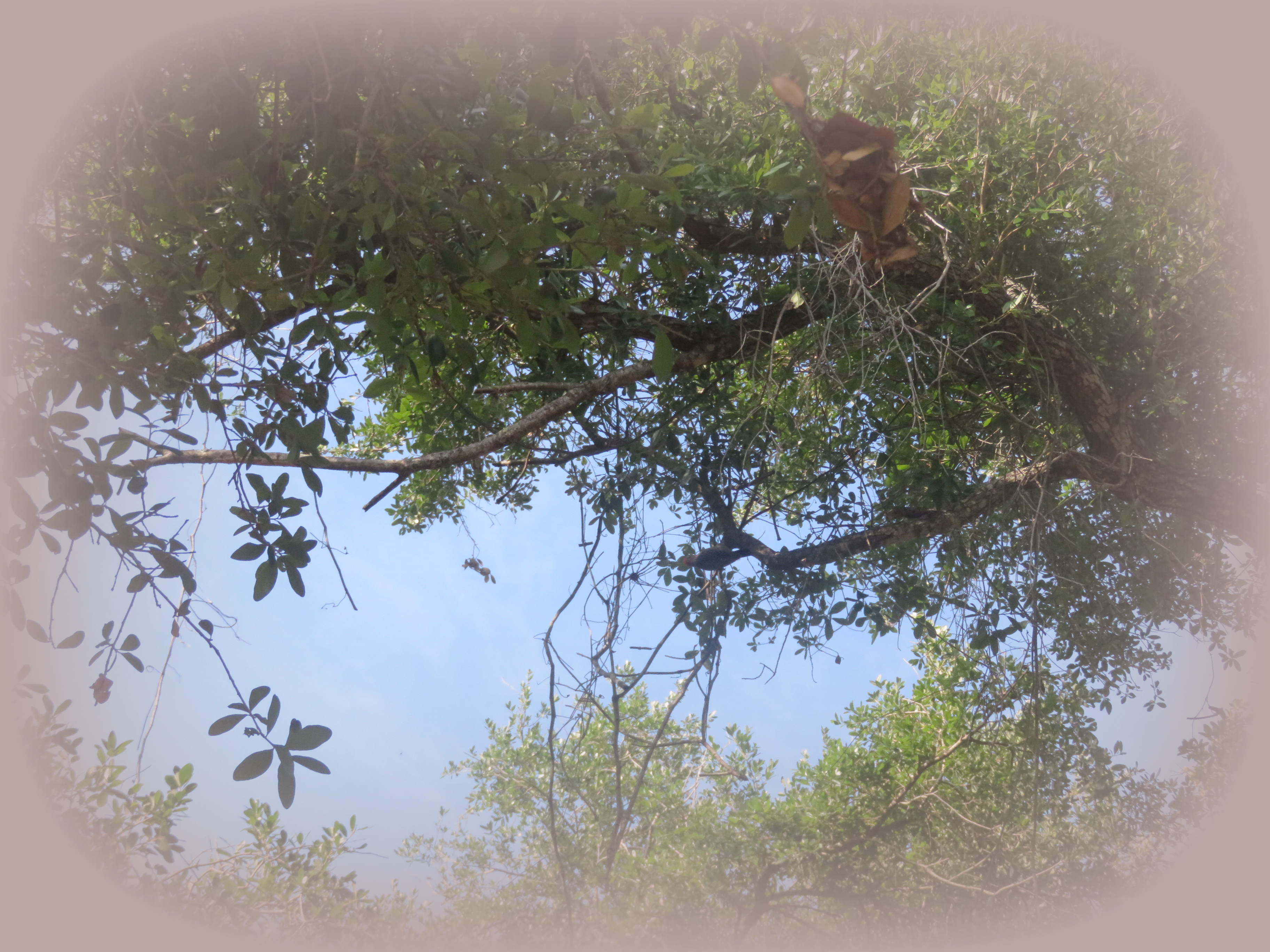
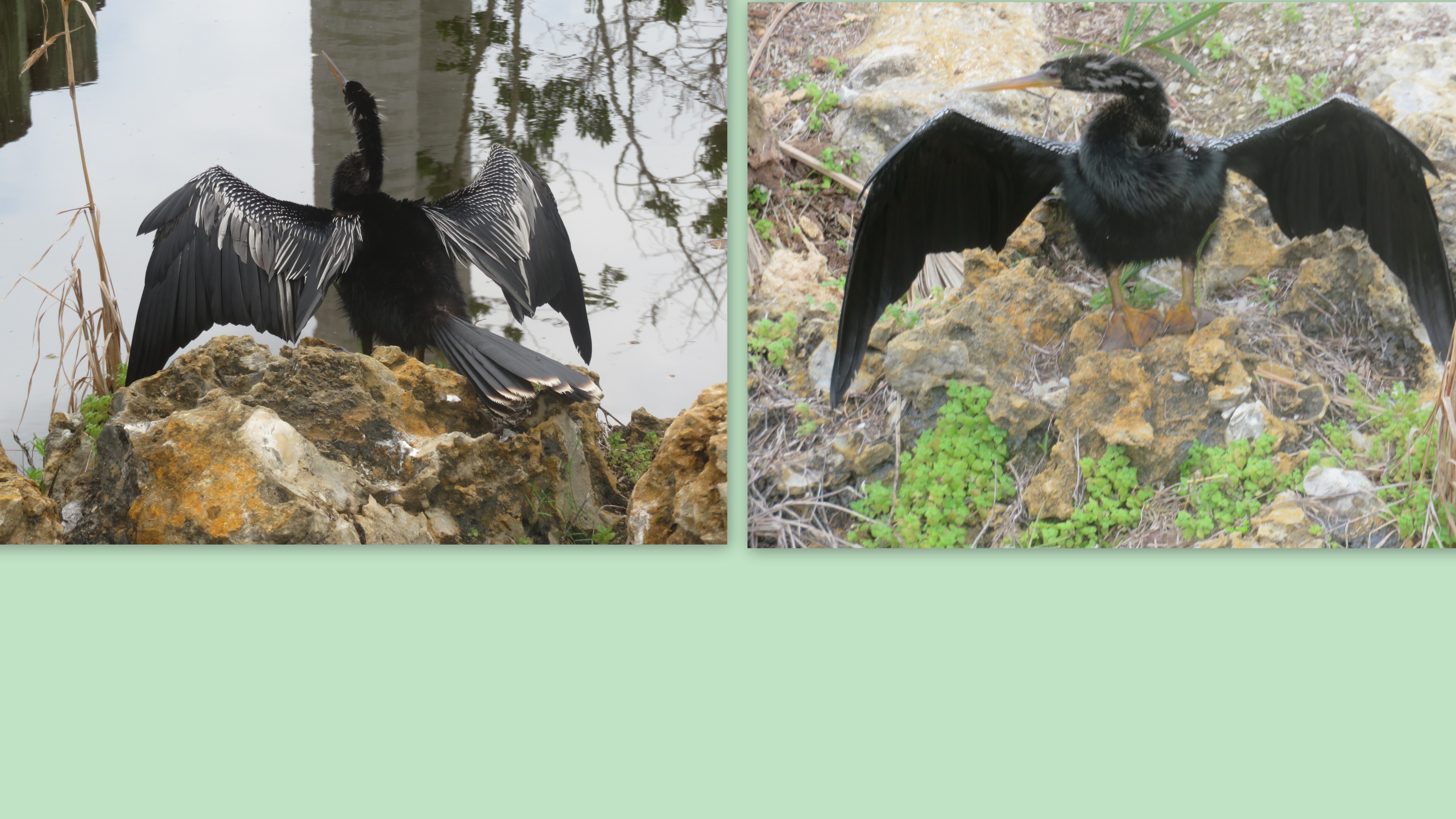
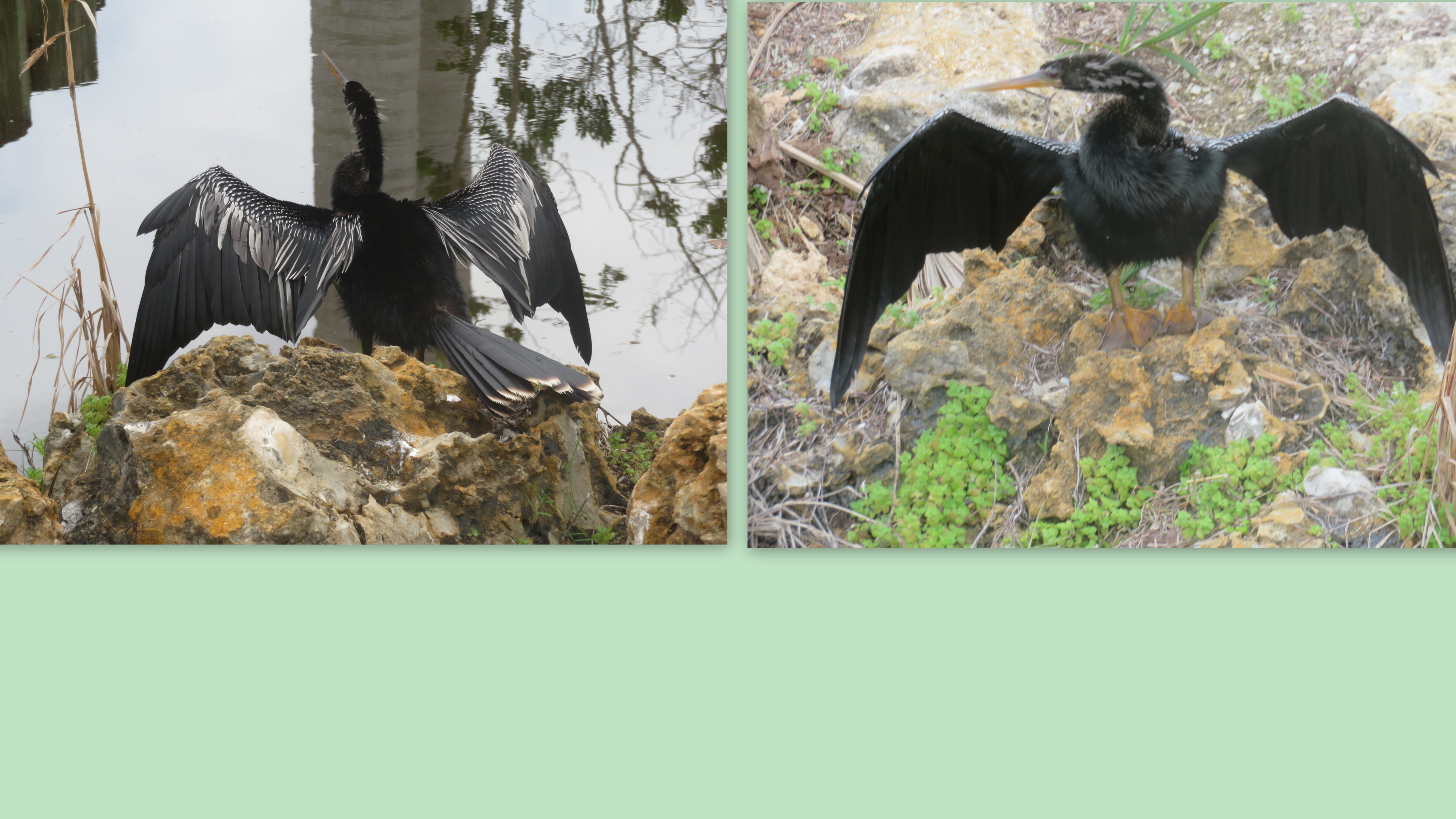
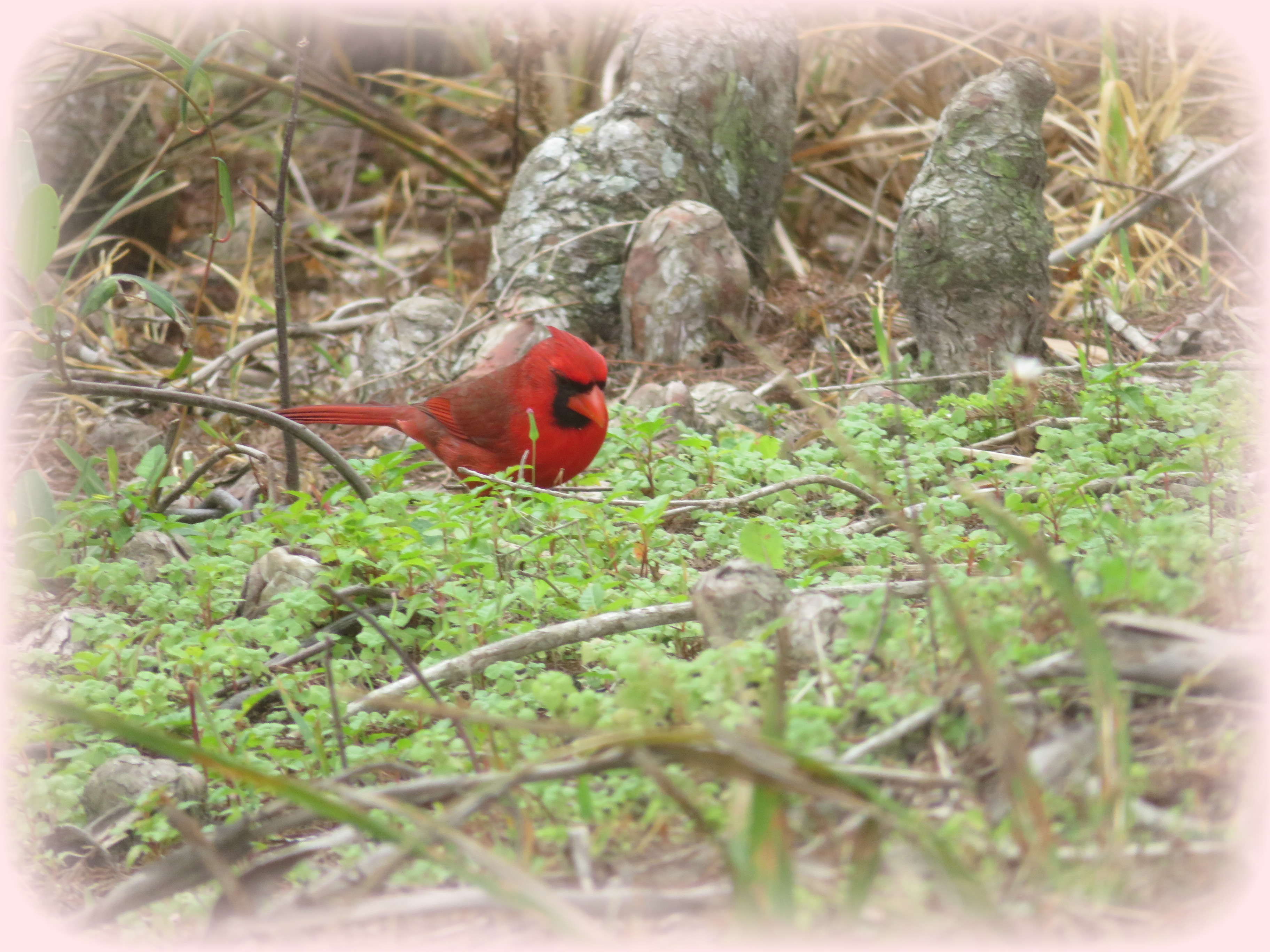
Most of the pictures in the Mosaic above were taken on the one-mile boardwalk through the cypress dome behind the museum. (The hawk and woodpecker were Campground visitors.)
The Seminole Tribe of Florida is a federally recognized Indian Tribe. Their website states "our ancestors have lived in the Everglades since creation."

Inside the Museum, we watched a well-made orientation film, providing a brief overview of Seminole history through interviews and filmed re-enactments. The Goal of the Museum is to Respect, Celebrate, and Preserve the Seminole History and Traditions.

Seminole Wars Diorama, AhTahThiki Museum
The Seminole Wars were three military conflicts between the United States and the Seminoles that took place between 1821 and 1858. In an attempt to gain land for white settlers during those years, the United States was in the process of forcefully relocating all Eastern Tribes to Indian Territory (now Oklahoma). Some Seminoles complied but others resisted violently. Their warriors used knowledge of the land to hide and attack. Instead of continuing to hunt these people down in the difficult terrain, the US Military Forces changed their strategy and attempted to burn and destroy Seminole villages and crops. Some then went to the Indian Territory, but others fled deeper into the everglades. Active fighting ceased in 1858 because the bands of Seminoles remaining in Florida had fled deep into the Everglades to land unwanted by American settlers (or land that military forces could not penetrate, depending on which accounts you read.) The Seminole Nation is the only Tribe in America that has never signed a peace treaty. In all, the Seminole Wars were the longest, most expensive, and most deadly of all American Indian Wars.

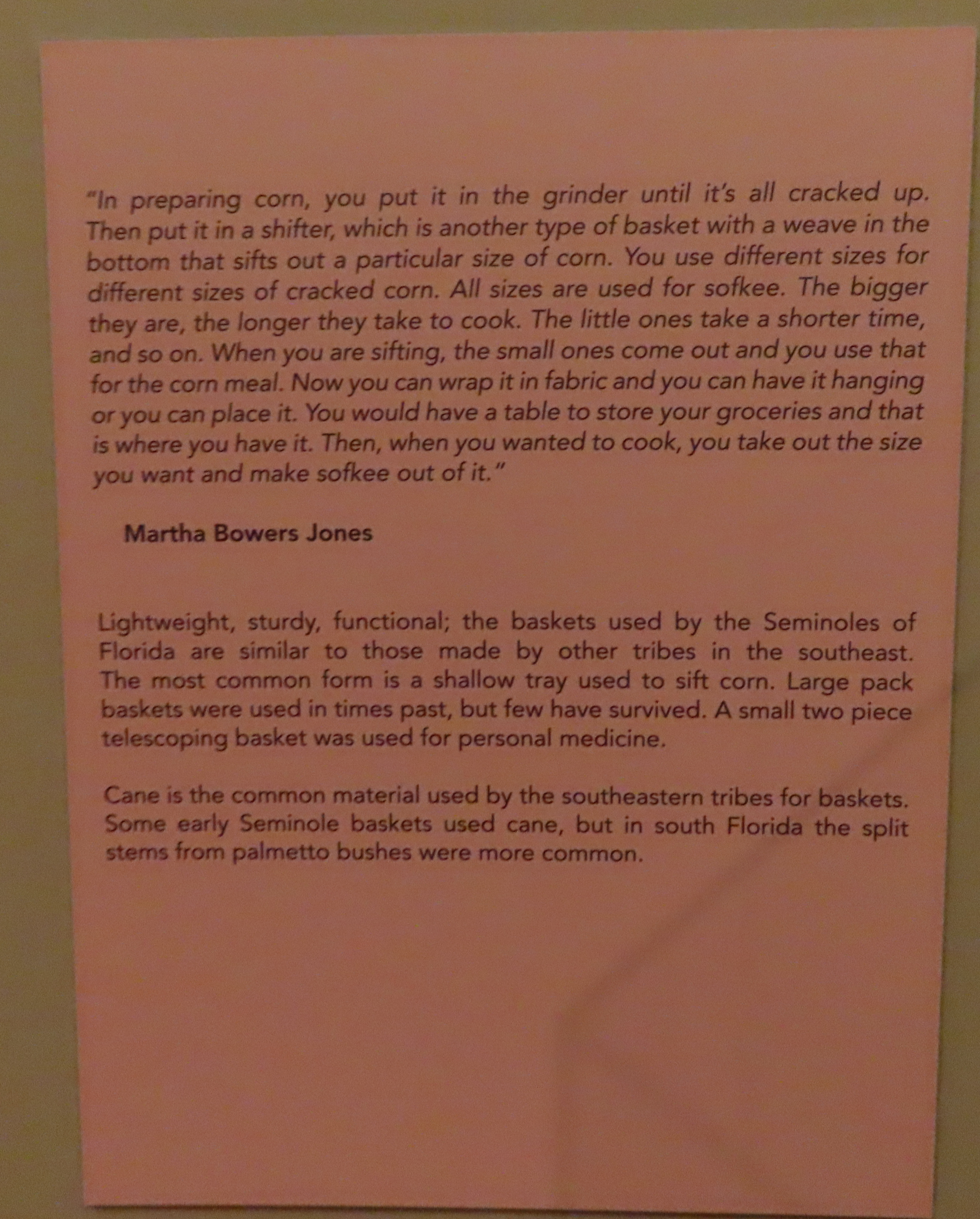
Seminole Basket Display
Not only did the Seminoles not sign a treaty, but in many ways, nowadays it also appears they won out in the end. The Seminoles of Florida own six gambling casinos in this state. (As a sidenote, there are none at all in the Seminole Village where we stayed). The Tribe also owns the Hardrock International chain (all of them). As the Tribal Chairman said in the video we watched "gaming has been very good to us."
The Chairman also said "today we fight our battles in the Courts." Just shortly after we returned from our vacation, we read that the US Supreme Court allowed to stand a verdict that gives the Seminole Tribe the rights to on-line gambling in the State. Isn't there a saying that revenge is a dish best served (very) cold?

Making Sofkee (corn flour)
Several years ago, tribal historians interviewed people who still remembered taking part in some of these old traditions and their words were displayed with each of the domestic dioramas.

No passports are required to enter the Seminole Nation, but it really is a separate state and country in many ways. We drove around the Village and looked at the facilities and homes. Here, the Tribe of Florida has its own police, schools, medical facilities, safety and law enforcement, and road department. It isn't a poor reservation obviously — the community buildings in the village were new, most older homes looked well-kept, and there were several subdivisions of newer homes that looked much like many such developments anywhere in Florida.

Except here almost all the homes had a grass-roofed chickee hut in their backyard, present day versions of the ceremonial chickees of the ancestors. The woodpile would be for food smokers and bonfires, not for winter heat, which isn't needed much here.
We enjoyed our visit and are always grateful for having a chance to learn more about the history of this area.
LINKING this week to the following, with thanks to the hosts:
SATURDAY CRITTERS ; NATURE NOTES; MOSAIC MONDAY; THROUGH MY LENS; TUESDAY TREASURES; MY CORNER OF THE WORLD; SIGNS SIGNS; THANKFUL THURSDAY; and SKYWATCH FRIDAY


 Spring 2020, Oregon