(In real life, we are happily at home in Eugene Oregon and pretty much settled in for the summer/fall season. It is only on the blog that we are still traveling.)

When we stopped in Southeastern Oregon on our way from Colorado, we stayed in the village of Frenchglen. The town as well as a wilderness area in the State called French Pete are named for Peter French, who, back in the 1870s, became the first "cattle king" of Oregon. (There is a long history of cattle ranching and grazing here in the wild wild West.) The information below about the barn French built is from informational signs placed by the Oregon Historical Society.

"In the spring of 1872, 23-year-old Peter French set off from California headed for Southeastern Oregon with about 1200 head of cattle, 20 horses,a few supply wagons, half a dozen cowhands and a cook. he eventually established a ranching operation that grew over the next quarter-century to 200,000 acres.
Peter French built this unusual barn around 1880. He and his hands used the barn for breaking and exercising horses during the winters. About 300 head of horse and mule colts were foaled each year. Most were kept to work on the ranch. The barn is placed on high ground for better drainage — it encloses a 60 foot diameter stone corral. The conical roof is supported by a 30 foot juniper center post and 13 other posts.
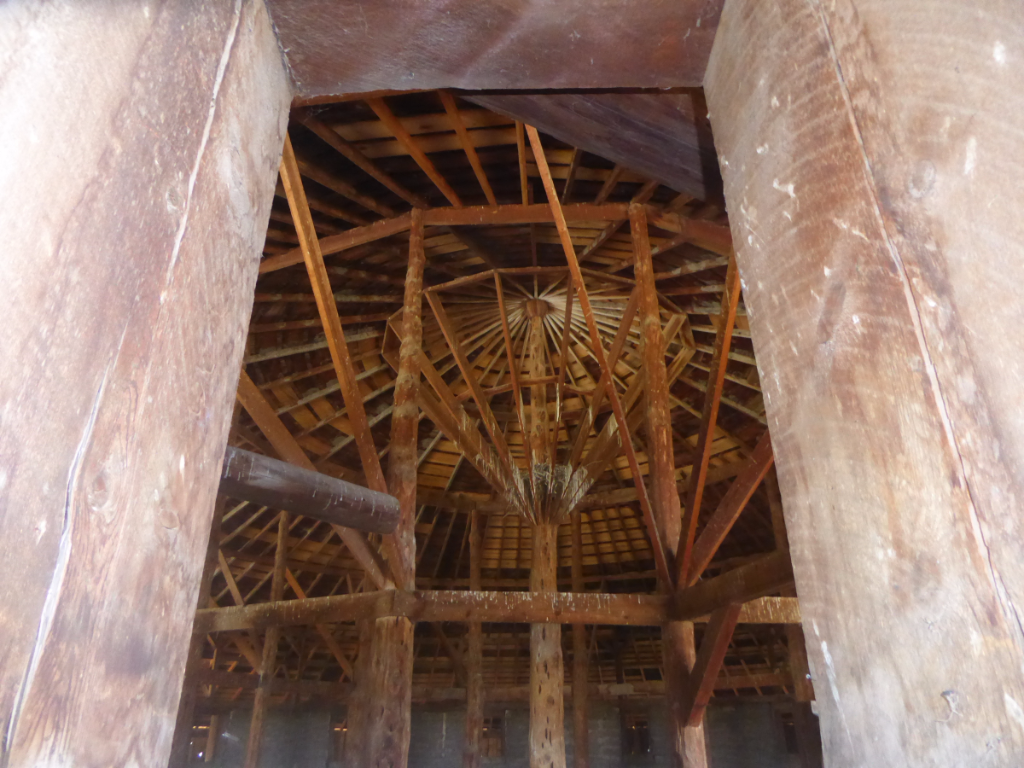
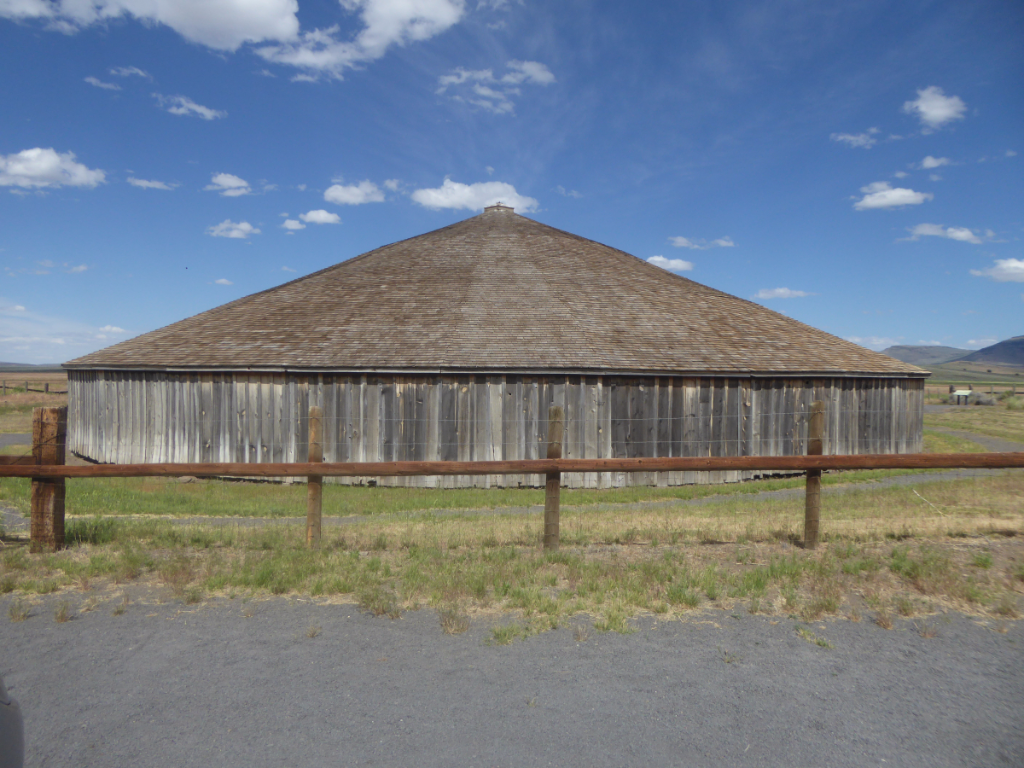
'The Round Barn's circular pattern was used to keep the young horses traveling smoothly safely and continuously without corners to stop their progress. Peter French's innovative Round Barn was ahead of its time. "
The historic structure including two acres and an access easement was deeded to the Oregon Historical Society in 1969 by the Jenkins family of local ranchers. It is open the public at no cost.
Pictures in the collage below are not only part of the natural beauty of this area, but also an interesting part of its history:

About 17 miles from Frenchglen on the Steens Mountain Loop Road are some beautiful meadows — they are on private land, but the owners do not try to prevent the public from enjoying this beautiful and historic area. There is no path — just open meadows with beautiful aspen trees. We walked in (as we had done on all of our previous visits to the area) and enjoyed the sunshine and relatively flat walking after our time up on the mountain.
These meadows are known as having one of the more unusual geographic feature names in the United States. According to Lewis McArthur, the author of "Oregon Place Names":
'In the early days “sin” was considered an unavoidable adjunct of life in the cattle and sheep country. During the summer one or more of the female entrepreneurs from Vale would set up facilities under canvas in this accessible but secluded meadow a mile east of Fish Lake. Houses of this category, wood and canvas, passed with the end of open cattle range and all that remained was the name on the slopes of Steens Mountain: Whorehouse Meadows."
In the late 1960s, the BLM and the Bureau of Geographic Names had a fit of prudishness and without public notice changed the name of this geographic feature to "Naughty Girl Meadows". The ensuing public furor eventually caused the U.S. Board of Geographic Names to find for history and honesty. Current topographic maps show the original name.'
A couple of decades ago, when we first visited this area, you could still see scatalogical drawings carved into the aspen tree bark. They were said to have been made by men waiting in lines. Now (perhaps fortunately) those aspens either have blown over or grown so tall that the carvings are no longer visible.
Happily the meadows have gone back to their natural state — with only the name a reminder of the rough history of the Old West in this remote corner of the world.
LINKING this post to: OUR WORLD; SIGNS SIGNS; GOOD FENCES; SKYWATCH FRIDAY; TREES & BUSHES; and THE BARN COLLECTIVE
Thank you to all of the hosts.
We appreciate all visitors and commenters! Thank you.