Category: Florida

  • AN AIRBOAT EXPERIENCE


    Dozens of places in the areas surrounding Everglades National Park offer Airboat experiences.  But we have resisted the temptation every time we've visited the Park until last week.  

      P1030012-001


    And we enjoyed the ride!   


    I chose the picture above because the hammock (that's what they say here in Florida — we would have said hummock) gives some perspective to the picture… but there are other hammocks that look just the same — and there are huge areas that are nothing but sky and grass.  It would be SO easy to get lost.


    P1030011


     Many of the people on the boat were most excited for the chance to see alligators in the wild.  But we've seen hundreds and hundreds of them — quite a few earlier on this trip in fact (and don't worry, I'll be showing them later).  The best part for us was being somewhere out in the middle of all that grass with no land in sight (everything looks the same)  – and realizing that the Everglades really and truly IS a Sea of Grass.


    Besides that it was just plain fun.


      Coopertown airboatBecause it has rained so much more than usual this winter, the glades are wetter than usual, but there were enough places that had very little water so that we got the idea of gliding over the grass.   

    Airboats are used for more than tourism — ecologists go out in them to get rid of invasive plants and they were even used to rescue people during Hurricane Katrina.   

    I forgot to take a picture of our boat — the one on the left is from Coopertown Tours which was the Company we used.    

    Our boat was longer than this one …. I did turn around to take a picture of the pilot up on his high seat (below).

    Here is a brief explanation of an airboat (taken from Wikipedia) and you can go to this link to read more.  

     An airboat is a flat-bottomed vessel propelled forward by an aircraft-type propeller and powered either by an aircraft or automotive engine.  They are used for fishing, hunting and ecotourism in marshy or shallow areas where a standard engine with a submerged propeller would be impractical.  The engine and propeller are enclosed in a protective metal cage that prevents objects, wildlife (and passengers) from coming in contact with the whirling propeller.  Stopping and reversing direction are dependent on good operator skills.

    2016-02-07


    Our driver (pilot/captain) is stopped in the middle of the sea of grass to answer passenger questions.  The other pictures were taken over the edge of the boat during calmer times on the ride.


    Sharing the ride with OUR WORLD on Tuesday; with MOSAIC MONDAY; and with WEDNESDAY WATERS

    Thank you to Lady Fi, Sylvia, Sandy, Arija, Gattina, and Jenn for OW;to Judith for MM; and Gemma for WW.


  • IN THE NEIGHBORHOOD

    We will be out and about much of this week (bringing back lots of pictures, I hope).    I should be able to link and visit others from the IPAD, but it's hard to post from it.  So this is a combination close-to-home pictures over the last couple of weeks — to share with a larger than usual combination of memes.   Thank you to all of the hosts.


    P1020932

    BUTTERFLY WALK, MANATEE PARK


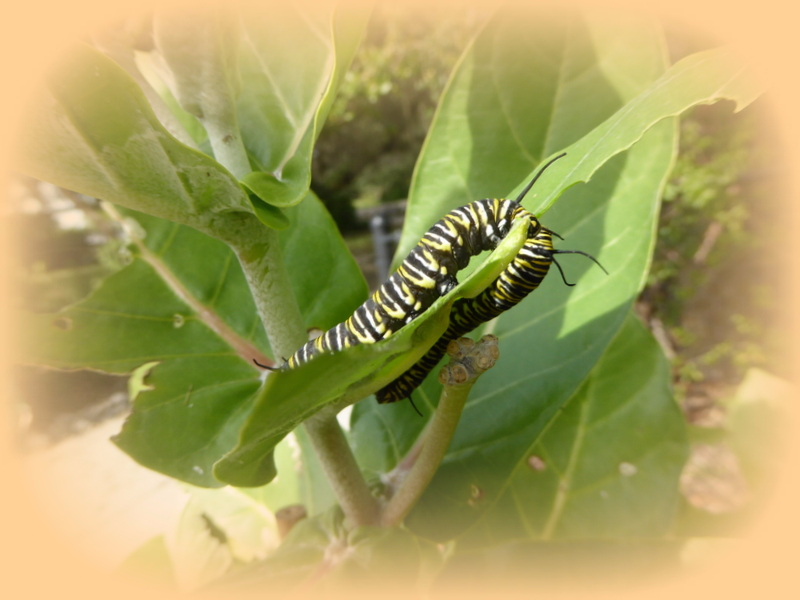
     I counted over a dozen Monarch caterpillars on the Milkweed plants. The Garden Club that maintains the flowers wanted to use all native Florida plants, but the caterpillars ate the native milkweed down to nothing in no time at all.  So the club decided to include the imported Giant Milkweed.  These plants are larger in area and with larger leaves, serving as host plants for many caterpillars.


    2016-01-30


        WHERE THE EAGLES ARE


    This is the horse pasture where the world-famous Fort Myers Eagles live.   Harriet hatched two eggs last week, so everyone is on nest watch.  Our Eagle family has had some interesting times since I posted about them last year and I will tell you more about that another time.  (With good news from the nest, I hope.)


    2016-01-302


    SIX MILE CYPRESS SLOUGH

     This wonderful County Park remains one of my favorite places ever.  After several dryer-than-usual years, this year has made up for it by being  wetter-than-ever, even now during the dry season here.  And while I don't love rain, it is good to see the Slough full of water and the foliage green instead of brown. 


    2016-01-303

     MANATEES AT THE PARK — the real reason it is here


    Not the best pictures, but while I love the flowers and butterflies and birds, the manatees really are the reason the park is here.  The water was alive with them on Saturday.   It's been colder this month so they flock to this section of the Orange River where the water is  warmed by a nearby power plant.  When the weather warms up, they will disburse again into the Caloosahatchie and the Gulf.  These huge mammals don't feed while they are at the Park — they are herbivores and there isn't too much for them to eat — it is just kind of a giant hot-tub for them.  (So it is almost impossible to get a picture of the whole animal — they only poke their noses up once in a great while for a breath of air.)  They can stay up to a week or so without eating.  (I hope it warms up by then too).  


      Reddish egret1


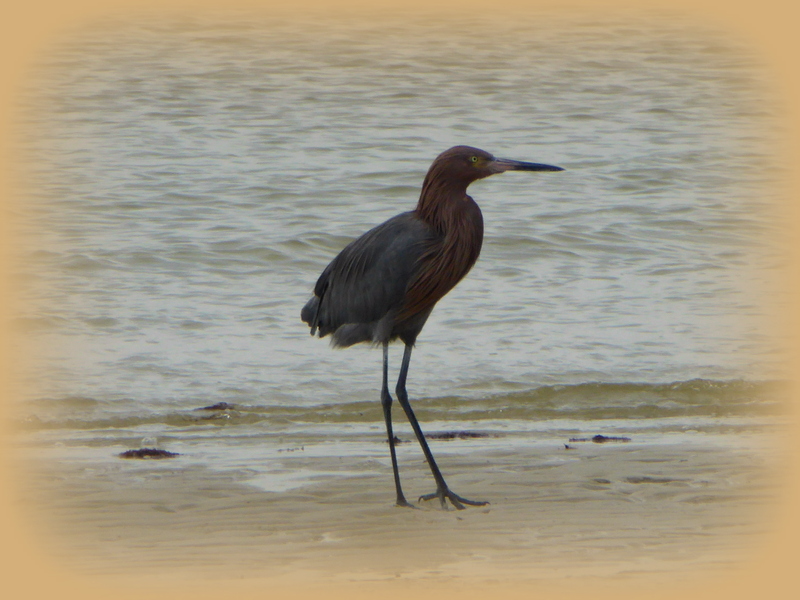
    BUNCHE BEACH – REDDISH EGRET


      Linking to OUR WORLD on Tuesday; NATURE NOTES; MOSAIC MONDAY; WILD BIRD WEDNESDAY; WEDNESDAY WATERS;  GOOD FENCES;  SKYWATCH FRIDAY; SCENIC WEEKENDS; SATURDAY CRITTERS; and RATHER B' BIRDING.


  • THE JOY OF SHORE BIRDS


    Even though I have a tough time identifying them, watching shore birds always make me happy.   I had a huge smile on my face the whole time we were at Bunche Beach last week, because we saw so many. And also a puzzled expression because there were so many different kinds of birds and nobody there to answer questions.  (I only saw two other people that cool morning and they were looking for shells.)


    P1020833-001

    I think that's another of the Willets that I showed last time, but I am not sure of the little guy.    I like the way the different shore birds seem to get along sharing the same space — there's a lot of difference in their sizes as this picture shows.


    2016-01-162


    Based on an ID a birder gave me when we were at another beach once,  I think this is a Marbled Godwit.  


    2016-01-165


    Lots of good stuff to eat under those rocks.  And also I wanted to include these pictures because it's a little bit of color on what was quite a monochrome day at the beach.  And of course I almost can't do a bird post without one or two "bottoms–up" pictures.


    P1020866


    I still can't ID him.


    Linking this week to: SATURDAY CRITTERS; OUR WORLD on Tuesday; MOSAIC MONDAY; NATURE NOTES; WILD BIRD WEDNESDAY; and WEDNESDAY WATERS.    Thank you to all of the hosts for this opportunity to share.


    Related articles

    Frustrations of an Amateur Birder
  • NAP TIME?


    I think these are Willets — and I think they got up too early in the morning.  By 10 a.m. they were ready for their morning nap!


    Willit group yawn-001


     It was a gray and cool (for Florida) morning at Bunche Beach.  The good part was  there were very few people on the beach (a rarity in this part of Florida during the season).  


    LINKING TO: WILD BIRD WEDNESDAY (thank you to Stewart) and to RATHER B'BIRDING (thanks to Anni)

  • CATCHING UP

    Our weather hasn't been great this week (again).   Lots of wind and rain and more tornadoes, very rare this time of year.   (Sarasota and Manatee Counties, where serious tornados struck around 4 on Sunday morning, are about an hour north of us.)   But by daylight on Sunday morning it was warm here — and as usual when the sun comes out after a rain, the sky was blue and it was hard to believe that we'd had a night of raging storms.   (At least, Bill tells me that it raged — I actually slept through the rain and wind — as well as the TV weather updates and tornado alerts that he was keeping an eye on.)     We continue to hope for a quick return to the winter weather we know and love, but know that all things considered,  we are fortunate.  

     We were able to get one day trip to the beach (by car) last week — and I will show some pictures of that on other posts.  But the lack of outdoor activity is  a great opportunity for some needed catching up.   

    Blogging is such a great way to learn.   Whenever I spend time visiting other blogs, I learn  something new about another State or another Country — or something new about one of our interests — travel,  nature photography, books, boats, food, birds, flowers (and often things I didn't even know I was interested in until I read about them).  

    And sometimes I even learn something new from posting on my own blog.   This post is about the last — things I learned because of my own posts.


      2016-01-025


    There were different pictures of each of the above plants  in earlier posts but  I couldn't identify them.   Then Monica, who blogs as NATURE FOOTSTEP,  told me in a comment that the beautiful lavender-colored  flower (bottom) was called Calotropis Gigantea (also known as crown flower or Giant Milkweed).  It is a host plant for Monarchs.  Thank you Monica!

    And in a stroke of serendipity, the very next Sunday after I made the posts using Manatee Park flowers, the plant column in the  local paper had an article (and picture) about the leathery-looking  patterned flower at the center right above.  It is called the Dutchman's Pipevine and it is the host plant for the Pipevine Swallow Tail Butterfly.  

    The two plants on the left are types of  milkweed, which are hosts for Monarchs.  (I found the ID for that one on a website).  

     The pictures in the collage below are butterflies that I saw at Manatee Park.  The blue one is the Pipevine  Swallow Tail and it is not my picture (I did see the butterfly –  and as soon as I am lucky enough to take my own picture I will replace this public domain one).    The other two are my own.  The  one on the bottom is a monarch on milkweed and the one on the right top is a Buckeye.  


    2016-01-16

     Those are mangrove plants in the background and mangroves are the host plant for the Common Buckeye.


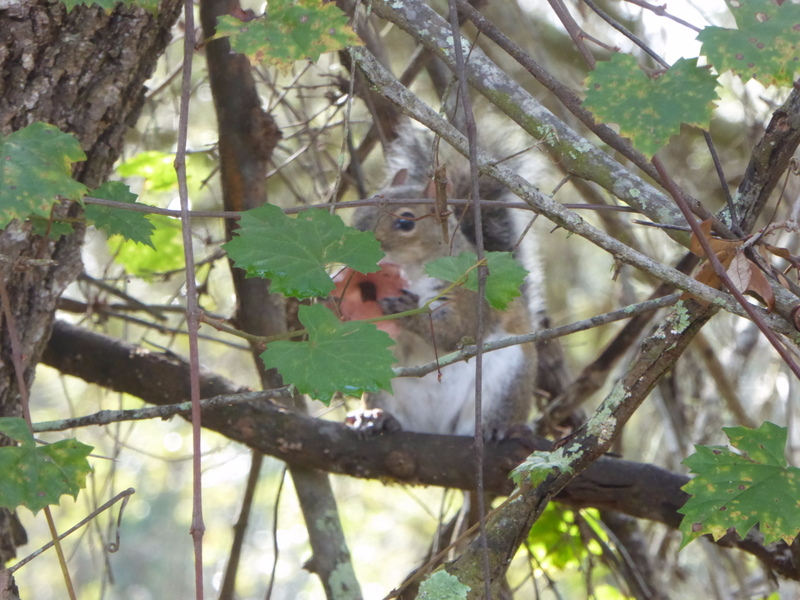
    I know I just posted the  mushroom-eating squirrel below  last Friday and it isn't even a different picture of him, since I only have the two I showed in that post.  But I learned something so interesting from  a comment on that post that I wanted to share it (which of course also helps me to remember it).


    P1020776


     Margaret (of BIRDING FOR PLEASURE) , very generously did the research I should have done before posting about squirrels eating mushrooms.  Like most of you, I wondered how the squirrel knew whether or not the mushroom was toxic (and hoped it did have some way of knowing).  Here is her comment:

     HI Sallie Well I did not know that Squirrels eat mushrooms so of course i had to find out more and thought you might be interested to know this also. Squirrels have the ability to eat toxic mushrooms as described below. Are there any mushrooms that they can't eat without dying? According to Dr. John Rippon, an IMA member and world expert on fungal diseases, squirrels have an interesting adaptation that allows them to eat mushrooms containing deadly amanita-toxins without being affected. There are three important chemicals in the amanitas. Two will knock you right off, but are destroyed in cooking. The third one is the interesting one: it consists of the second amanitin, bound tightly to a glycoprotein molecule. When we digest the mushroom, the enzymes in our gut break the bond between the toxin and the glycoprotein, leaving the toxin free to enter our bloodstream, while the glycoprotein is excreted (a glycoprotein is a [protein containing sugar molecules and accounts for the viscous properties of mucus], in case you don't know). What the squirrels have done is line their gut with a toxin-compatible glycoprotein, so that as soon as it gets split from its original glycoprotein molecule, it gets rebound to the squirrel glycoprotein, and excreted along with it. Obviously, the squirrels don't cook their food to destroy the first two molecules, but presumably those get bound in exactly the same way. Thus, squirrels and a few other animals (guinea pigs also, I believe) can eat mushrooms that are highly toxic to other animals with no ill effects.


     Thank you for teaching us something new  and so interesting Margaret.  (And if you're a mushroom hunter — definitely don't go out in the woods and think you can eat a mushroom just because you see a squirrel doing so without ill effects!)


    Thank you to every single one of my blog-world friends for sharing the beauty and inspiration and wonderful scenery … and for giving me a reason to post my own pictures!  Special thanks to Monica and Margaret and as always the hosts of the sharing opportunities where I'm linking today:   OUR WORLD on TUESDAY (Lady Fi, Sylvia, Sandy, Gattina, Arija, and Jenn);  Michelle's NATURE NOTES; and Judith's MOSAIC MONDAY  


  • SCENES WITH A SQUIRREL


    Still hanging out around home (at least on the Blog).   Today's pictures are from a walk last week at Caloosahatchie Regional East — the county park that adjoins our RV Resort.   


    P1000863


    The Boardwalk is less than a mile long — usually I walk both it and another longer trail that is on packed dirt.   It was too muddy to walk the dirt trail last Saturday.   The short walk was fine though.  Any chance to get out in a quiet, natural setting is worth it — especially when you don't need a car to get there in the first place.   


    P1020776


    I spotted the squirrel digging frantically next to the board walk .   And I could hardly believe it when he uprooted this mushroom and raced up the nearest tree.  Did you know squirrels enjoyed mushrooms?


    P1000849


     Ferns, sabal palms, and palmettos are mostly what I see at this park.  It's a nice quiet green place for an easy walk.   There's a lot of parkland in this County; this particular one is rather underused — I usually don't see anybody else at all there.  (Which is just fine with me.)   I  don't think the County worries about the number of people at these smaller parks — they have bought the land mostly to preserve it from development and protect native plants.  And provide habitat for birds and animals.


    P1020779


    Here's my little friend still nibbling.    That was a pretty big mushroom.


    P1020775


    LINKING TO: SCENIC WEEKENDS (thank you to Gemma) and to SATURDAY CRITTERS (thank you to Eileen).

  • BIRDS EVEN CLOSER TO HOME


    Continuing this week's 'closer to home' theme because it's still pretty rainy out and we've had a lot to do right here  (fun stuff and chores both).   We were so happy to see Sandhill Cranes up close  on our Palm Beach trip last month.  But then, a couple of weeks ago,  these big old birds started to show up right here at Upriver.  This is their first year here, at least since we've been spending our winters.


    P1020754


    The Sandhills are often seen in groups of three.   I think they are a family group, with the darker one being the juvenile.   I like this group photo, with the young one on the right showing off those long legs, so elegantly crossed at the knee.  

     Upriver has a 9-hole non-regulation golf course (I don't exactly know what that means, but I'm sure if anyone is a golfer they will).  That's where the cranes are hanging out.

    I'm hoping that the golfers shoo them away before they take their shots.  Either that or that the cranes understand the word "Fore".  


    2016-01-105


    These are the first Sandhills we've seen this close to home, but I've taken pictures of them other places here in Florida, as well as in Alaska, Texas and Utah and (especially memorably) in New Mexico when we were full-time RVing.  

    So I know I've blogged several crane pictures already and have even more in the archives.   But the picture below, taken last Friday, may well be my all-time favorite.

    P1020758

    Just a minute after I took the picture, Mom turned her back in disgust and walked away while Junior continued to rant, probably begging for food.   I'm thinking it's probably about time for him to learn to get along on his own.


    SHARING this post with WILD BIRD WEDNESDAY (thanks to Stewart), with GOOD FENCES (thank you to Teresa), and with RATHER B' BIRDING (thank you to Anni).

  • EVEN CLOSER TO HOME

    A week ago, my pictures in the post called "Close to Home" were  from a couple of nature walks we tagged on to routine shopping excursions.    This week, all of my pictures were taken even closer to home — right here at Upriver RV Resort, where our "Canal Cottage" is located.  


    2016-01-101


    Because we travel back and forth, I don't grow flowers myself, so these beautiful hibiscus are all growing in neighboring yards.  But I have to say I'm becoming more and more tempted to buy an outdoor  potted plant or two.   Nearly all of our neighbors here in Florida are snowbirds too — living here only part of the year.   I will let you know if and when I succumb to temptation and buy a plant.

    One reason we have stayed close to home this week is the weather.  It has rained (hard) on and off, accompanied by lightning and thunder.   On Saturday evening, a tornado touched down in the next town to us (Cape Coral) and there was quite a bit of damage.  We were at a show here in the recreation center at the park.  It's a metal building — and you could hear the thunder and hard rain.   (I felt a little sorry for the entertainer, having to compete with the elements — and the fact that people kept going in and out.  Some were worried about their dogs left at home, so they went back to their units to check on them.)   There was no damage here in the park or even, as far as I know, anywhere in Fort Myers.

    In Oregon, we are used to steady downpours, but when it rains here in Southwest Florida it pours down in walls.  And often, a few hours after the storm begins, the sun comes out and the sky is blue (in Oregon, rainy days usually mean long-lasting gray skies).     We really need more words for rain.     


    2016-01-10


    These are a few of the park models on another street here at Upriver.    The brightly-colored doors and windows are new this season.  And I am sort of in love with them.  They brighten things up and  seem very appropriate to Florida.  


    THIS POST is LINKED TO: OUR WORLD ON TUESDAY (thank you to Lady Fi, Sylvia, Sandy, Gattina, Arija, and Jenn)  and to MOSAIC MONDAY (thank you to Judith).  


  • MANATEE PARK FLOWERS


    More pictures from the land of Winter flowers.   


    P1020729


    A brown anole lizard seems to be looking for the railroad vine flowers.  I was looking too — the signage on the Butterfly Walk at the park probably needs to be re-done for the season.  The native plants in this garden seem to wander a bit from year to year (or perhaps they just aren't quite in season).

    P1020718


     Firewheel (aka Indian Blanket Flower.  I know this one without a sign!


    P1020707

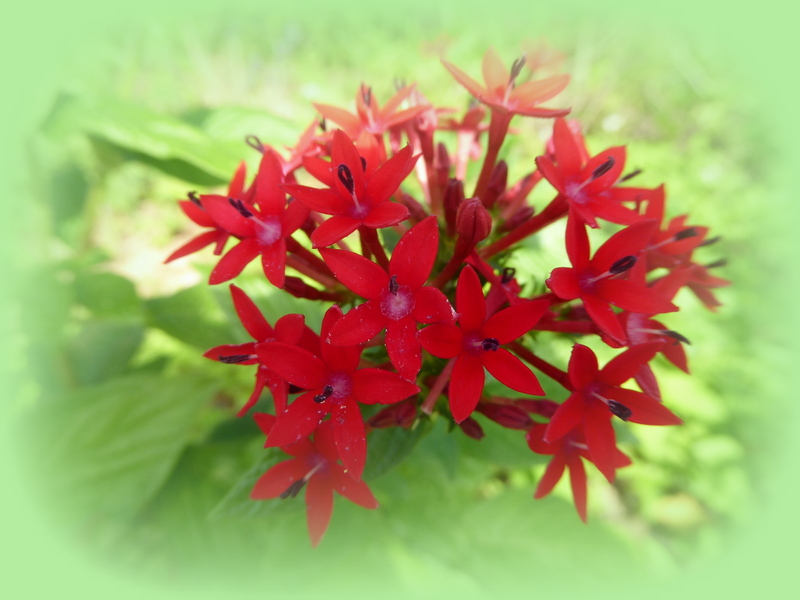
    Could not find the sign for this beauty – I will keep looking for it (or for more information).   I do know that all of the plants on the Butterfly Walk are native  to this area and are known to attract butterflies.   There is information about planting conditions and other hints  that would be very helpful to anyone who wants to make their yard butterfly-friendly.  ADDED NOTE:  Thanks to Monica (Nature Footsteps) for giving me the name of this flower:  Calotropis Gigantea (Crown Flower).  


    P1020724


    The Butterfly Garden is tended by volunteers.


    P1020730


    This might be what the lizard was looking for (in another color).


    Sharing this post with Denise's TODAY'S FLOWERS, with Gemma's MACRO MONDAY, and with Laura's I HEART MACRO.  Thank you to each of you for these lovely sharing opportunities.


  • RANDOMOSITY


    Totally random collection put together on a rainy Sunday afternoon.  Linking to several memes (you may have to scroll down to find the one you linked from…. this really is a very random post.) 


       2016-01-024

     For Monica's DIGITAL ART.  Only the flower in the middle part of this panel is altered.  The two on the outside are straight out of the camera (except for cropping), but I think they look at least as un-real as the one in the middle.


    P1020715


    This is the SOC version of the middle one.


    2015-12-141


    Welcome to Arizona!


    For Lesley's SIGNS SIGNS these two seen at different rest-stops on our December roadtrip.    The one on the left is scary — but it is probably good for strangers to be warned.  The one on the right is just sort of sad.  Because the picture was taken in 2015.     I think they need something new to be proud of!


    2015-12-14


     For Eileen's SATURDAY CRITTERS, this guy who welcomed us back to the Canal Cottage last month — he had found a quiet home on our side-porch — and was none too happy about being disturbed.  He finally hopped away safely.


    P1020693


     And finally, for SKYWATCH FRIDAY this rainbow after the brief Southwest Florida rainstorm. 

    Thank you to Yogi, Sylvia, and Sandy for SWF and to each of the hosts listed above.   I appreciate the work you do!!


    I am also linking to a new meme (for me) :   FUN FRIDAY FAVORITES, hosted by Cath.  Thank you Cath.