Category: Flowers and Gardens

  • BOK TOWER AND GARDENS

    We visited Bok Tower and Gardens in Lake Wales on the day after Christmas.  (Still on our quest to explore as much of Florida as we can.)   Below are views of the beautiful bromelid tree in the visitor center.  These pictures are all from the tree, but similar bromelids were blooming in the gardens.  It amazes me to see "houseplants" blooming profusely outdoors.


    BOK TOWERS5


     Bok Tower is a  beautiful bell tower built on the summit of Iron "Mountain" which is the highest peak in peninsular Florida.   High elevation in these parts is NOT very (it is only 298 feet above sea level).   After spending the summer and fall in Alaska, the Pacific Northwest, and Colorado we must admit to being a bit underimpressed with the altitude. 

     But the singing tower was lovely to see — and hear.  I wish we could have recorded the carrilon music that we heard.  We arrived just as the first of two live concerts began.  Mechanical keyboards play every half hour and then, while we were eating lunch at the Visitor Center cafe, we heard the second live concert of the day.  (The music can be heard throughout the grounds.)


    P1000032-001


     The Singing Tower and gardens were a gift to the American people from publisher, author and philanthropist Edward R Bok.  The Tower is a National Historic Landmark.  

    Mr Bok emigrated to America as a child.  When he and his parents left the Netherlands, his grandmother charged him to make his new country more beautiful because he had lived in it.  When the tower was dedicated, Mr Bok said he wanted to follow her long-ago advice by making a place where people could find and enjoy beauty and serenity.  (Link here to read what  else Wiki tells us about his interesting life.)


    BOK TOWERS3


     The tower is built of pink and gray marble quarried in Georgia and coquina (a sedimentary rock mostly made up of seashells) from Florida.  The tile work depicts birds, wildlife, and figures from myths.  It was opened to the public in February 1929 and dedicated by then-President Calvin Coolidge. 


      P1000053-001


    The tower, with its surrounding moat, is the centerpiece of the 200-acre tower gardens.  I will show more from the gardens in a later post.


    Sharing these views and blooms with Judith's  MOSAIC MONDAY ; and  OUR WORLD on Tuesday (hosted by Lady Fi, Sylvia, Sandy, Gattina, Arija, and Jen) ; and Nature Footsteps  BLO -MA.   Thank you to all the hosts!


  • A MUSHROOMING POPULATION


    Nature has reclaimed the abandoned town of Dyea Alaska,  once a major port for Klondike goldrush travel.   Mushrooms and other fungi thrive where storekeepers once sold supplies to stampeders.


    P1020546


    The area is now owned by the National Park Service; some historical artifacts and ruins can be seen on a self-guided walk.  Even better, the reclaimed forest was a quiet and beautiful place for a long nature walk — a perfect day trip to escape from the touristy city of Skagway, where we were staying.


    Dyea drive from skagway


     At the time of the goldrush, this area was a grassland and the forest is not yet mature … the process known as plant succession is underway here.  As it matures, spruce, hemlock, and cottonwood trees will  give way to the shade-tolerant western hemlock.

    At its present stage, the forest-floor provides the perfect home for mushrooms and fungi.  So many varieties that we lost count.   (But I think we got pictures of most of them.)


    P1020593
     

     Magical mushroom, I'm sure.


    Dyea drive from skagway1
     

    Fungi on parade.


      P1020590

     Broken but still beautiful.


    Linking this post to Laura's I HEART MACRO; to Judith's MOSAIC MONDAY; and to Michelle's NATURE NOTES.  

    Thank you to each of these lovely ladies for giving us these opportunities to share and learn.

  • MIXED BOUQUET (flashback to last spring)

     Note:  I wrote this post in late May just before we left for our Alaska trip, but was not able to post it.  These flowers are   too pretty to forget, so here's a flashback to late Spring in our daughter and son-in-law's yard.  

     We had a short time to visit with our kids in May — much earlier than we usually arrive back in the Pacific Northwest.  It was a wonderful time for flowers.  Some late Spring blooms were at their peak (like the pink rhododendron and the iris that I posted earlier.)  And  a few  summer  flowers were already showing their colors as well.

    This whole bouquet of pictures was "gathered"  on the first May day we spent with  our daughter and son-in-law in their yard.


    ALVADORE FLOWERS MIXED BOQ

     Peonies ready to burst into bloom, shy forget-me-nots, rosebuds, orange poppies, red  and lavender rhododendrons, columbine,  and California poppies .  

    P1000206The California poppies were abundant not only in their yard, but all over the area. We never used to see them here when we lived in Oregon — like a lot of  people from the next state south, I guess they decided to migrate to Oregon (maybe they too were tired of all the traffic and smog.)  

     On a camping trip to California many years ago, we looked and looked for this flower and never even saw a one.   I can't remember if we were too early or too late or if it was just a bad year for them.  

    They may be more common now, but they were still a welcome sight.


    POSTING TO:  TODAY'S FLOWERS  (thank you Denise),  MOSAIC MONDAY (thank you to Judith), and (next Tuesday) to NF BLO-MA (thank you).


  • THE CORPSE FLOWER


    We visited Seattle's Volunteer Park Conservatory earlier this month while   spending a lovely day with our brother-in-law and  sister  (mine, but after more than 57 years together, it all kind of blends together).  


    P1020758
     

    There were some beautiful orchids and ferns.  But we really went to see the Corpse Flower.  This odd — and rare — plant  bloomed in early September for the first time since the Conservatory acquired it in 2006.   (It takes from seven to 10 years for the plant to make a flower.)


    Seattle Sept 2014


    The Corpse flower (Amorphophallus Titanum) was discovered in Sumatra in 1881.  It grows from a large tuber which can weigh more than 150 pounds.  It is said to be the world's largest flower.  Technically it is an 'inflorescence' or a cluster of flowers.  

    All of the above information is from the Conservatory.  The information sheet also said "Yes, the flower does smell —  like rotting flesh."  –  But we didn't need the handout to know that.  It smelled awful!

    I hate to end a post on a stinky note, so below is just one of the beautiful orchids grown in the Conservatory.  I'm sorry that I don't have any information about it.  

    P1020770


    Linking this post to TODAY'S FLOWERS and I HEART MACRO. and NATURE'S FOTOS BLO-MA (on Tuesday).   Thank you to Denise and to Laura and to Monica for hosting these wonderful sharing opportunities.


  • FIREWEED

    Fireweed is a  tall beautifully-colored wildflower that is blooming prolifically in fields and along roadsides wherever we've been in Alaska so far.  

    It is lovely to see masses of these magenta flowers as you walk or drive along.   


    P1010204


    Fireweed is known as Alaska's Summer Clock.   Local wisdom says that once the fireweed blooms to the top of the stalk,  summer is over and it is only a few more weeks until the long winter sets in.   


    P1010203


    Believe me, we are keeping a  close eye on it! 


    Here are a few more beautiful Alaska wildflowers.   We've enjoyed these lovely color spots as we travel in the state and, for year-round Alaskans, I would imagine they are even more welcome after a long cold winter. 


    Alaska wildflowers


    I'm planning to link this post* to TODAY'S FLOWERS AND NF BLO-MA.  Thank you to Denise and the TF team and to Monica for hosting Blo-Ma.  

    (*if travel and internet connections cooperate)

  • LILACS IN JUNE


    P1000570


    We have learned that there is a way to see typical early Spring flowers even if during that season you are in Florida where it is too hot for them.  

    And even if you don't arrive for a summer visit with your kids in Oregon until mid-May, when the earliest spring blooms have faded.

      P1000572


    The way you do it is to arrive in Seward Alaska in mid-June.  Spring has barely begun here.  It has been years since we've seen lilacs.  I wanted to bottle their wonderful scent.

      Recovered Autosave-001


    Flower gardens were certainly not our primary reason for traveling to Alaska but aren't these beauties a nice bonus?


    FOR: NATURE'S PHOTOS BLO-MA,  TODAY'S FLOWERS and MOSAIC MONDAY.  Thank you Monica, Denise and Mary.


  • Sometimes you get HONEYSUCKLE, sometimes you get SCOTCH BROOM


     Sometimes in life you get Honeysuckle ….


    2014-05-31


     …  like the plants above that plant dress up the fence row at Cyndi and Jeff's.   The sweet aroma makes you happy even before you see the flowers.


    2014-05-311

    But sometimes you get Scotch Broom, another cheerful yellow blossom.


    This  weed has an unpleasant dry scent that permeates the surroundings and causes even the most hayfever-resistant individuals to cough, sneeze and wheeze.  (And one of us is not hayfever-resistant at all).   It's an invasive species and now it is considered a noxious plant by the State of Oregon.

    Although none of the State's websites say so, when we first moved to Oregon (in 1971),  Scotch Broom was planted on freeway dividers.   The State also planted it along the coastal dunes as a stabilizer.    It has now migrated to farmlands, timberlands and backyards everywhere.

    The State realized its mistake some years ago and has been trying to eradicate it for years,  but it's  almost an impossible task.  

    Because of Scotch Broom,  as well as  pollen from cottonwood trees and grasses, and in spite of the honeysuckle and other spring plants we miss, we usually don't come to  visit our Oregon kids and friends until July (by then scotch broom has quit blooming and the grass for the most part has stopped shedding pollen).    


    P1000265One more pretty honesuckle picture (with a stray wild yellow rose) —  just to end this post on a cheerful note.  

    Linking  to OUR WORLD TUESDAY and NATURE NOTES.

     Thank you to Lady Fi and the OWT team and to Michelle for Nature Notes.

     Below are a couple links to further information about noxious scotch broom:


         Oregon State University

    State Dept. of Ag.

  • PORTRAITS OF IRIS


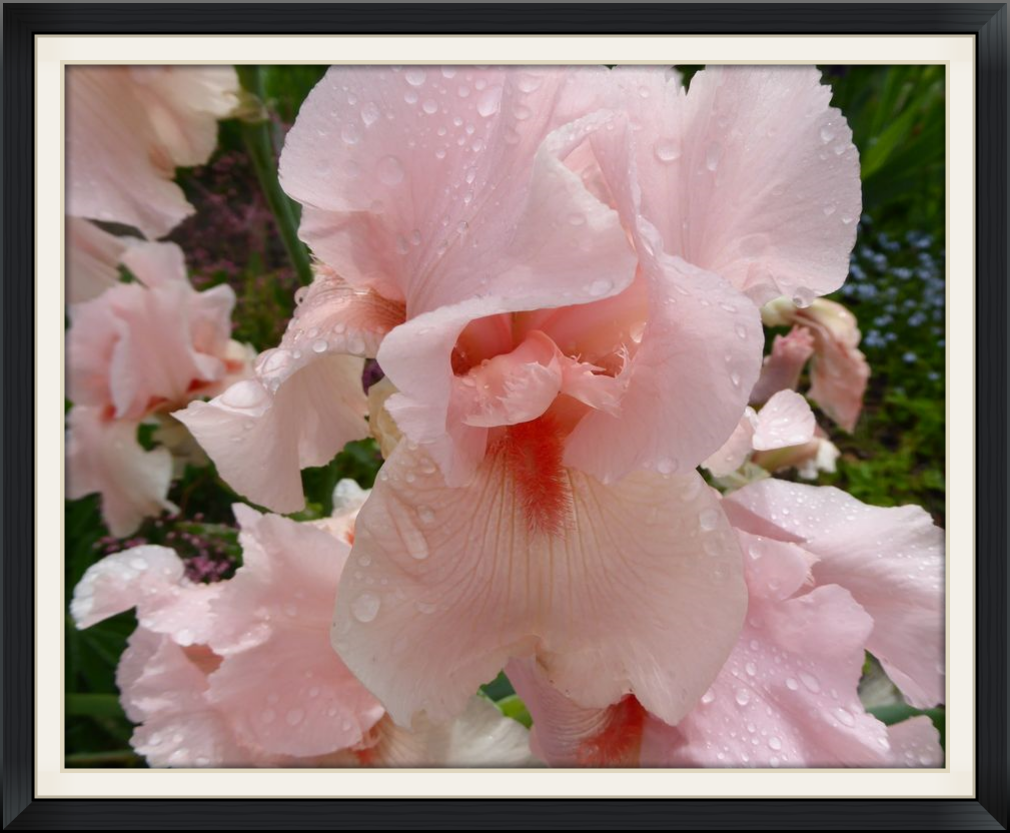
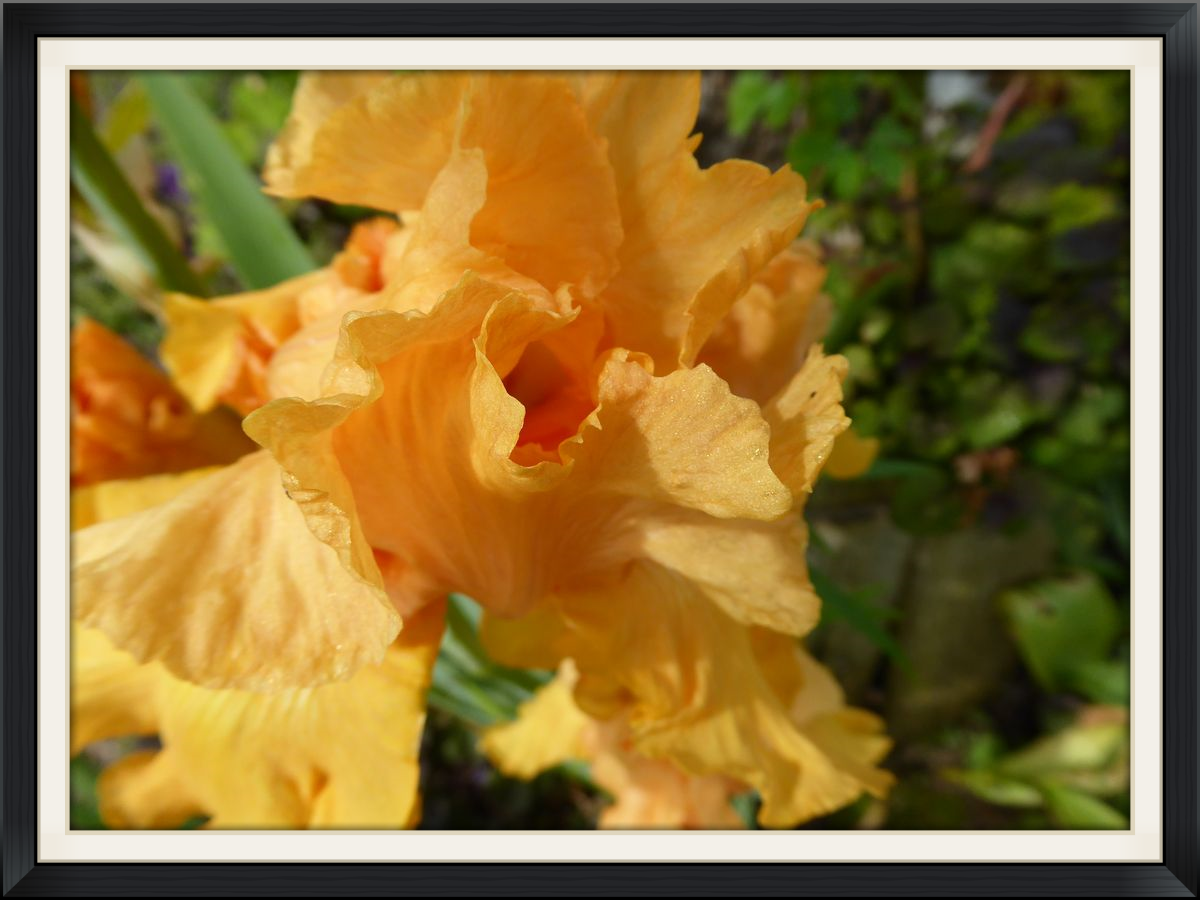
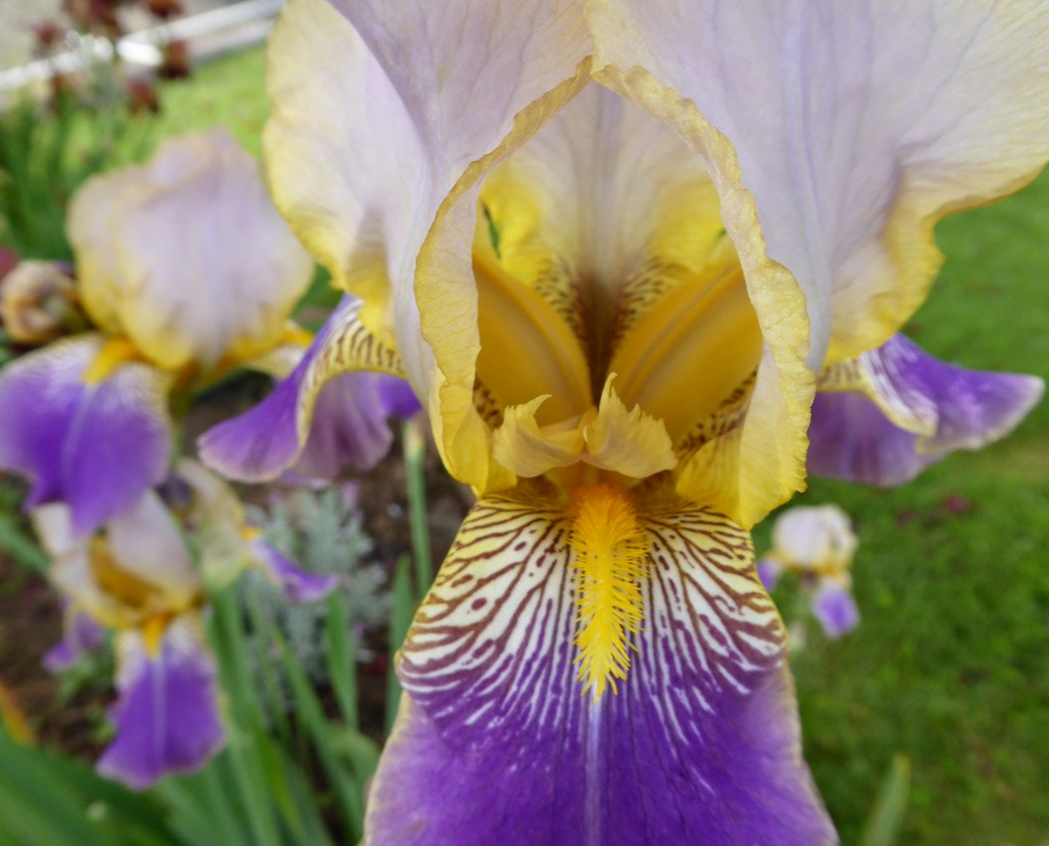
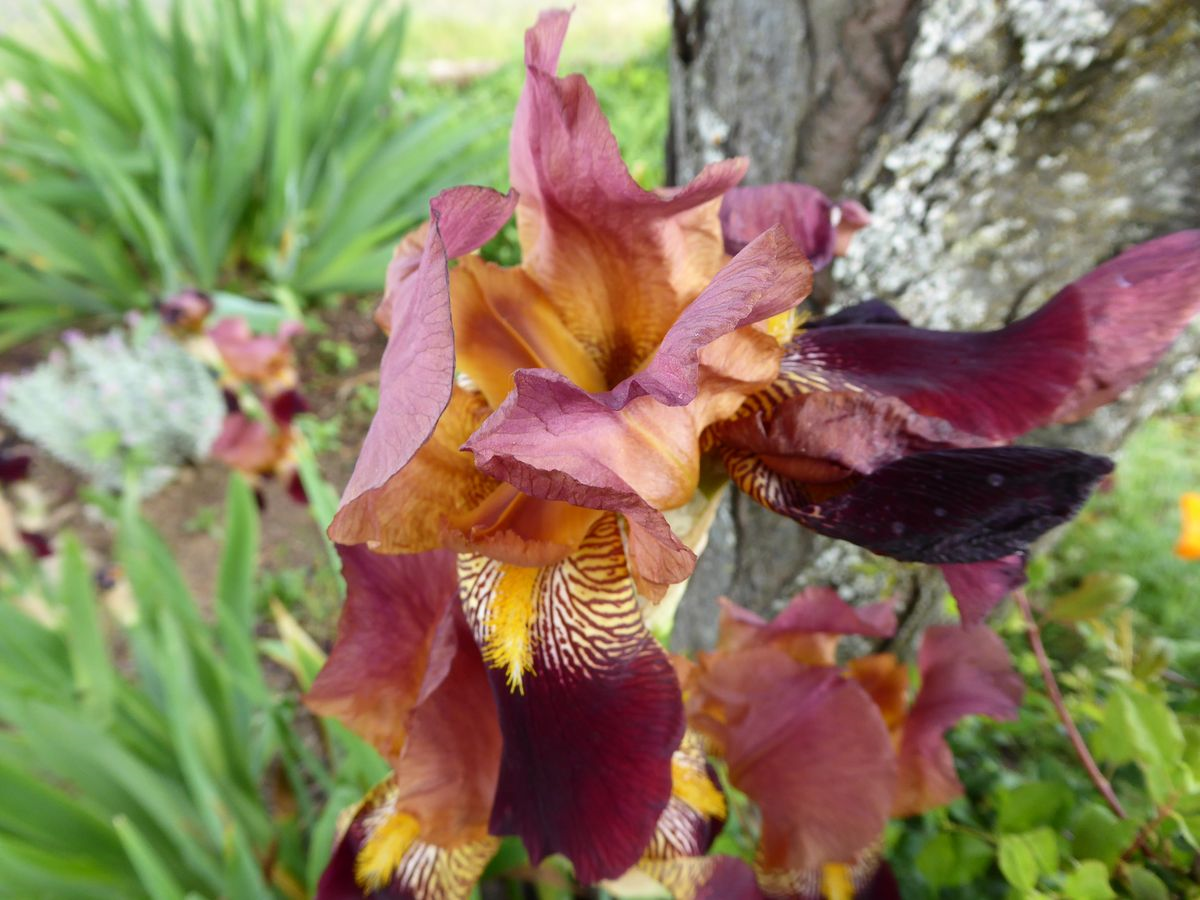
    Here are a few of our neighbors flowers stolen* on  my first walk of the summer   here at the Lake.    

    (*Only on camera.  It's a misdemeanor I commit regularly.)

    P1000234


    Fern Ridge Shores  is different from most  RV Parks in that each space has its own yard and garden.   


    P1000236


    The yards are small, but there is big gardening talent on display.


    P1000238


    As you know, we were at our Florida home  during last season's long winter.  But this  area had several inches of snow (which is rare here), several days of freezing temperatures and, as usual, many gray and rainy ones.  

    Family, friends, and our neghbors who live here year-round are glad their flowers survived and are happy to see some color.


    P1000248


    Even though we don't have such a good reason, I too am absolutely delighted with these colors — because they belong to the REAL spring flowers that I have missed so much.


    P1000251


    Linking to TODAY'S FLOWERS and I HEART MACRO.  Thank you to Denise and Laura.

  • IN THE PINK


    We are back again on the West Coast.  We love the family time and the visits with "old" friends  ….  and as a special bonus, we arrived early enough this year to enjoy the beauty of  Pacific Northwest late-Spring flowers. 


     P1000187


    This magnificent  rhododendron is one of many our daughter and son-in-law have planted.


      2014-05-121


    During this season,  their yard is almost like a botanical park — with amazing hosts!


    P1000181


    For the past several years, we have spent  Springtime  in our RV traveling and exploring cross-country.  So it's been a long time since we've seen these colorful flowers at their peak.   It's a real treat.


    P1000189


     The reason we're here is, of course, the people.  But how nice to get  flowers as a  bonus!  

    It's good to be back! 


    Linking to:  TODAY'S FLOWERS, I HEART MACRO, and MOSAIC MONDAY.


    Thank you to the hosts of each of these great sharing opportunities.


  • CACTUS FLOWERS

    We had just driven through the gates into  Honeymoon Beach State Park when we spied these yellow blooms.   


    P1000063


    A surprise, because we think of them as part of the landscape in the dry Southwest States not here in humid Florida.   But cactus plants apparently grow in pretty much every State in the union. 


    P1000062


    I got lost down some internet rabbit holes trying to find the name of this one — and whether they grow here naturally  or are "escaped" from someone's house plant garden.  And never did get a good answer.

    In any case, the bees were happy to visit them — and so was I.  Yellow flowers always make me smile.  No matter how prickly the "leaves" are.


    P1000064


    SHARING WITH:  TODAY'S FLOWERS.   Thank you to Denise and her team.    And with  I HEART MACRO, hosted by Laura.  Thank you Laura for reminding me that your beautiful meme is still open.