The final port of call on our South America and Chilean Fjords Cruise was Buenos Aires, the capital of Argentina.
 First view of the City from our balcony
Three million plus people reside within the city limits, with millions more in the Greater BA area. It's an interesting Big City to explore. Located on the beautiful Rio de la Plata, there's a lot of port and river activity. The downtown area is a mix of European-looking 19th Century buildings along with reminders of the fishing and port origins. And so much history.

This is Casa Rosada (the Pink Palace) which houses the offices of the President (not the presidential residence) and the focal point of Plaza de Mayo, the City's gathering place.

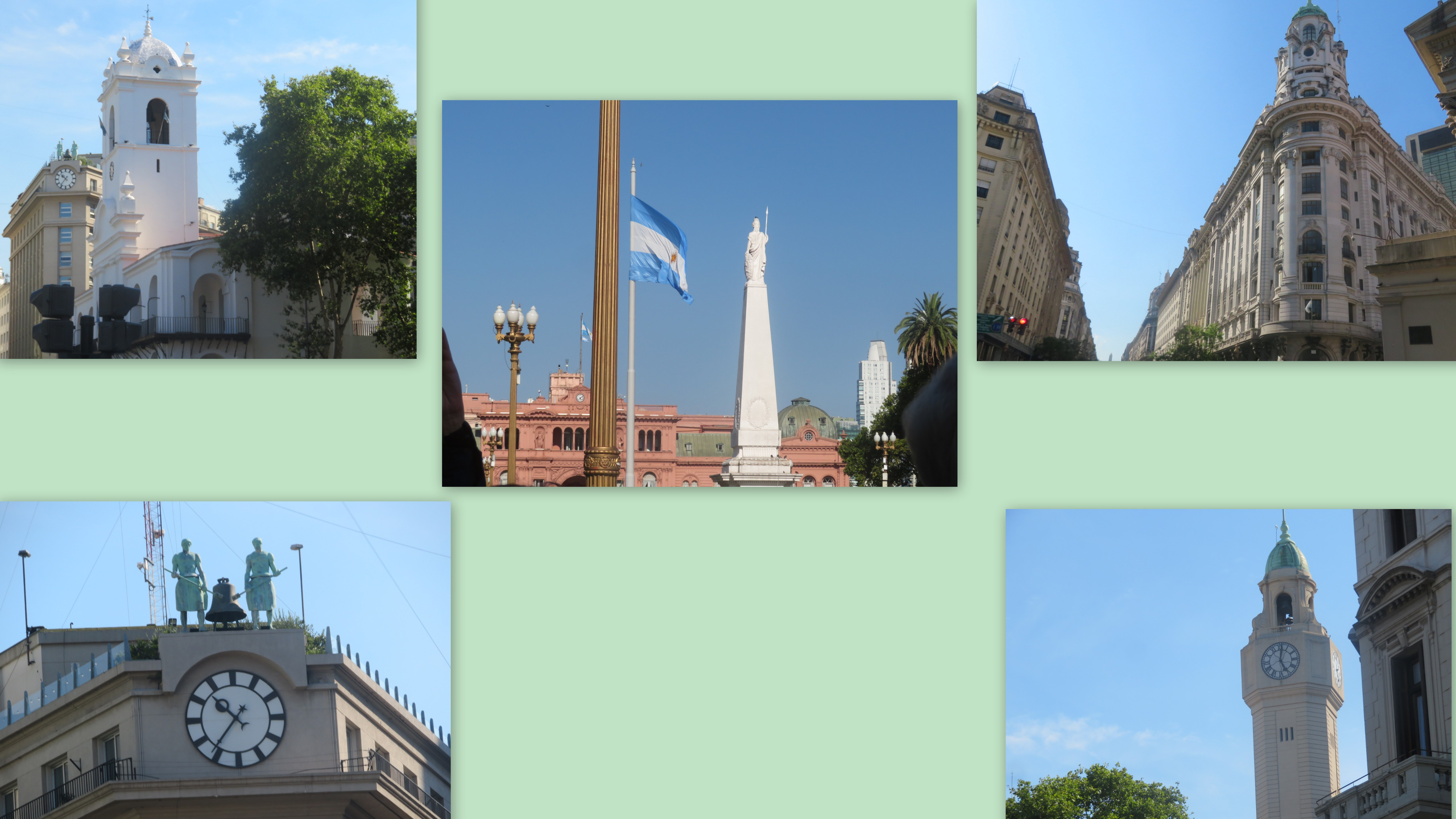
Plaza de Mayo had been the center of Buenos Aires political life since the city was founded in 1580. It was renamed for the May 1810 revolution when the country gained its independence from Spain. The monument in the center picture was placed in 1811 to celebrate the first anniversary of the revolution. The collage above also shows some of the buildings surrounding the Plaza including the City Legislature building, the National Museum, and a former commercial building with the statue of two giants ringing a bell. Their mechanical hammers are connected to the clock.
The Plaza is perhaps best known here in the US as the place where huge throngs gathered to hear Eva Peron's passionate addresses from the balcony. As an unofficial political leader during her husband's presidency (in the 1960s), she helped to bring about economic reforms as well as the passage of women's suffrage legislation.
But the Plaza had been (and remains) the site of huge gatherings and protests since its origin. Below is an example of a more recent action by citizens:

Each stone on the steps surrounding the statue (and the picture doesn't show anywhere near all of them) was placed to honor someone who died during the Covid pandemic. Many include names and dates. People wanted to remember and honor those who died, especially because they were almost always unable to be with their loved ones during their final hours or to hold a service. Later, the City government planned to gather the memorial stones and display them in a building, but people protested that they should be left in the original spot.
Tiles such as the one pictured below are reminders of a courageous public protest from a slightly earlier time (but well within memory):

This symbol on the Plaza's floor tiles marks the path taken on weekly walks by the Mother's Group. They began marches of resistance during the in the 1970s when over 30,000 people disappeared during what was called the National Reorganization Process. Mostly teenagers and young adults, they were hunted down and killed because they were known to have opposed the right wing military junta that had gained power. These brave mothers wore white head scarves when they began to march in resistance to the dictatorship and to petition for the return of their Disappeared children. They continue the marches in their memory and as a constant reminder.
Democracy was re-established in 1983, but the Mothers Group continues their political action work and members hold a ceremonial march on the Plaza once every week.


The top row pictures are from the Riverfront neighborhood of the city, while the lower row are of the Municipal Cathedral. This is the Church where Pope Francis served before being elected Pope. (It was really crowded, pictures were practically impossible )
The pictures below are from the La Boca neighborhood — a colorful, eccentric, and joyful area:

This is La Boca, where local artists celebrate and preserve the origins of the neighborhood which was once a tenement district where port workers and fishermen lived with their families. The shacks are mostly reproductions of the original homes which were made from shipbuilding scraps. Local artists added the bright colors. The neighborhood is full of small cafes and food carts, art galleries, odd little shops, and street entertainment (tango dancers, dog shows to name a few). And many winding hallways and alleys, where it was way too easy to get turned around.

Our time in this beautiful lively city with all its important history, interesting neighborhoods, and busy port district made an incredible last day for what had been an amazing trip. We're immensely grateful for all we saw and learned.

This pedestrian bridge is in Puerto Madero, the newest neighborhood in Buenos Aires. It rotates to allow ships access to the river. Viking transported disembarking passengers to a hotel in this area, where we had breakfast and snacks while waiting in groups for our airport transportation. (The ship's crew would prepare to board a new group who would take the same cruise in the opposite direction beginning the next day). The last day of vacation is never fun, but it was made about as painless as possible and we walked around this new scenic neighborhood while we waited to begin the long trip home.
At least a couple of people have asked for further information about our days at sea and I do plan to post one more blog about "life aboard ship." Meanwhile, we have been alive and well and doing a few blog-worthy things at home and around the Canal Cottage, and it's great to be just about caught up here in blogland.
LINKING to the following sharing opportunities this week:
MOSAIC MONDAY; THROUGH MY LENS; TUESDAY TREASURES; MY CORNER OF THE WORLD; THANKFUL THURSDAY; and SKYWATCH FRIDAY;
We appreciate all visitors and commenters! Thank you.