Category: Florida

  • BIRDING ON A FLORIDA ROADTRIP


    We went on a short road-trip last week — mostly to go birding.   I posted a little about the trip and some of our sightings a couple of days ago (here).   Here are  a few more.  


    P1000708

    Northern Shoveler


    We might have seen Northern Shovelers before, but I didn't used to even try to ID ducks.   So it's officially a first-time sighting.


    2015-04-093


     "Rear views" certainly don't make the best pictures, but I think it's kind of cute to see them "duck" for dinner. And besides my only pictures of the female have at least one of the pair with tails up.


    P1000740-001

     We saw several Common Gallinules  …


      P1000748


    … and a few pie-billed grebes and about a zillion coots.  


    P1000713

    I have more Merritt Island birds to show later and probably should even have parceled yesterday's and today's pictures over a few more weeks for linking to the birding memes.    


    P1000729

    Redwing blackbird on Merritt Island

    Since we don't have backyard birds here* it can sometimes be a while between bird photo-ops.  

    *It isn't that there are no backyard birds in this part of Florida — it is just that our own backyard is essentially a boat dock with a patio in front of it.  

    Our canal has no shoreline, so it doesn't invite birds.   

    But we love having our boat docked at our doorstep and we love day trips and road-trips  to go see birds so it's a perfect compromise for us.

    ———————–

    This post is linked to OUR WORLD ON TUESDAY and to WILD BIRD WEDNESDAY.  (Thank you to Lady Fi, Arija, Gattina, Sandy, Sylvia and Jenn for OW and to Stewart for WBW).


  • REFLECTING ON THE BIRDS

    There was a lot of reflection going on when we visited Merritt Island Wildlife Refuge recently.


    2015-04-092


    So many of my Florida pictures could be rotated and still look about the same.

    Sometimes it's hard to know which way is up.

    But at least here I have an excuse!


      P1000700


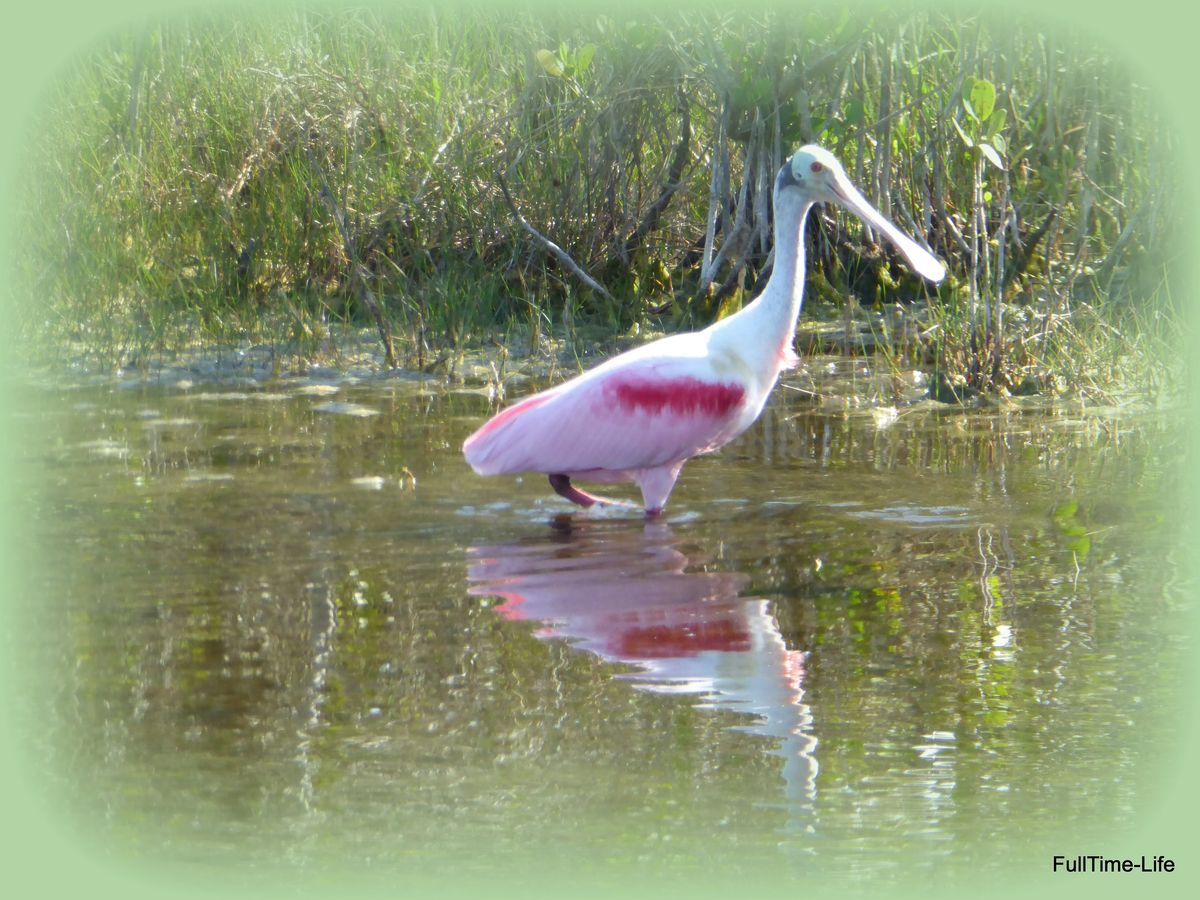
    Roseate Spoonbills are always a joy to see.  And we saw a lot of them.


    P1000762


    It's always fun to  see different species together.  Here's a Roseate with  a selection of egrets.  (Probably Snowy Egrets,  but I can't see their feet to know for sure.)


    P1000779


    Great Egret with a tiny little sandpiper.


    P1000780

    Tangled legs.  I think this is a Stilt Sandpiper.


    P1000782


    More Egrets.   And it's a mirror image two different ways!  


    Linking birds and reflections with Eileen's  SATURDAY CRITTERS; with Anni's RATHER B'BIRDING; with Judith's  MOSAIC MONDAY; and Michelle's NATURE NOTES.   


    Thank you to all these wonderful hosts for providing these sharing opportunities.  Go visit!!!


  • HENDRY COUNTY FARM TOUR


    We had a chance to take part in a farm tour sponsored by Hendry County Extension Service.  (We live in Lee County; Hendry is a mostly agricultural area and the next county over.)  This is the sign in the window of the County Office where we boarded the bus.


    P1000453-002


    Our guide got some laughs when he pointed out that in addition to being hungry and naked, without agriculture we would also be sober.


    2015-03-082


    The first stop was Patty's Patch.  She told us how she started  growing a few blueberry  bushes on a tiny part of the cattle ranch she and her husband own.   Then they found that the perfect harvest time for blueberries in Florida is right in between those grown in Maine and those from South America.   So she has created a market for the berries and now they have six acres planted to them with more to come.  


      2015-03-088

     Raising Black Angus cattle is still the main purpose of this ranch though.    We saw a demonstration of how they herd cattle using horses and Florida cow dogs.   

      The dogs and horses work together so well and are such good friends that the dogs sleep under the horses at night.  

    P1000481

       The horses were the best part of the tour for some visitors.


      P1000467

    This is Patty's husband, the co-owner of the ranch.  He's a member of the Hendry County Cattleman's Association.  Later in the tour, we stopped at the County Fairgrounds, where the Cattlemen  prepared and served a delicious "lunch" of grilled steak with salads and vegetables.


    P1000514   
    And then as we got off the bus back at the Extension Office, each participant received a huge bag of produce grown at  one of the other places we had visited.  (I hope to post more about a couple of those in a future post.)

    Thanks to  Agriculture, there was definitely no danger of going hungry that day (or any other for that matter).


    Thank you to the hosts of  OUR WORLD TUESDAY (Lady Fi, Arija, Gattina, Sandy, Sylvia, and Jenn);  SIGNS SIGNS (Lesley);  GOOD FENCES (Theresa); and SATURDAY CRITTERS (Eileen).   


  • AFTER THE RAIN

    We had a huge rainstorm last Monday afternoon —  walls of water for three hours straight.  Since we're from western Oregon originally, we're used to rain — or should be.  But there, the winter rain usually just kind of drips softly and steadily for all day (and all the next day and the next ….).     Here in Florida, it gushes and then when the storm is over, it's over.  


    P1000551

    Fungi "blossoming" after the rain


    (We need more adjectives for rain … the way there is supposed to be a hundred or so words to describe snow in the Native Alaskan's vocabulary.)


    P1000670-001

    It wasn't raining at all on Tuesday morning but at the Slough there was water where it was dry the week before.    The reflections sparkled and the clean 'after-the-rain' scent was delicious.  

    (And surprisingly and happily there were no mosquitoes.) 


    2015-03-26


    The epiphytes were blooming and I spotted my first pink lichen on a couple of trees.


    2015-03-261


    I thought I was taking pictures of a black-crowned night heron, but it sure looks bluer than usual if it is.  Didn't do anything to change the color of the photos, so maybe it's a trick of the light.  Or maybe it's another bird.  (Help always welcome.)


    P1000669


    Another beautiful day at the swamp.   There's nothing better than taking advantage of the wonders of the rain storm without actually having to get wet! 


    LINKING to SCENIC WEEKENDS (thank you Gemma); to I HEART MACRO (thank you Laura); to MONDAY MACRO (again thank you Gemma); to MOSAIC MONDAY (thanks to Judith); NATURE NOTES (thank you Michelle)  and to WILD BIRD WEDNESDAY (thank you to Stewart).

  • NEWS FROM THE NEST — happy, sad, hopeful

    A few days after I wrote (in this post) about a visit to the nest, but a day before it was scheduled for publication, we drove past the pasture.  And even from the the car we were pretty sure we saw an eagle that did not have a white head perched on a branch above the nest.   We turned around and drove back.  

     P1000621

     Yes — we saw correctly.  There was E-6,  proud as could be several feet above the nest.   Posing beautifully.   Happy news.

     But the  next day (the same day that earlier post was published), there was a report of an injured eagle  found dazed on a railroad track a few miles from the tree.  That eagle was rescued by a passerby who called Fish and Wildlife.  The eagle, later positively identified as Ozzie, was taken to a rescue facility on Sanibel Island called CROW (Clinic for Rehabilitation of Wildlife).  (Click the hypertext link to get to their website).  Veterinarians are treating him for a broken clavicle and they report that he is eating well and recovering (sad news but hopeful).


    P1000622


    Meanwhile back at the nest, E-6 continues to progress.    The constant watchers reported on FaceBook Monday morning  that he had fledged  (he took a short flight away from the tree and came back for a fish breakfast).    Harriet of course continues to bring food.    Those watchers also report that sub-adult eagles have been flying near the nest with twigs and small pine branches,  apparently trying to intrude on the nest.   They must know there is only one adult there to defend the territory.   Harriet has chased them away successfully so far (but she still has to hunt and can't be near the tree all the time).  Bird watching  isn't always easy.  

    P1000613There are so many questions.  

    Without his father to urge him on, will E-6 fledge completely and fly off to succesfully begin his independent life?  Will Ozzie recover well?  Will he return to the nest?  Will Harriet be able to fend off the intruders?  Will she wait for Ozzie to return before flying off herself?

     (The adult pair has always left the nest for their summer 'residence' shortly after their eaglet(s) leave the nest permanently.  They are true snowbirds, with their time in Florida coinciding beautifully with the months we human snowbirds are here.)

    _______________  

    I had decided at the beginning of this season that I wouldn't monitor the eagle- cam this year; I was pretty much 'over it' (not completely over the eagles, just the web-cam). Everybody has learned a lot about eagle behavior from the cam, but  … 

    … I was beginning to think that becoming so "familiar" with their behavior makes it too easy to for us to anthropomorphise  … to forget that these are wild birds who don't behave or "feel" like people do.

    Ozzie and harriet(Ozzie and Harriet from a previous — happier — year.)


    But I have to admit that with the latest chapter, it is hard not to sneak a peek at the website every so often.  I hate to miss an episode of this drama.

    I'd be seriously interested to hear what you think about bird-cams in general and would love it if you'd share your thoughts in a comment!


     I am sharing this post with Michelle's NATURE NOTES; with Stewart's WILD BIRD WEDNESDAY;  with Anni's  RATHER B' BIRDING, and  Eileen's SATURDAY CRITTERS.    Thank you to all the hosts.


  • SLOW-WALKING


     Small treasures from slow walks.


    2015-03-153


    Blue meditation (walking after Yoga class) at Six Mile Cypress Slough last week.


    2015-03-221


    Sunday stroll at Caloosahatchie Nature Preserve.    The mushroom kind of looks like a butterfly left a self-portrait  on it.


      2015-03-222

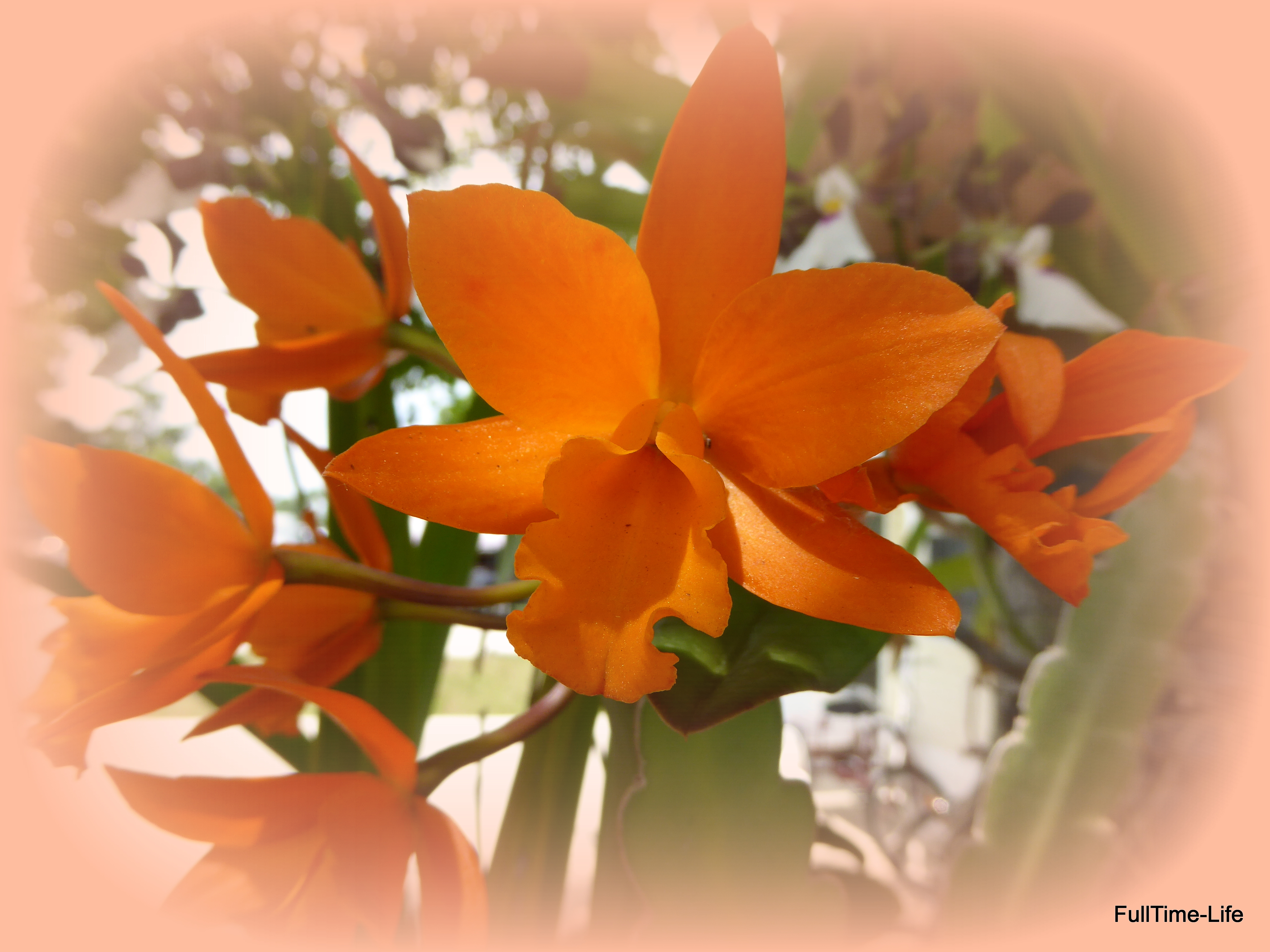
     More beauty from our orchid-growing  neighbor here at Upriver Resort.


    P1000661


     And finally, left over from whenever the last full moon was:

    2015-03-081


     (No walk at all  – taken about 10 steps from the back door.)


    Thank you to Laura for I HEART MACRO; to Gemma for MONDAY MACRO; to Judith for MOSAIC MONDAY; and to Lady Fi, Sylvia, Sandy, Gattina, Arija, and Jenn for OUR WORLD TUESDAY.   

  • HAPPY CLOUDS


    Florida clouds are purely and simply the kind that you dream about.  

    This time of year especially they are exactly the  kind of fluffy happy clouds that little kids try to draw when they make a sky picture.  (Maybe that's why I like them so much.)

    P1000591-001


     I never get tired of sky-watching here.  

    These pictures are from the boat —  just a short hop down the Caloosahatchie to the Fort Myers Yacht Basin (the city boat dock).


      P1000588-001


    Sometimes it's fun to think about how others live:

    2015-03-152

     Much of the river banks are undeveloped  but when you get near downtown there are a few condo towers.  


    P1000593-002


    There is a lot less traffic on the river than there would be if we drove the roads and across these bridges to the same destination. It takes longer by boat though and it's more work for the Captain.  But he loves it  – and the first mate has a lot of time to look at the sky!  


    LINKING TO:  SKYWATCH FRIDAY   (thank you Yogi, Sandy, and Sylvia) and to SCENIC WEEKENDS (thank you Gemma).


  • AT THE EAGLE PASTURE again


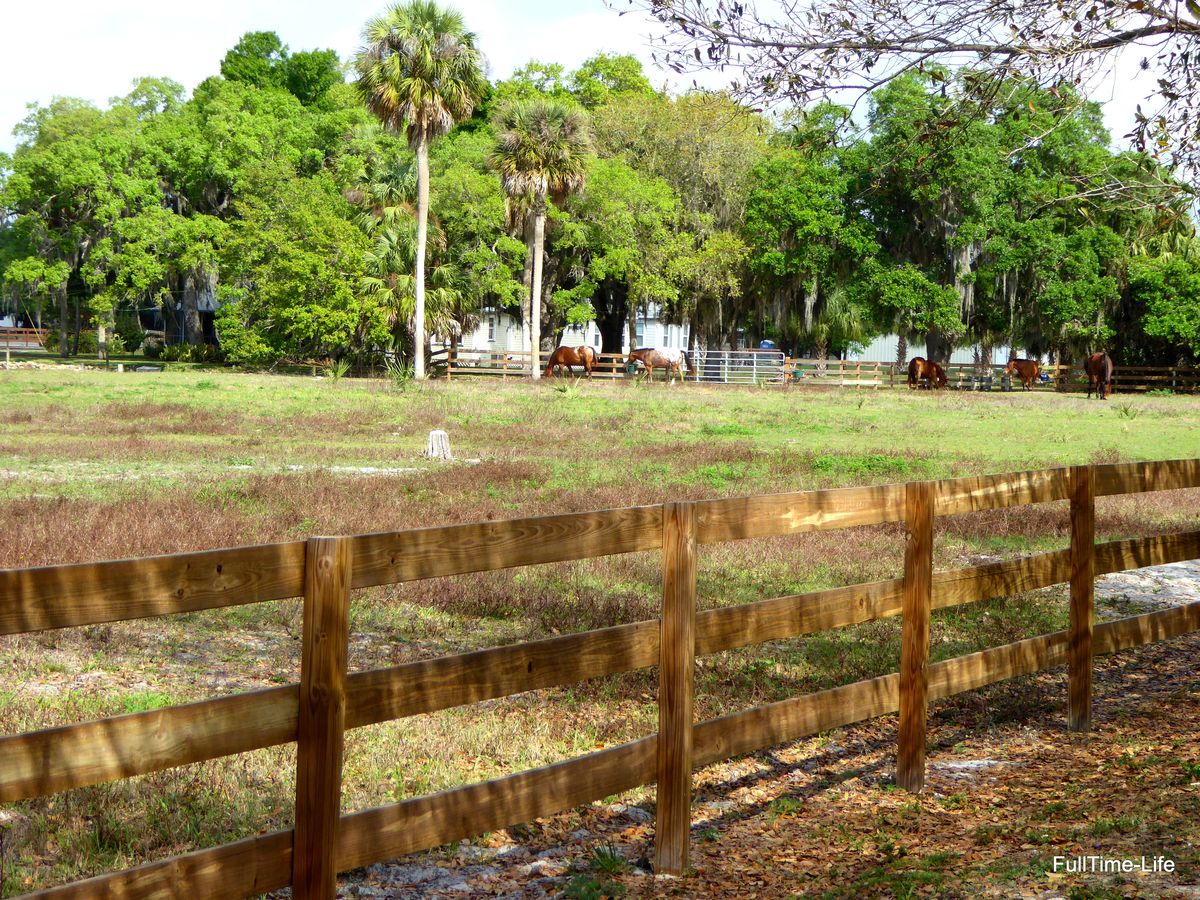
    Here are a couple of the other residents of the pasture where the local eagles live in their scrub pine.

    Sometimes there are as many as eight or ten horses.  

    P1000570


    They belong to the family who has installed the eagle cam.   I always park on the end of the church lot (on the other side of the pasture) and as far away from the nest as possible.  Both because I think it's better for the eagles and because its fun to watch the horses too. 

     Ozzie and Harriet weren't at home (really this time — they weren't anywhere in sight.)  E-6 was practicing his wing stretches and occasionally hopping up and down for fun and strength  building. 


    2015-03-15


     Branching should take place any day now (flying out of the nest to the nearest branch and back.)   On this day, he must have had a good meal recently because he wasn't making any noises at all.  And because probably he is getting more used to being on his own.   


    P1000565


    I was in the car getting ready to leave (and noticing the shadow patterns on the pasture fence) when a flock of cattle egrets flew down.


     2015-03-151


    Maybe they should be renamed — horse egrets?  In any case their mission was the same as it is when they land in cattle pastures.  


    Linking to WILD BIRD WEDNESDAY (thank you to Stewart) and to GOOD FENCES (with thanks to Theresa aka TexWis Girl).

  • PINK GOLD

    Pink gulf shrimp were discovered 100 years after the California Gold Rush; fishermen then called them Florida's Pink Gold.    And  they really are; shrimping is now is a $100 million a year industry here.

    We visited  Ostego Bay in Fort Myers Beach for a guided tour of the working waterfront.    


    P1000430


     The shrimp boats trawl from 14 to several hundred miles off shore.  Each boat has a crew of three and the boats spend about three weeks offshore, returning to the docks during the full moon when the shrimp molt.     


    P1000432


     Making and repairing nets is just one of many jobs that support the shrimpers. A 40 to 50 foot net takes an experienced worker about ten hours to weave and costs around $3000.   


    2015-03-08


    The weave is large enough to catch only mature shrimp, letting smaller ones escape.    In addition there is an escape hatch for sea turtles.  A local netmaker named Don Dinh (shown in larger photo above) invented this.


    P1000436


     All of the supporting businesses on this dock are family owned by local people. Above is a facility that makes and repairs  a device called trawler doors, used to hold the nets at the desired depth.   


      P1000445

    On board, workers put the shrimp in 40 pound onion sacks and dip them in a salt slurry that flash-freezes them at minus 10 degrees.   When the boat docks, the sacks are transferred to a loading dock before moving into display cases at the fish market or to freezers set at 18 degrees while waiting transport.    


    P1000426-001


    One of the local shrimp boats returned recently with a record million-dollar catch — enough shrimp to fill two semi-trailer trucks.   Pink gold indeed!


    Linking to OUR WORLD ON TUESDAY and MOSAIC MONDAY


    Thank you to Lady Fi, Arija, Gattina, Sandy,  Sylvia, and Jenn for OW and to Judith for MM.


  • HERE BE MONSTERS

    The Iguana lizard is just one of quite a lot of creatures that really love Southwest Florida  – even though they probably shouldn't really be here.  Often unfortunately for native animals and plants, invasive species (animal and plant) seem to thrive in this greenhouse climate.  


    P1000386-002


    Not exactly beautiful, but fascinating (or at least I think so).  There's a whole colony living in and on the rocky rip-rap in front of the Army Corps of Engineers office in Clewiston, across the canal from the Marina where we docked at  the Lake.   (All pictures taken from across the 50 foot canal at my camera's maximum magnification.  The iguanas are three to four feet long.) 


      P1000391-002


    Springtime — and an Iguana's thoughts turn to …. courtship.

    (They're holding hands!)


     The consensus of experts seems to be that Iguanas are pretty much here to stay.     And that if left alone they probably won't harm people or pets.  (But they might destroy your garden.)  Here are some articles for further information: 


    Florida Animal Rights Organization  article is here.
    Florida's Iguana Infestation, Melissa Kaplan

    Dealing with Iguanas in Florida landscapes , University of Florida


    LINKING to Eileen's SATURDAY CRITTERS and to Michelle's NATURE NOTES.  ( Thank you both!)