Category: Florida birding

  • BLACK-NECKED STILT


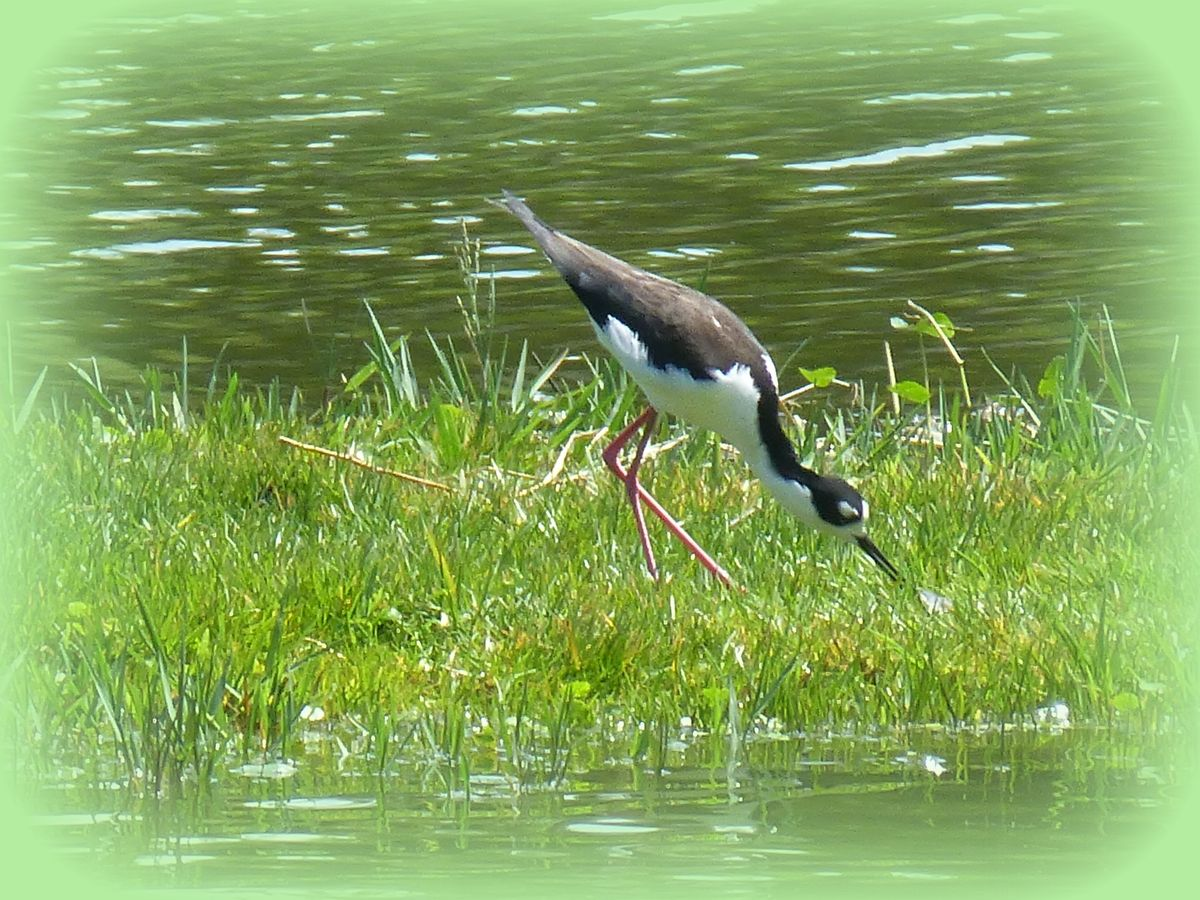
    We watched a pair of black-necked stilts  at Palmdale Florida last Sunday.


    P1040165


    At least I'm pretty sure that's what they were …  because this one looks almost exactly like the photo in my Audubon bird book.


    P1040168


    It was hard to get both of them in the same frame — they'd stay just far enough away from each other to make it almost impossible


      P1040169


     Shorebirds always seem to do such a delicate dance as they search for food along the water's edge.


    P1040167 


    Seems obvious why  this bird would be called a Stilt!


    Sharing with WILD BIRD WEDNESDAY, graciously hosted by Stuart at Paying Ready Attention.

  • BRANCHING OUT


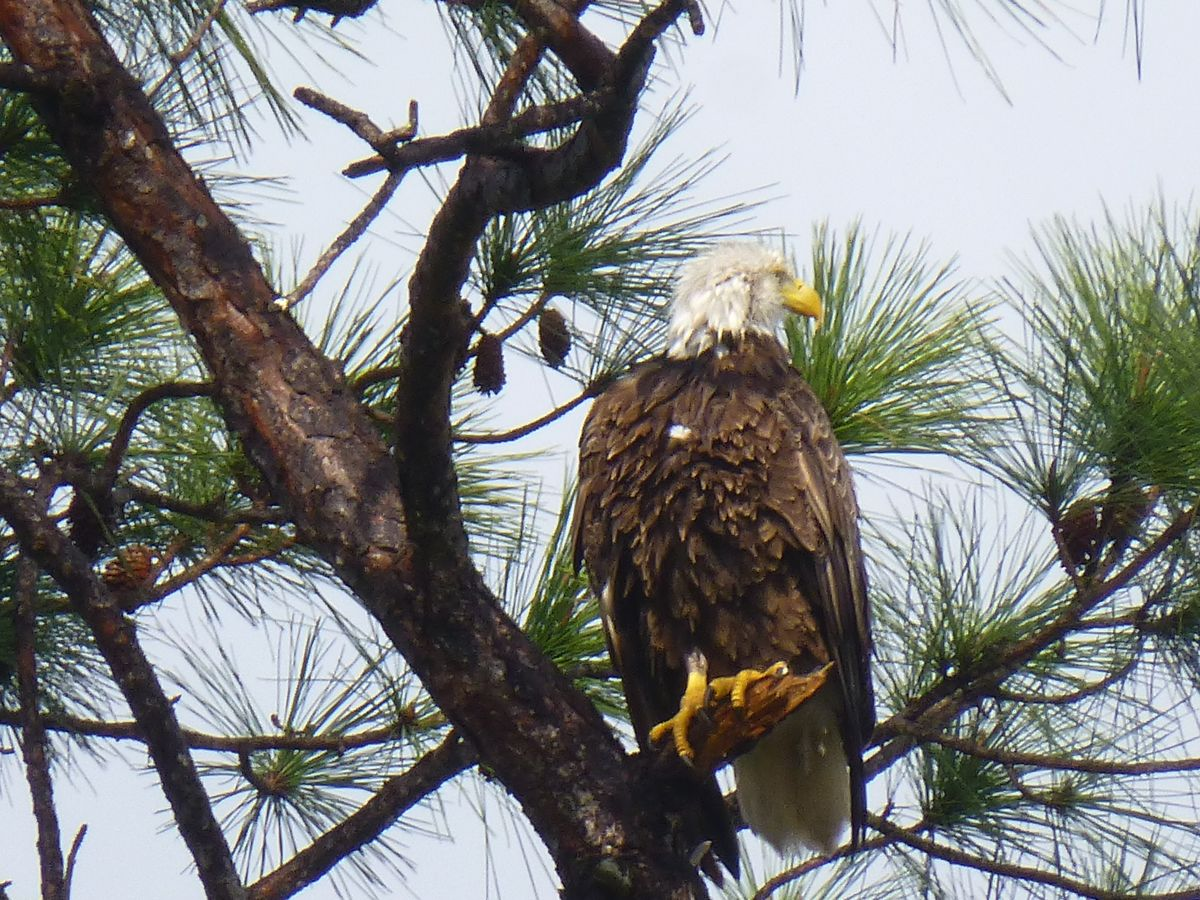
    Last Wednesday afternoon it poured down rain for a couple of hours  and had barely let up when I left for my weekly  Yoga class*.   Even though the Eagle nest is on the way,  I assumed they'd all be huddled down in the nest keeping dry. So I hadn't planned to stop.  


    P1030924-001


    But there was one car in the parking place, so  birding instinct kicked in and I made a quick turn into the church lot.  Thank goodness.  Instead of huddling down, the whole family was out air-drying their feathers.


    P1030907-001


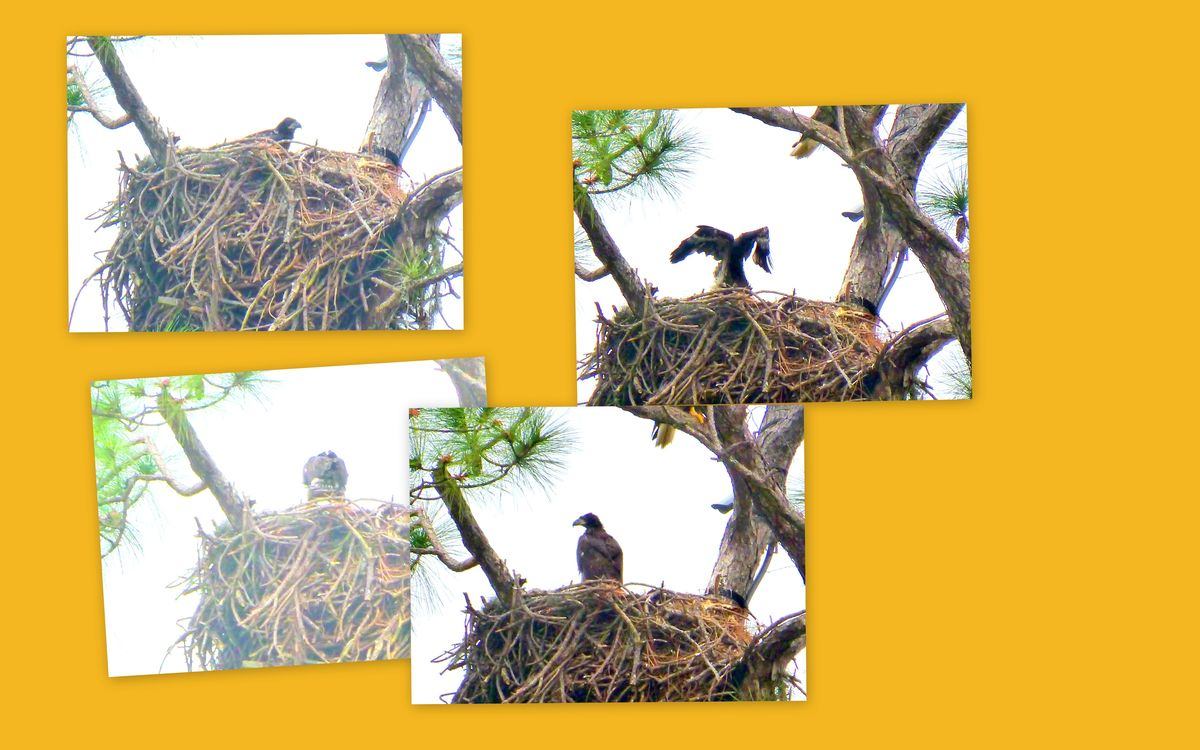
    The baby was all fluffed up .    It really looked as if it was sitting on a branch.  But maybe it was just the edge of the nest.   According to the people who write on the eagle cam website, E4 first branched early on Sunday morning — nearly four full days after I took these pictures.


      P1030925-001


    The baby is pretty much the same size as his parents now and they have been busy bringing lots and lots of food to the nest.  (For anyone who has ever parented teenagers it is hard not to anthropomorphize.) 


    P1030906


    Keeping an eye on Jr.  from above — as the breeze ruffles still damp feathers.


    P1030922-001


    Looking up at dad and dreaming about flying — up up and away!


     It won't be long before E4 fledges … and another season on the nest comes to an end.   It's a lucky thing for us part-time Floridians that eagle nesting season coincides with the winter snowbird season.


    * and P.S.:  Yoga is held right next door to our Library, so  I always leave home early.  Usually there is time to return our  books, check out new ones and browse through the magazines before class.   On this day, I pretty much just threw the returns into the slot and ran for class.  But it was worth it!


    This post is linked to NATURE NOTES,  OUR WORLD TUESDAY and WILD BIRD WEDNESDAY.


    Thank you to Michelle, to the OW team, and to Stuart for hosting these three great sharing opportunities.
  • NESTING


    Seemed like most of the birds we saw on our recent boat trip were nesting or watching their nest.  It must be Spring!


    2014-03-044


     I lost count of the number of Ospreys and osprey nests we saw.    We're glad to see them doing well.

    2014-03-045


    Great blue herons were abundant too.   We also saw little blue herons, three kinds of egrets, and a couple of marsh hens as we boated.  And as always pelicans, terns, and gulls.   Just as we turned into the marina we saw a skiff of black skimmers.  Too busy docking to try to take a picture —  I looked and looked for them later but no luck.


    2014-03-046

    At the Marina we spotted this sweet little mourning dove nesting above a rusty pipe in the dock area.   Not the loveliest of neighborhoods for a home, but probably quite safe.


    P1030865-001I've been trying for years to get a picture of a Kingfisher, one of my favorite birds and one we see everywhere (on both coasts and on rivers in between).  They always seem to sit still until I go for the camera and then whoosh, they're gone.  I finally was able to get this pretty Belted from the boat.    (I'll keep trying for a better picture though.)

     We travel to Lake Okechobee every year with a group of boating friends and the trip isn't necessarily organized around birding –it's just a fun social outing.    So every bird was  a lovely bonus.  


    SHARING WITH WILD BIRD WEDNESDAY.    Thank you Stewart.

  • EAGLE UPDATE


    The remaining eaglet on the North Fort Myers nest seems to be doing well.   We visited the nest this (foggy) morning.   One of the parents delivered a fish to the nest and then watched for a while.  

    The baby can eat unassisted now, but sometimes is still fed by the parents.


      02-25-14 028


    At 62 days,  the baby is learning.  He hops onto the edge of the nest, helps the parents move sticks around the nest and exercises its wings in preparation for learning to fly.  The parents leave it alone in the nest for long periods of time, but deliver food frequently.  


    EAGLES FEB 251-002


      02-25-14 029


     As usual, the nearby snags and trees held their share of other birds.  Doves, woodpeckers, and the usual starlings.     The eagles leave them alone.  And after watching the nest camera one day recently I think I figured out why.  Bird meals have to be defeathered….Both parents  were in the nest, apparently teaching the baby how to do that.   Because it is important that the young eagle learns how to eat anything (and everything).  But fish are much easier!


    EAGLES FEB 25


    FOR:  WILD BIRD WEDNESDAY.  Thank you Stewart.

  • MUTE SWANS


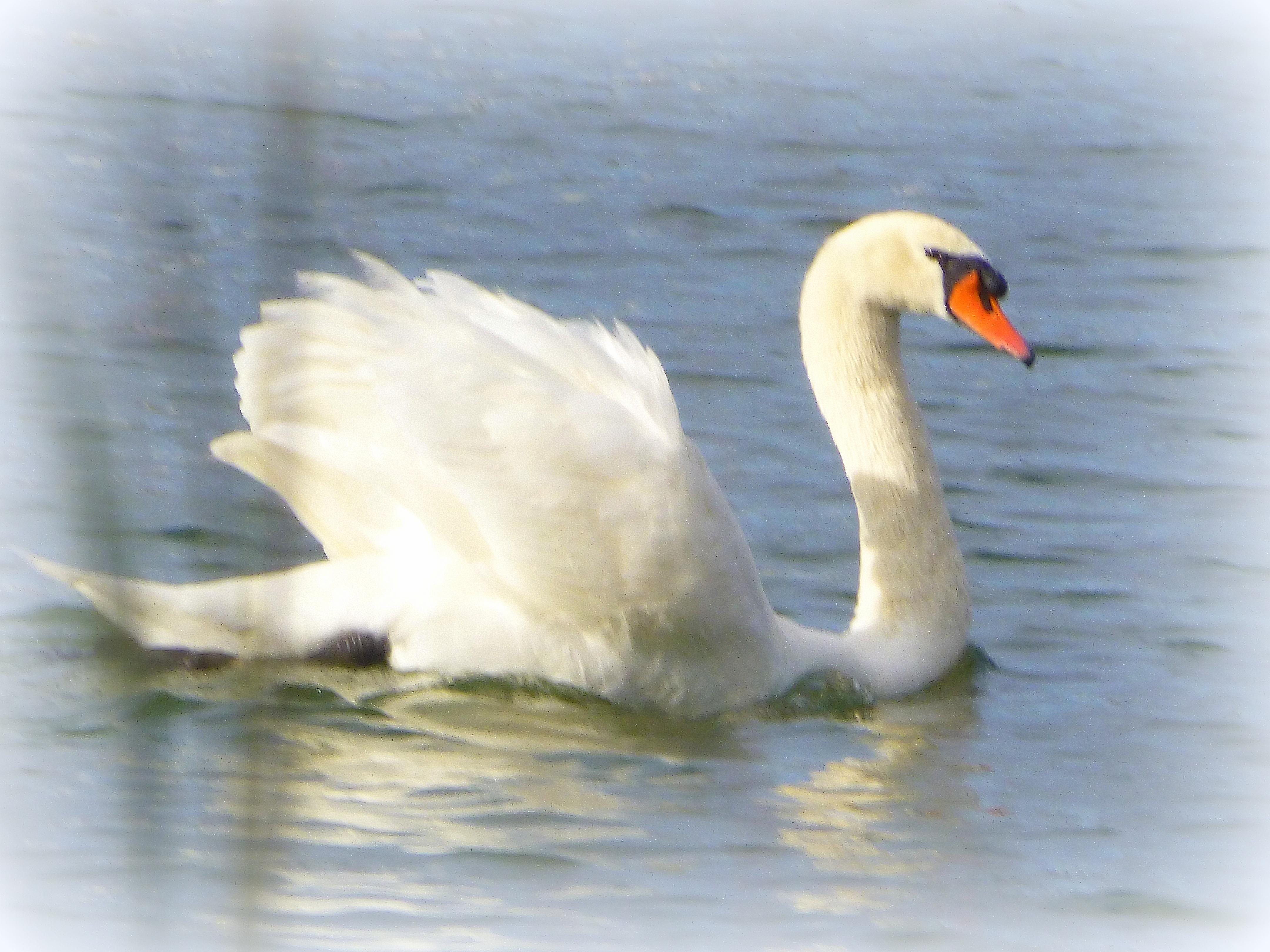
    P1030593 This is a followup to the Australian Black Swans  post of a couple of weeks ago.  I said that the swan is the symbol of Lakeland, but as this sign shows, it's probably really Mute Swans that the city fathers/mothers had in mind.  

    P1030571


    They glide so  gracefully.


    White swans


    Maybe not quite so graceful looking when they're sleeping or grooming … but they sure are agile!


    P1030520


    The story is that swans had inhabited the city's lakes for years, but died out (victims of disease and alligators perhaps).     In the 1950s, a former resident of Lakeland residing in England arranged to have a pair of mute swans shipped to the city to begin repopulating the Lakes.  

    Whether true or apocryphal,  something worked and many healthy swans of several different kinds now grace the city's lakes.     (Google Lakeland swans to read more about the history and how the city cares for the birds.)


    P1030555


    This looks like the model for all those swan river boat and carnival rides.


    Thank you to Eileen for  hosting SATURDAY CRITTERS.  

  • BIRDS OF THE SLOUGH


    From a walk at Six Mile Cypress Slough.    

     Note:  Thank you to Gordon and Gail who corrected my ID in the top picture … that beautiful fellow is a green heron not a tri-colored.  I should have checked my book first!   I've fixed the caption.


    P1030824-001

    Green heron


    These birds were kind enough to pose for the camera during our walk.


    Anhinga

    Anhinga drying its wings

    We're having slow computer issues, so I'm not even trying to say much about these birds.   


    BIRDS OF THE SLOUGH

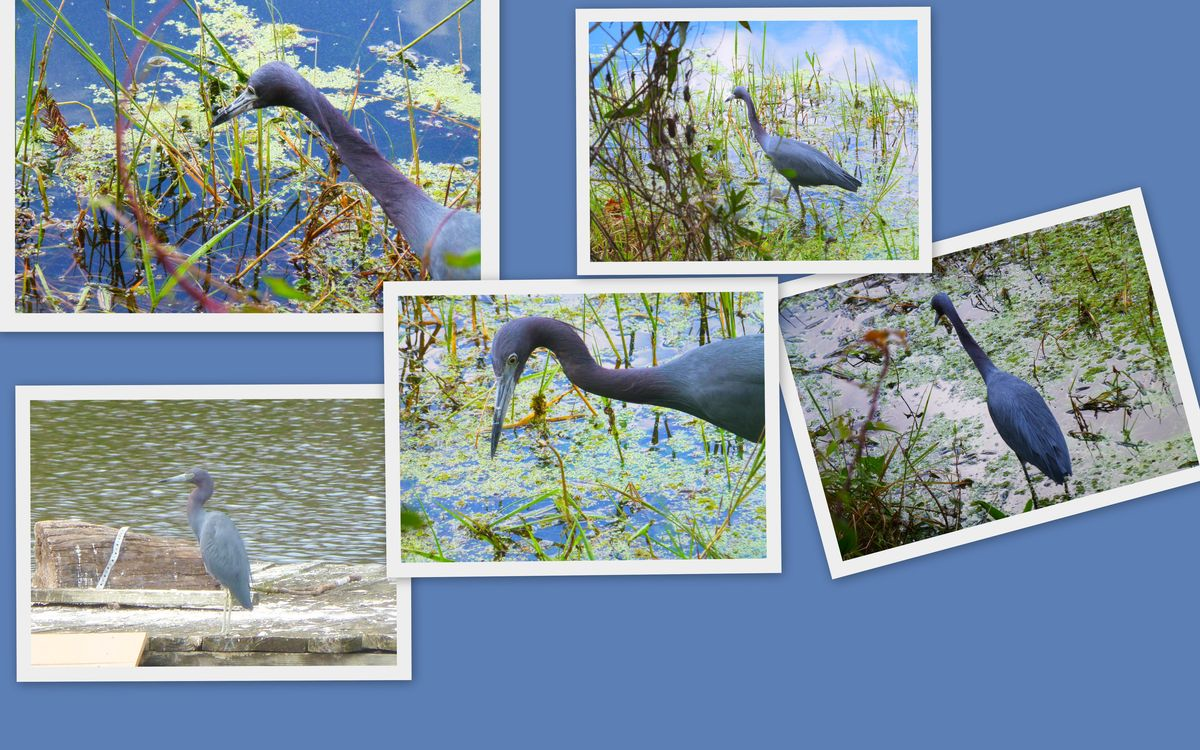
    Little blue heron

    But who needs words?


    Ibis and immat ibis

    White ibis — mature and immature


    They are all the usual suspects.  But I never tire of seeing them.  

    P1030806-001

    Great Egret


    Linking to WILD BIRD WEDNESDAY.   Go birding!  Thank you Stewart.

  • BLACK CROWNED NIGHT HERON

    Both kinds of Night Herons — the yellow-crowned and the black-crowned — can be found in Florida.   You'd think from the names that these birds would be  difficult to spot during the daytime.     


    And that is true with this guy, the black-crowned.  So it was surprising to see him on a mid-day walk at Corkscrew Swamp.   And even more surprising that he posed so beautifully.  


     I think it's a first-summer juvenile because the bill is yellowish, where the adult's would be all black.  (Maybe he hadn't learned yet that he is supposed to be roosting in trees during the day.)


    082

    Black-crowned night heron


    In spite of the fact that they are said to  be even more strictly nocturnal, we actually see the yellow-crowned  quite often … even sometimes, like the one below, right here on the canal where we live.  


    P1010737

    Yellow-crowned night heron


     Like all herons, both birds are relaxing to watch.  They're absolutely serene and patient  as they wait … positive that the perfect fish or crab dinner will come along when it is supposed to.  


    LINKING TO WILD BIRD WEDNESDAY, the best virtual birding on the web.  Go click the links.  Thanks to  STEWART for hosting.

  • BLACK SWANS


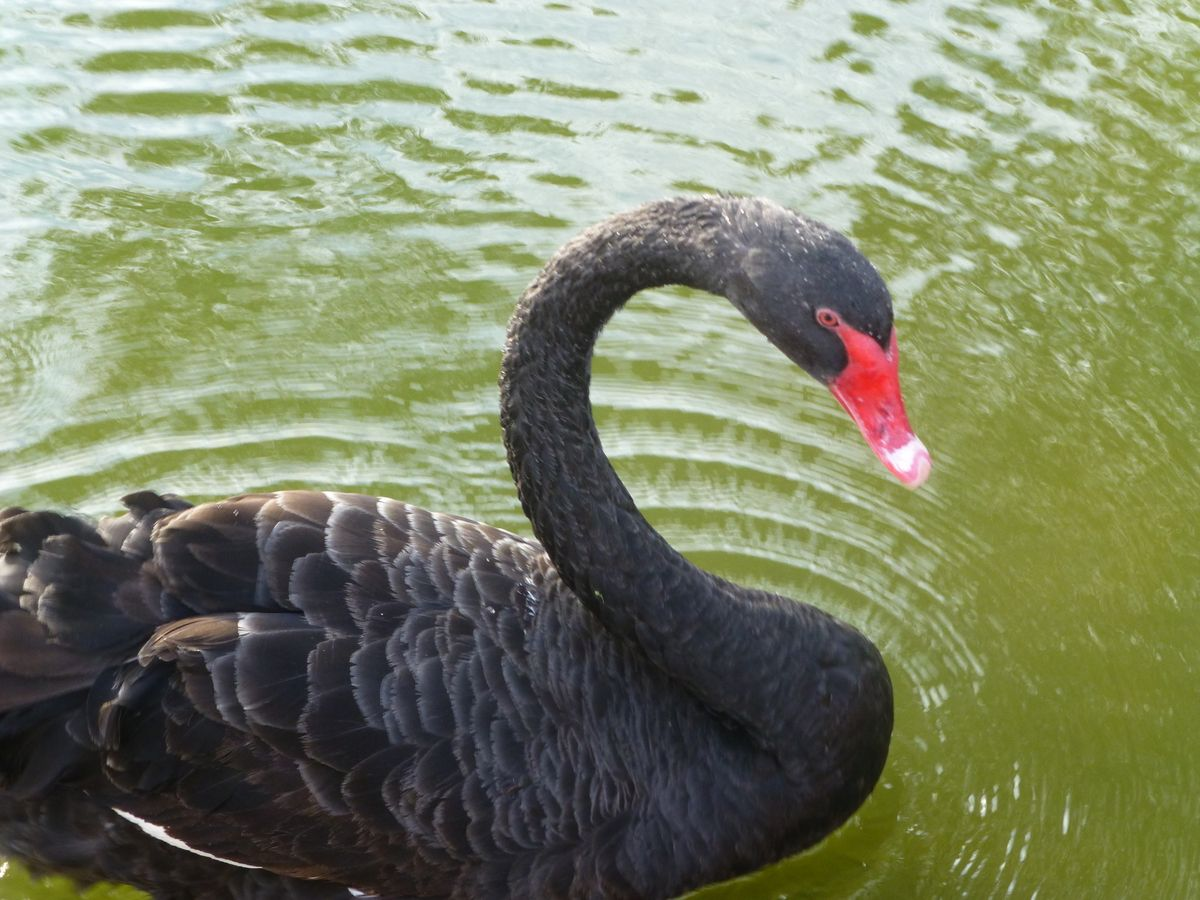
     The swan is the symbol of the City of Lakeland, Florida and we saw many when we visited Lake Morton there.   


    P1030546


    These, I think, are Australian Black Swans (but am more than happy to be corrected if I'm wrong!).   (Note:  My research is confirmed by comments from several wonderful Australian bloggers .. these are definitely Australian Black Swans.)


    Collages


    Lakeland seems to be a very good place for birds — whether native to Florida or imported.     All  we saw at Lake Morton looked very healthy and the park was full of people enjoying them.


    Thank you to Eileen for hosting  SATURDAY CRITTERS  at  her  beautiful and informative blog "Viewing Nature with Eileen" .


  • RING-NECK DUCKS and FRIENDS

    The whole Lakeland area was rich with bird life.     There were dozens of ducks in addition to lots of other birds swimming in Lake Morton.  A lot of mallards …  We watched mallard families out for a stroll, mallards and white ducks (escaped pets?) hanging out together happily,  that cotton-topped white duck I showed  in an earlier post also happily swimming with mallards, and best of all a few ring-neck ducks. 


      Ducks1


     The ring-neck was a first timer.    My Audubon guide says this  "might better be called 'ring-billed duck' for it's chestnut neck-ring is seen only at close range while the white ring on the bill is a permanent field mark."    We could see the neck-ring too, so I feel pretty confident about the ID.  


    Ring neck2


     When it came to ducks, I used to be satisfied to know just that much about them … that they were a duck.       It is only in the last couple of years that I have made an effort to identify the different species.    I think the ring-neck is quite  handsome. 


    LINKED TO:   WILD BIRD WEDNESDAY.  Thank you Stewart.


  • SHADES OF SKY WHILE EAGLE WATCHING

     Note:  If ads are showing up on this post, I apologize… I didn't put them there and I will be checking in with Typepad to see what's going on.

     Earlier this month I spent a couple of late-afternoon hours near our local eagle nest.  I got a few halfway decent pictures with eagles (this post) and even more without them.  

    037

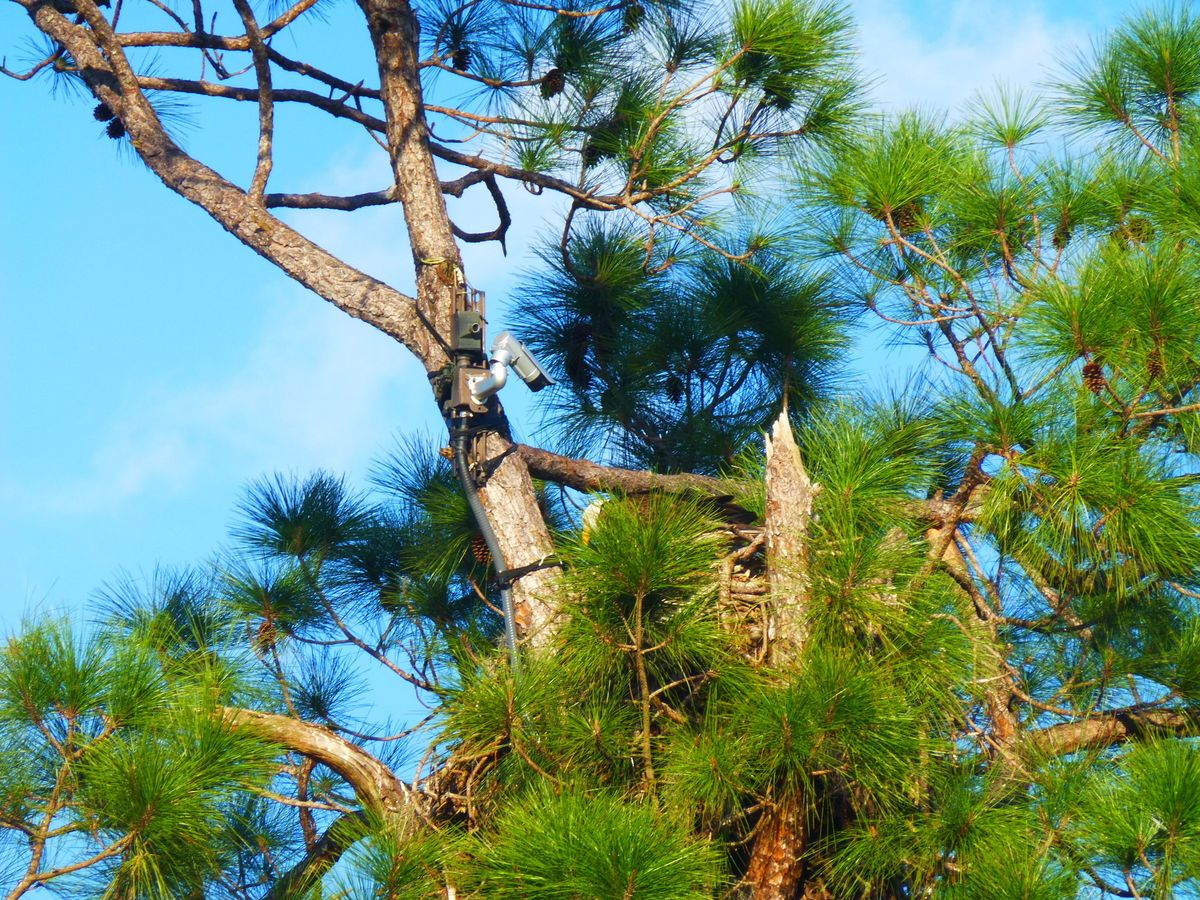
    I focused on the scrub pine where the nest is, waiting for someone to come home.  (The Eagle cam is attached to the trunk on the left.)   

      017

    Most of the Eagle pictures on the other post were taken between this picture and the one beneath.  The starlings set up a huge racket as they settled onto these branches for the night.


    Both eagles were sitting only a few yards away from the 'starling tree', but they paid no attention to them. 


    064


     I don't know if there is safety in numbers for the starlings or if they just aren't worth it as food for the eagles.    Sometimes the eagles bring in egrets or gulls to the nest as well as fish.  

    The sun was starting to go down.  I love the golden skies we get sometimes … sunrise and sunset.


    077


    It was almost dark as I headed for the car. Below is one of the eagles silhouetted above the nest.


    076


    Both eaglets seem to be doing fine now after the difficult start.  Both are being fed.


    LINKING TO NATURE NOTES (better late than never) and SKYWATCH FRIDAY.

    Thank you to the hosts.